

Mango nectar
Common food

Photo: Wikipedia
Mango nectar is a sweet, viscous beverage made from mango pulp, water, and often added sugar, delivering a smooth, tropical flavor that is less intense than pure mango juice. With a vibrant golden-orange hue and a velvety mouthfeel, it provides a quick source of carbohydrates, primarily from its 12.45g of sugar per 100g. At 51 kcal per 100g, it is a light, refreshing drink that captures the essence of ripe mangoes in a convenient, liquid form.
Calorie split: 1% protein · 98% carbs · 1% fat
↓ Full nutrition💚 Why it's loved
People love mango nectar for its intensely sweet, tropical taste and smooth, drinkable texture that evokes summer and vacation. It is a versatile base for cocktails, smoothies, and desserts, and holds deep cultural significance in many tropical regions as a beloved, everyday refreshment.
⚠️ Watch-outs & how to enjoy it better
The high sugar content (12.45g per 100g) can cause rapid blood-sugar spikes, especially for those with diabetes or insulin resistance. To counteract this, pair it with a source of protein or healthy fat (like nuts or yogurt) and practice portion control by limiting servings to 100-150ml. Additionally, some commercial brands may contain added sugars or preservatives, so checking labels for 100% fruit nectar is advisable.
Key benefits
- Provides a quick source of energy from natural and added sugars.
- Contains small amounts of dietary fiber (0.3g per 100g) to support digestion.
- Offers a convenient way to consume mango's tropical flavor year-round.
- Low in fat (0.06g per 100g) and protein (0.11g per 100g), making it a light beverage option.
🍽️ Popular dishes
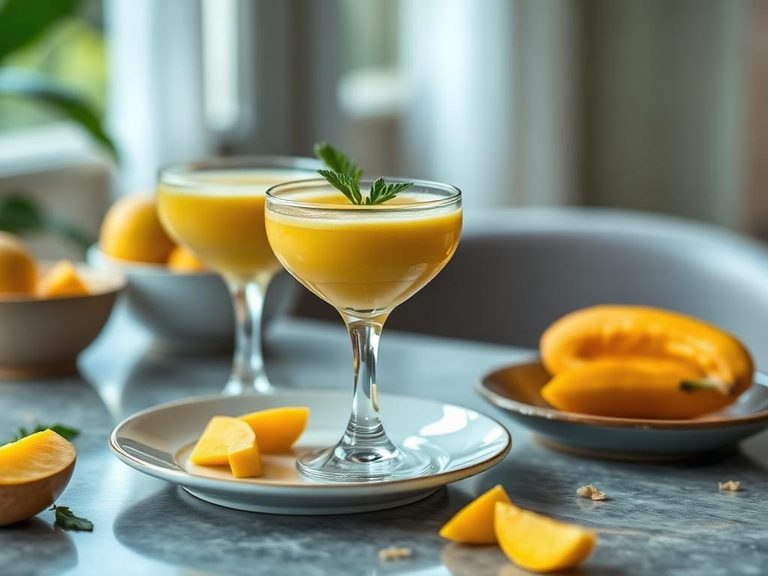
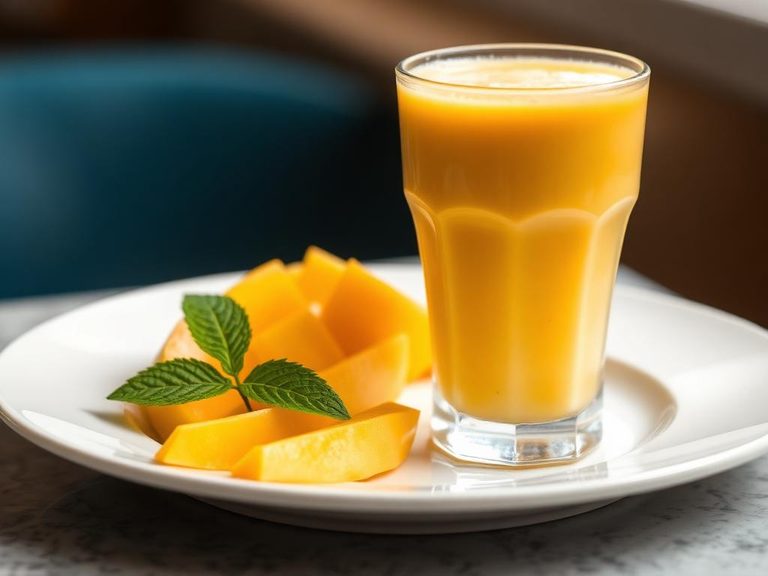
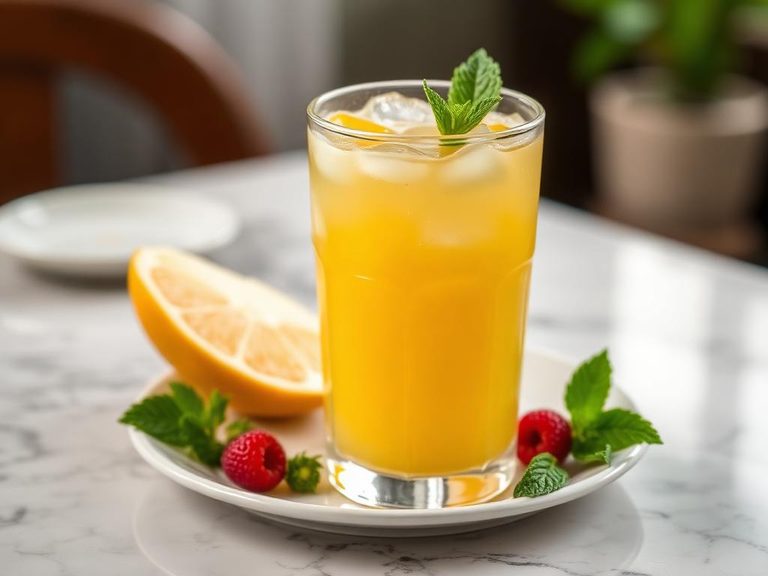
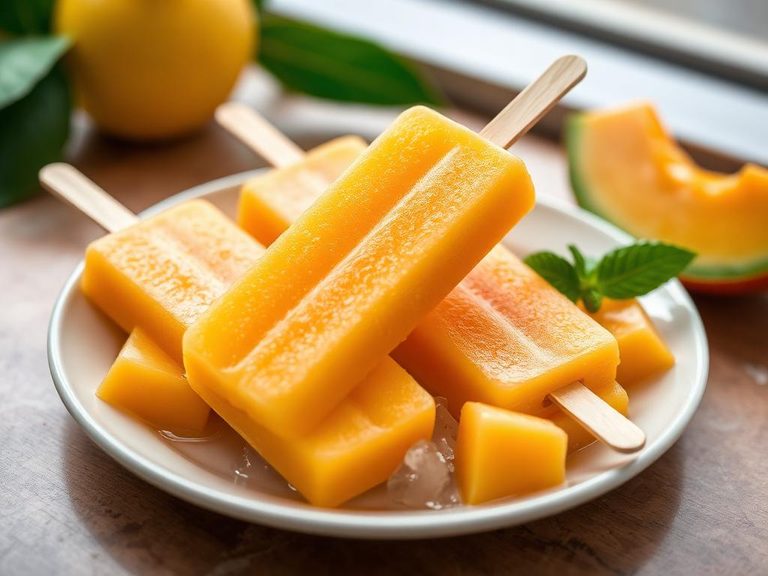
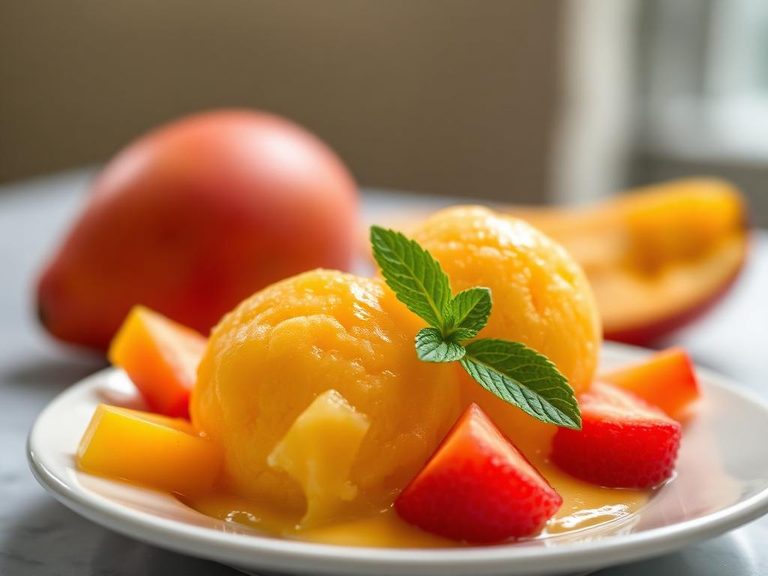
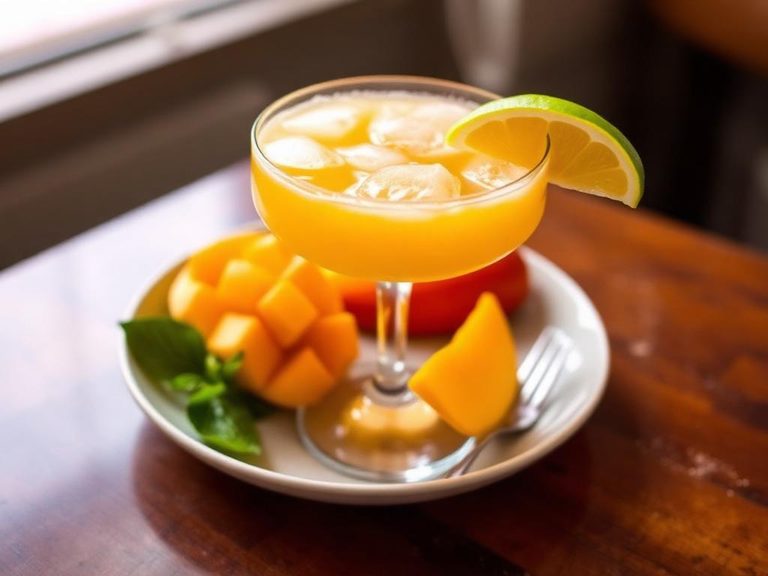
🌍 Where it's eaten
💡 Did you know?
Mango nectar is technically not a juice but a 'nectar' because it contains less than 100% fruit juice, often diluted with water and sweetened, which is a regulated distinction in many countries.
Full nutrition (USDA data · scales with serving)
| Water | 86.6 g |
| Energy | 51.0 kcal |
| Protein | 0.11 g |
| Total lipid (fat) | 0.06 g |
| Carbohydrate, by difference | 13.1 g |
| Fiber, total dietary | 0.30 g |
| Total Sugars | 12.4 g |
| Calcium, Ca | 17.0 mg |
| Iron, Fe | 0.36 mg |
| Magnesium, Mg | 3.0 mg |
| Phosphorus, P | 2.0 mg |
| Potassium, K | 24.0 mg |
| Sodium, Na | 5.0 mg |
| Zinc, Zn | 0.02 mg |
| Copper, Cu | 0.01 mg |
| Selenium, Se | 0.40 ug |
| Vitamin C, total ascorbic acid | 15.2 mg |
| Thiamin | 0.00 mg |
| Riboflavin | 0.00 mg |
| Niacin | 0.08 mg |
| Vitamin B-6 | 0.01 mg |
| Folate, total | 7.0 ug |
| Folic acid | 0.00 ug |
| Folate, food | 7.0 ug |
| Folate, DFE | 7.0 ug |
| Choline, total | 1.5 mg |
| Vitamin B-12 | 0.00 ug |
| Vitamin B-12, added | 0.00 ug |
| Vitamin A, RAE | 35.0 ug |
| Retinol | 0.00 ug |
| Carotene, beta | 402 ug |
| Carotene, alpha | 0.00 ug |
| Cryptoxanthin, beta | 26.0 ug |
| Lycopene | 0.00 ug |
| Lutein + zeaxanthin | 0.00 ug |
| Vitamin E (alpha-tocopherol) | 0.21 mg |
| Vitamin E, added | 0.00 mg |
| Vitamin D (D2 + D3) | 0.00 ug |
| Vitamin K (phylloquinone) | 0.80 ug |
| Alcohol, ethyl | 0.00 g |
| Caffeine | 0.00 mg |
| Theobromine | 0.00 mg |
Fat & fatty acid profile (per 100g)
| Fatty acids, total saturated | 0.01 g |
| SFA 4:0 | 0.00 g |
| SFA 6:0 | 0.00 g |
| SFA 8:0 | 0.00 g |
| SFA 10:0 | 0.00 g |
| SFA 12:0 | 0.00 g |
| SFA 14:0 | 0.00 g |
| SFA 16:0 | 0.01 g |
| SFA 18:0 | 0.00 g |
| Fatty acids, total monounsaturated | 0.02 g |
| MUFA 16:1 | 0.01 g |
| MUFA 18:1 | 0.01 g |
| MUFA 20:1 | 0.00 g |
| MUFA 22:1 | 0.00 g |
| Fatty acids, total polyunsaturated | 0.01 g |
| PUFA 18:2 | 0.00 g |
| PUFA 18:3 | 0.01 g |
| PUFA 18:4 | 0.00 g |
| PUFA 20:4 | 0.00 g |
| PUFA 20:5 n-3 (EPA) | 0.00 g |
| PUFA 22:5 n-3 (DPA) | 0.00 g |
| PUFA 22:6 n-3 (DHA) | 0.00 g |
| Cholesterol | 0.00 mg |
FAQ
Is mango nectar the same as mango juice?
No, mango nectar is typically made from mango pulp diluted with water and often sweetened, whereas mango juice is pure pressed mango fruit with no added water or sugar.
Can mango nectar be used in cooking?
Yes, it can be used as a sweetener or flavoring in sauces, marinades, desserts, and beverages, adding a rich mango taste without the texture of fresh fruit.
Is mango nectar healthy?
While it provides some energy and flavor, its high sugar content and low fiber make it less nutritious than whole mangoes. It's best enjoyed in moderation as a treat.
Nutrient density (calculated · NRF9.3)
Nutrient Rich Foods index: beneficial nutrients (protein, fiber, vitamins, minerals) minus saturated fat, added sugar & sodium, per 100 kcal.
NRF9.3 index — Fulgoni, Keast & Drewnowski, 2009. Computed from USDA nutrients.
Weight-loss friendliness (composite index)
Energy density 0.51 kcal/g · 1% calories from protein · 0.3 g fiber · 12.4 g sugar per 100 g.
Composite of energy density (Rolls et al., 1999), protein & fiber satiety, minus sugar. A calculated heuristic — ranks satiety-per-calorie, not a clinical measure.
Dietary load (calculated from USDA values)
Potential renal acid load. Positive = acid-forming, negative = alkaline-forming.
Sodium-to-potassium ratio: 0.21 (lower is better — aim for ≤ 1)
Sodium:potassium per WHO potassium guidance. Computed from USDA nutrients.