

Lobster gumbo
Common food

Photo: Wikipedia
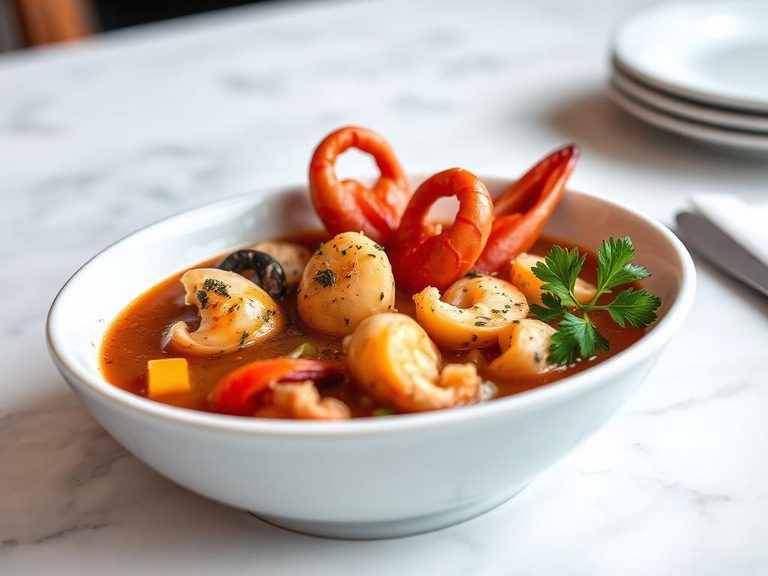
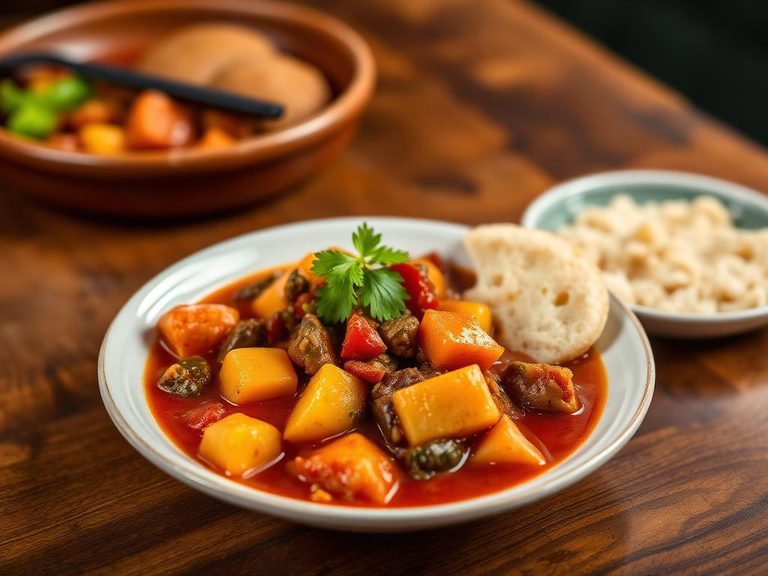
Lobster gumbo is a rich, soulful stew from Louisiana, blending tender chunks of lobster meat with the holy trinity of vegetables (onion, celery, bell pepper) in a dark, flavorful roux-based broth. The dish offers a luxurious, briny sweetness from the lobster, complemented by the earthy depth of the roux and a subtle kick from spices like cayenne. Nutritionally, it's a surprisingly lean protein source, with a 100g serving providing over 6 grams of protein for under 60 calories.
Calorie split: 42% protein · 31% carbs · 27% fat
↓ Full nutrition💚 Why it's loved
People adore lobster gumbo for its complex, layered flavors—the deep, nutty roux, the sweet lobster, and the aromatic vegetables create a uniquely satisfying comfort food. It's also a celebrated dish of Louisiana Creole and Cajun cuisine, representing a fusion of French, African, and Southern culinary traditions.
⚠️ Watch-outs & how to enjoy it better
The primary concern is the high sodium content typical of gumbo, due to the roux, stock, and seasonings, which can be an issue for those monitoring blood pressure. The roux also adds refined carbohydrates. To counteract this, use a low-sodium stock, season with herbs and spices first, and serve a moderate portion alongside a fresh, leafy green salad to add volume and balance the meal.
Key benefits
- Excellent source of lean, high-quality protein
- Low in calories and fat per serving
- Contains fiber and micronutrients from the vegetable base
- Provides selenium, zinc, and B vitamins from the lobster
- A hydrating, broth-based meal option
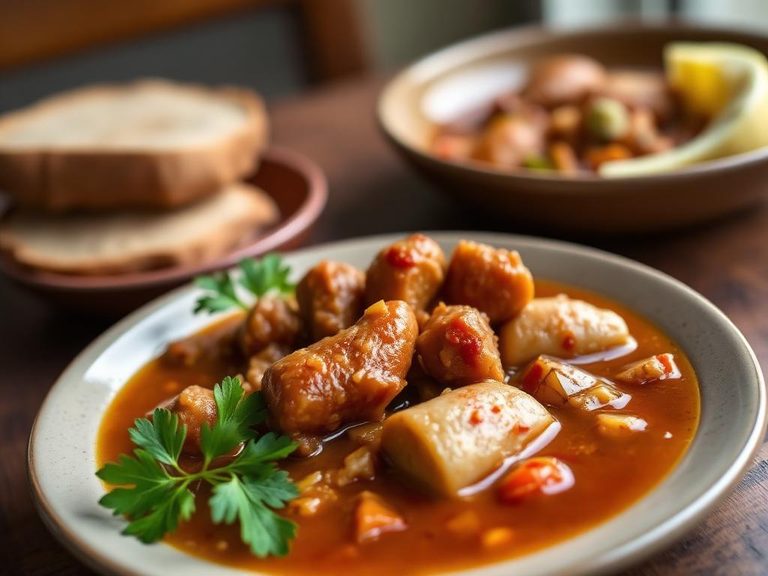
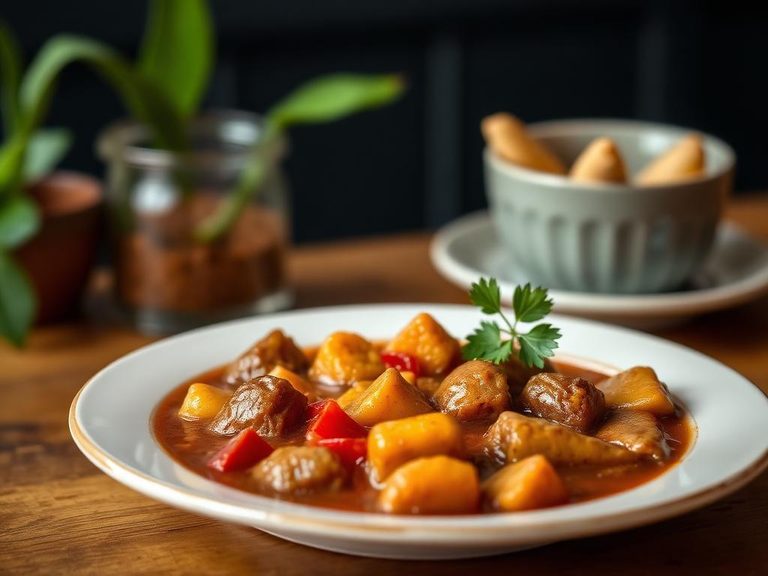
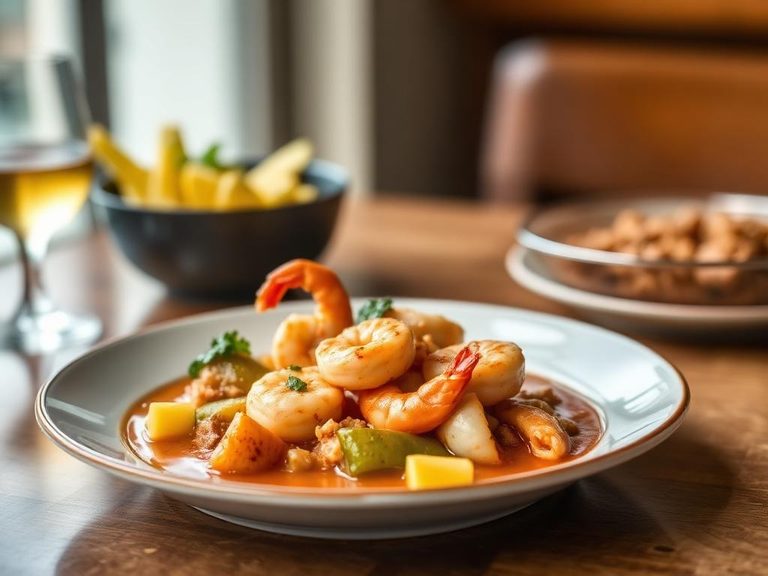
🍽️ Popular dishes
🌍 Where it's eaten
💡 Did you know?
The word 'gumbo' is derived from the West African word 'ki ngombo' for okra, a traditional thickener, though many modern recipes, especially those with a dark roux, omit it entirely.
Full nutrition (USDA data · scales with serving)
| Water | 85.9 g |
| Energy | 59.0 kcal |
| Protein | 6.2 g |
| Total lipid (fat) | 1.8 g |
| Carbohydrate, by difference | 4.6 g |
| Fiber, total dietary | 0.90 g |
| Total Sugars | 1.8 g |
| Calcium, Ca | 55.0 mg |
| Iron, Fe | 0.67 mg |
| Magnesium, Mg | 22.0 mg |
| Phosphorus, P | 75.0 mg |
| Potassium, K | 229 mg |
| Sodium, Na | 288 mg |
| Zinc, Zn | 1.1 mg |
| Copper, Cu | 0.46 mg |
| Selenium, Se | 17.7 ug |
| Vitamin C, total ascorbic acid | 3.7 mg |
| Thiamin | 0.03 mg |
| Riboflavin | 0.06 mg |
| Niacin | 1.6 mg |
| Vitamin B-6 | 0.07 mg |
| Folate, total | 22.0 ug |
| Folic acid | 1.0 ug |
| Folate, food | 21.0 ug |
| Folate, DFE | 23.0 ug |
| Choline, total | 29.2 mg |
| Vitamin B-12 | 0.38 ug |
| Vitamin B-12, added | 0.00 ug |
| Vitamin A, RAE | 19.0 ug |
| Retinol | 11.0 ug |
| Carotene, beta | 94.0 ug |
| Carotene, alpha | 0.00 ug |
| Cryptoxanthin, beta | 0.00 ug |
| Lycopene | 4159 ug |
| Lutein + zeaxanthin | 66.0 ug |
| Vitamin E (alpha-tocopherol) | 0.74 mg |
| Vitamin E, added | 0.00 mg |
| Vitamin D (D2 + D3) | 0.00 ug |
| Vitamin K (phylloquinone) | 8.7 ug |
| Alcohol, ethyl | 0.00 g |
| Caffeine | 0.00 mg |
| Theobromine | 0.00 mg |
Fat & fatty acid profile (per 100g)
| Fatty acids, total saturated | 0.79 g |
| SFA 4:0 | 0.03 g |
| SFA 6:0 | 0.02 g |
| SFA 8:0 | 0.01 g |
| SFA 10:0 | 0.03 g |
| SFA 12:0 | 0.03 g |
| SFA 14:0 | 0.12 g |
| SFA 16:0 | 0.39 g |
| SFA 18:0 | 0.13 g |
| Fatty acids, total monounsaturated | 0.37 g |
| MUFA 16:1 | 0.04 g |
| MUFA 18:1 | 0.30 g |
| MUFA 20:1 | 0.02 g |
| MUFA 22:1 | 0.01 g |
| Fatty acids, total polyunsaturated | 0.27 g |
| PUFA 18:2 | 0.08 g |
| PUFA 18:3 | 0.02 g |
| PUFA 18:4 | 0.00 g |
| PUFA 20:4 | 0.02 g |
| PUFA 20:5 n-3 (EPA) | 0.07 g |
| PUFA 22:5 n-3 (DPA) | 0.01 g |
| PUFA 22:6 n-3 (DHA) | 0.07 g |
| Cholesterol | 37.0 mg |
FAQ
Is lobster gumbo gluten-free?
It can be. The traditional roux is made with wheat flour, but it can be thickened with a gluten-free flour blend or by using okra or filé powder as a thickener instead.
What's the difference between Cajun and Creole gumbo?
Cajun gumbo typically uses a darker roux, no tomatoes, and is often served over rice. Creole gumbo often includes tomatoes and is a bit more refined, reflecting city influences.
Can I make lobster gumbo ahead of time?
Yes, the flavors often improve after a day in the fridge. However, add the lobster meat during the last 10 minutes of reheating to prevent it from becoming tough.
Nutrient density (calculated · NRF9.3)
Nutrient Rich Foods index: beneficial nutrients (protein, fiber, vitamins, minerals) minus saturated fat, added sugar & sodium, per 100 kcal.
NRF9.3 index — Fulgoni, Keast & Drewnowski, 2009. Computed from USDA nutrients.
Weight-loss friendliness (composite index)
Energy density 0.59 kcal/g · 42% calories from protein · 0.9 g fiber · 1.8 g sugar per 100 g.
Composite of energy density (Rolls et al., 1999), protein & fiber satiety, minus sugar. A calculated heuristic — ranks satiety-per-calorie, not a clinical measure.
Dietary load (calculated from USDA values)
Potential renal acid load. Positive = acid-forming, negative = alkaline-forming.
Sodium-to-potassium ratio: 1.26 (lower is better — aim for ≤ 1)
Sodium:potassium per WHO potassium guidance. Computed from USDA nutrients.