

Lamb, Australian, imported, fresh, foreshank, separable lean only, trimmed to 1/8" fat, cooked, braised
Whole food · Lamb, Veal, and Game Products

Photo: Wikipedia
This is a lean, collagen-rich cut from the lower leg of Australian lamb, slow-braised until fork-tender with a deep, savory flavor and a silky, gelatinous texture. With an impressive 27.5g of protein per 100g and minimal fat, it's a powerhouse of pure muscle meat. The braising process transforms its tough connective tissue into a luxurious, melt-in-your-mouth experience.
Calorie split: 70% protein · 0% carbs · 30% fat
↓ Full nutrition💚 Why it's loved
People adore it for its profound, meaty flavor that becomes incredibly rich and satisfying after slow cooking. It's a versatile, economical cut that shines in hearty stews and braises, making it a comforting staple in many home kitchens.
⚠️ Watch-outs & how to enjoy it better
If not cooked properly, the foreshank can be tough and chewy due to its high connective tissue content. It also requires a longer cooking time than more tender cuts, which can be a drawback for quick meals. Tip: Always use a slow, moist cooking method like braising or stewing to break down the collagen, and consider using a pressure cooker to significantly reduce the time.
Key benefits
- Excellent source of high-quality protein for muscle maintenance.
- Rich in collagen, which supports joint and connective tissue health.
- Low in carbohydrates, suitable for low-carb and ketogenic diets.
- Contains essential minerals like iron, zinc, and B vitamins.
- The braising method makes tough cuts tender and digestible.
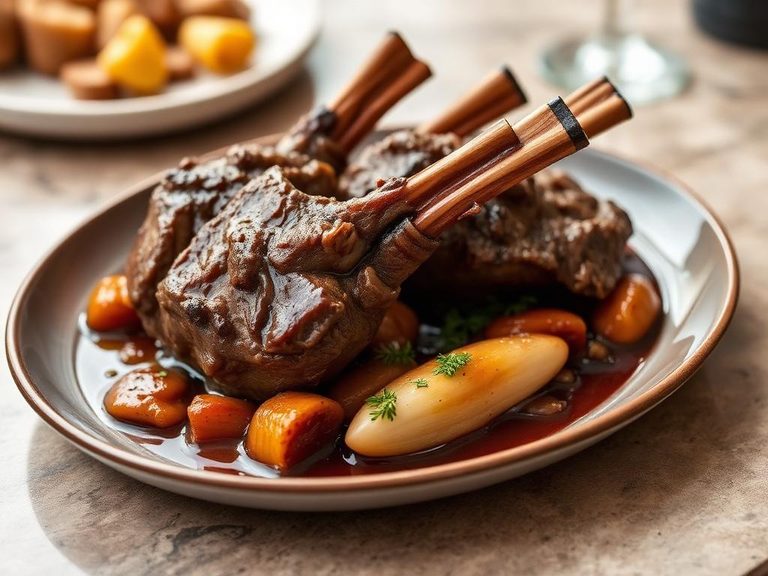
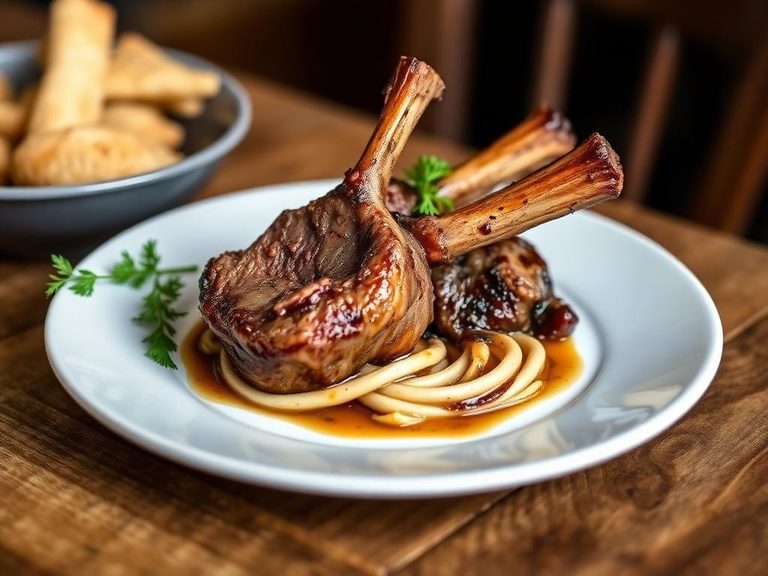
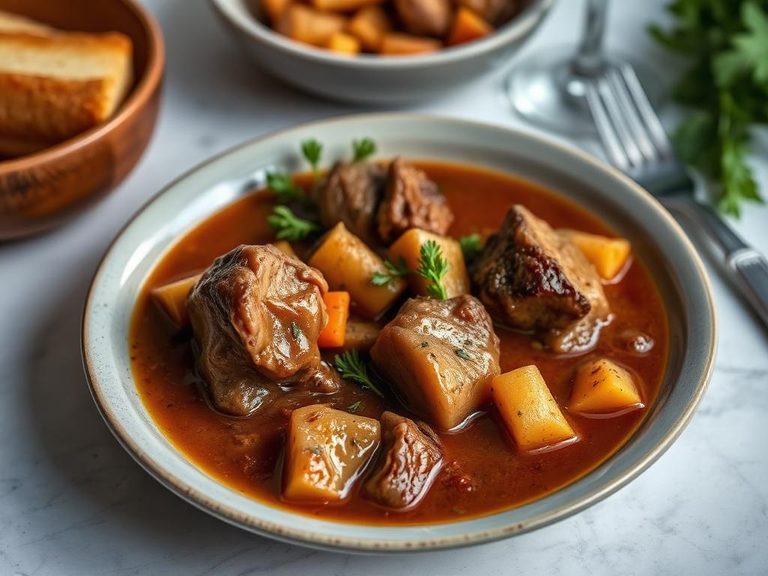
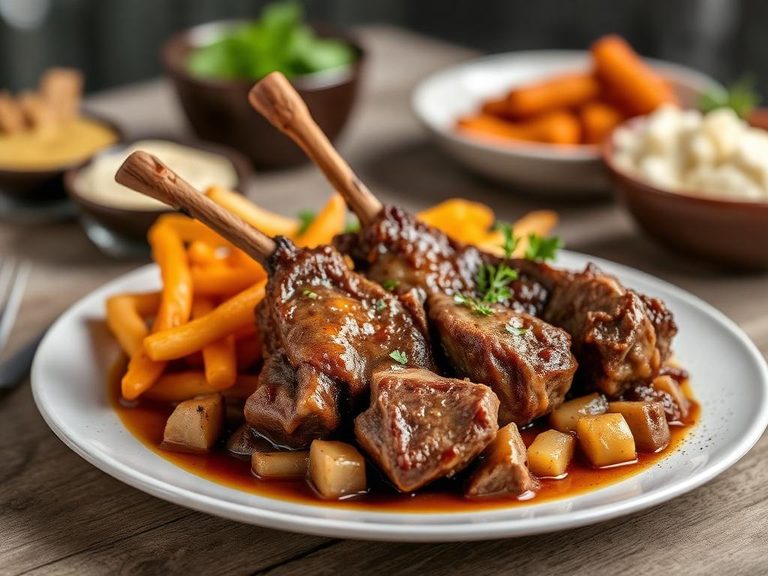
🍽️ Popular dishes
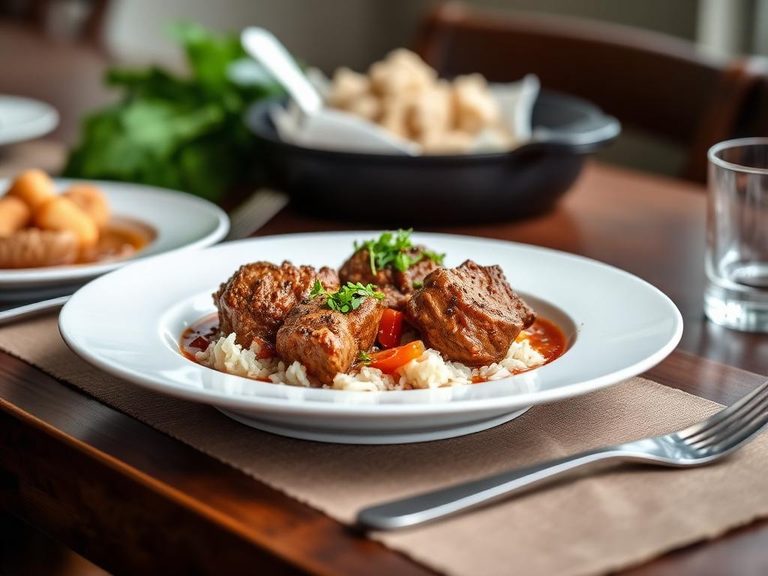
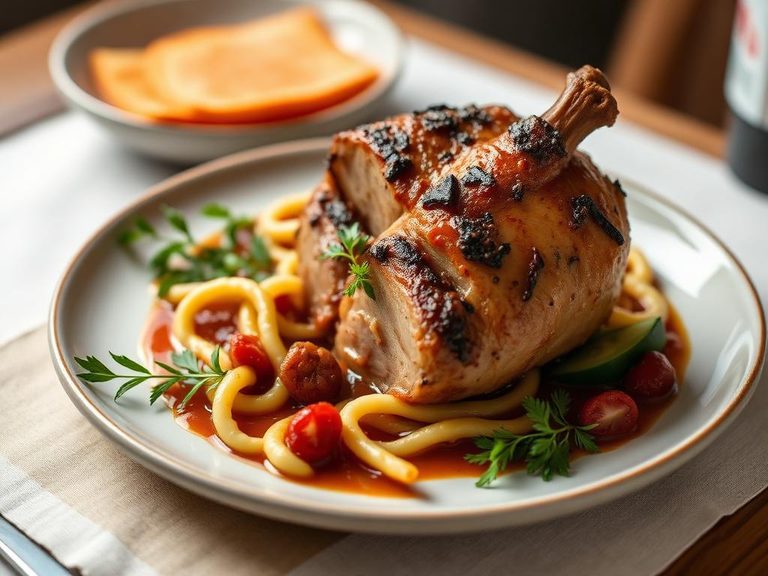
🌍 Where it's eaten
💡 Did you know?
The foreshank is a working muscle, meaning it's packed with connective tissue (collagen) that, when cooked low and slow, melts into gelatin, giving braising liquids a naturally thick, velvety body without needing flour or cornstarch.
Full nutrition (USDA data · scales with serving)
| Water | 66.9 g |
| Energy | 165 kcal |
| Energy | 690 kj |
| Protein | 27.5 g |
| Total lipid (fat) | 5.2 g |
| Ash | 0.83 g |
| Carbohydrate, by difference | 0.00 g |
| Calcium, Ca | 14.0 mg |
| Iron, Fe | 1.9 mg |
| Magnesium, Mg | 22.0 mg |
| Phosphorus, P | 177 mg |
| Potassium, K | 255 mg |
| Sodium, Na | 100 mg |
| Zinc, Zn | 7.9 mg |
| Copper, Cu | 0.13 mg |
| Manganese, Mn | 0.01 mg |
| Selenium, Se | 9.0 ug |
| Thiamin | 0.09 mg |
| Riboflavin | 0.28 mg |
| Niacin | 5.4 mg |
| Pantothenic acid | 0.66 mg |
| Vitamin B-6 | 0.26 mg |
| Vitamin B-12 | 3.2 ug |
Fat & fatty acid profile (per 100g)
| Fatty acids, total saturated | 1.9 g |
| SFA 12:0 | 0.01 g |
| SFA 14:0 | 0.14 g |
| SFA 15:0 | 0.02 g |
| SFA 16:0 | 1.0 g |
| SFA 17:0 | 0.05 g |
| SFA 18:0 | 0.63 g |
| Fatty acids, total monounsaturated | 2.3 g |
| MUFA 14:1 | 0.01 g |
| MUFA 16:1 | 0.12 g |
| MUFA 18:1 | 2.1 g |
| MUFA 20:1 | 0.02 g |
| Fatty acids, total polyunsaturated | 0.29 g |
| PUFA 18:2 | 0.17 g |
| PUFA 18:3 | 0.08 g |
| PUFA 20:4 | 0.04 g |
| Cholesterol | 92.0 mg |
Amino acid profile (per 100g)
| Tryptophan | 0.32 g |
| Threonine | 1.2 g |
| Isoleucine | 1.3 g |
| Leucine | 2.1 g |
| Lysine | 2.4 g |
| Methionine | 0.70 g |
| Cystine | 0.33 g |
| Phenylalanine | 1.1 g |
| Tyrosine | 0.92 g |
| Valine | 1.5 g |
| Arginine | 1.6 g |
| Histidine | 0.87 g |
| Alanine | 1.7 g |
| Aspartic acid | 2.4 g |
| Glutamic acid | 4.0 g |
| Glycine | 1.3 g |
| Proline | 1.2 g |
| Serine | 1.0 g |
FAQ
What's the best way to cook lamb foreshank?
Braising is ideal. Sear the shank, then cook it slowly in a flavorful liquid (like wine, broth, or tomatoes) at a low temperature (around 325°F/160°C) for 2-3 hours, or until the meat is tender and pulling away from the bone.
Is this a fatty cut of meat?
No, this specific preparation is 'separable lean only, trimmed to 1/8" fat,' making it very lean with only 5.22g of fat per 100g. Most of the richness comes from the gelatin rendered during cooking.
Can I substitute lamb foreshank in recipes?
Yes, it's a great substitute for other braising cuts like beef shank, veal shank (for osso buco), or even pork shoulder in stews, though the flavor will be distinctly lamb.
Nutrient density (calculated · NRF9.3)
Nutrient Rich Foods index: beneficial nutrients (protein, fiber, vitamins, minerals) minus saturated fat, added sugar & sodium, per 100 kcal.
NRF9.3 index — Fulgoni, Keast & Drewnowski, 2009. Computed from USDA nutrients.
Weight-loss friendliness (composite index)
Energy density 1.65 kcal/g · 67% calories from protein · 0.0 g fiber · 0.0 g sugar per 100 g.
Composite of energy density (Rolls et al., 1999), protein & fiber satiety, minus sugar. A calculated heuristic — ranks satiety-per-calorie, not a clinical measure.
Dietary load (calculated from USDA values)
Potential renal acid load. Positive = acid-forming, negative = alkaline-forming.
Sodium-to-potassium ratio: 0.39 (lower is better — aim for ≤ 1)
Sodium:potassium per WHO potassium guidance. Computed from USDA nutrients.