

Kiwi fruit, raw
Common food

Photo: Wikipedia
The kiwi fruit, or Chinese gooseberry, is a small, fuzzy brown berry with vibrant green flesh speckled with tiny black seeds. Its flavor is a bright, tangy-sweet explosion, often described as a blend of strawberry, banana, and citrus, with a juicy, creamy texture. Nutritionally, it's a powerhouse of vitamin C, offering more per gram than an orange.
Calorie split: 7% protein · 87% carbs · 6% fat
↓ Full nutrition💚 Why it's loved
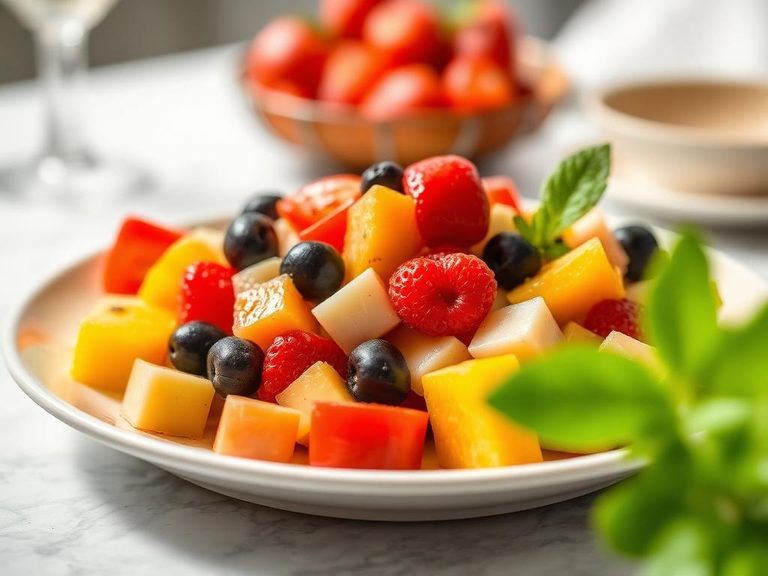
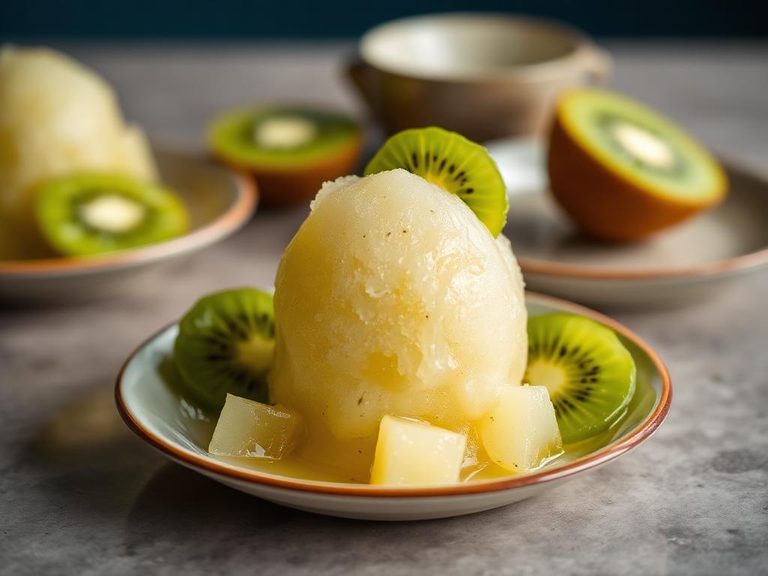
People love kiwi for its uniquely vibrant flavor and striking appearance, which instantly elevates fruit salads, yogurt bowls, and desserts. Its natural tenderness-enzymes also make it a popular natural meat tenderizer in marinades.
⚠️ Watch-outs & how to enjoy it better
Some individuals experience oral allergy syndrome or mouth irritation from kiwi due to the actinidin enzyme and latex-fruit syndrome. To mitigate this, try cooking the kiwi (which deactivates the enzyme) or opting for golden varieties, which are often better tolerated. Its natural sugars, while healthy, can contribute to blood sugar spikes if consumed in large quantities alone; pairing it with protein or healthy fats (like nuts or yogurt) can help blunt this effect.
Key benefits
- Excellent source of vitamin C, supporting immune function.
- Contains actinidin, a natural enzyme that aids protein digestion.
- High in dietary fiber, promoting digestive health.
- Provides a good amount of potassium, important for heart function.
- Rich in antioxidants like vitamin E and polyphenols.
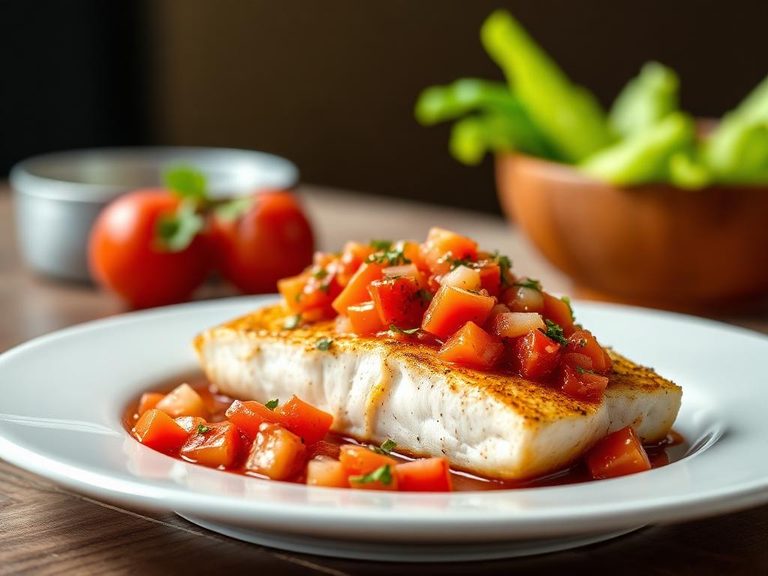
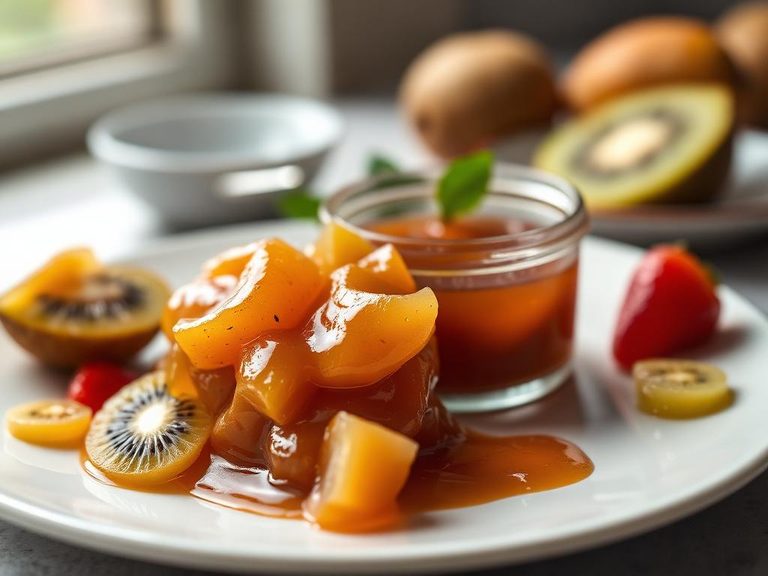
🍽️ Popular dishes
🌍 Where it's eaten
💡 Did you know?
The fuzzy brown skin of a kiwi is completely edible and packed with fiber and vitamin C; many people simply wash and eat it like an apple.
Full nutrition (USDA data · scales with serving)
| Water | 83.9 g |
| Energy | 64.0 kcal |
| Protein | 1.1 g |
| Total lipid (fat) | 0.44 g |
| Carbohydrate, by difference | 14.0 g |
| Fiber, total dietary | 3.0 g |
| Total Sugars | 9.0 g |
| Calcium, Ca | 35.0 mg |
| Iron, Fe | 0.24 mg |
| Magnesium, Mg | 16.0 mg |
| Phosphorus, P | 34.0 mg |
| Potassium, K | 198 mg |
| Sodium, Na | 5.0 mg |
| Zinc, Zn | 0.14 mg |
| Copper, Cu | 0.13 mg |
| Selenium, Se | 0.20 ug |
| Vitamin C, total ascorbic acid | 74.7 mg |
| Thiamin | 0.03 mg |
| Riboflavin | 0.03 mg |
| Niacin | 0.37 mg |
| Vitamin B-6 | 0.06 mg |
| Folate, total | 26.0 ug |
| Folic acid | 0.00 ug |
| Folate, food | 26.0 ug |
| Folate, DFE | 26.0 ug |
| Choline, total | 7.8 mg |
| Vitamin B-12 | 0.00 ug |
| Vitamin B-12, added | 0.00 ug |
| Vitamin A, RAE | 4.0 ug |
| Retinol | 0.00 ug |
| Carotene, beta | 52.0 ug |
| Carotene, alpha | 0.00 ug |
| Cryptoxanthin, beta | 0.00 ug |
| Lycopene | 0.00 ug |
| Lutein + zeaxanthin | 122 ug |
| Vitamin E (alpha-tocopherol) | 1.3 mg |
| Vitamin E, added | 0.00 mg |
| Vitamin D (D2 + D3) | 0.00 ug |
| Vitamin K (phylloquinone) | 40.3 ug |
| Alcohol, ethyl | 0.00 g |
| Caffeine | 0.00 mg |
| Theobromine | 0.00 mg |
Fat & fatty acid profile (per 100g)
| Fatty acids, total saturated | 0.03 g |
| SFA 4:0 | 0.00 g |
| SFA 6:0 | 0.00 g |
| SFA 8:0 | 0.00 g |
| SFA 10:0 | 0.00 g |
| SFA 12:0 | 0.00 g |
| SFA 14:0 | 0.00 g |
| SFA 16:0 | 0.02 g |
| SFA 18:0 | 0.01 g |
| Fatty acids, total monounsaturated | 0.05 g |
| MUFA 16:1 | 0.00 g |
| MUFA 18:1 | 0.05 g |
| MUFA 20:1 | 0.00 g |
| MUFA 22:1 | 0.00 g |
| Fatty acids, total polyunsaturated | 0.29 g |
| PUFA 18:2 | 0.25 g |
| PUFA 18:3 | 0.04 g |
| PUFA 18:4 | 0.00 g |
| PUFA 20:4 | 0.00 g |
| PUFA 20:5 n-3 (EPA) | 0.00 g |
| PUFA 22:5 n-3 (DPA) | 0.00 g |
| PUFA 22:6 n-3 (DHA) | 0.00 g |
| Cholesterol | 0.00 mg |
FAQ
How do I know when a kiwi is ripe?
A ripe kiwi will give slightly to gentle pressure near the stem end, similar to a peach. If it's rock hard, it needs a few days on the counter. Refrigeration slows ripening.
Can I eat the skin of a kiwi?
Yes, the skin is edible and nutritious. It's easiest to eat if you rub off the fuzz with a towel or vegetable brush. Golden kiwi varieties often have smoother, thinner skin.
Why does my kiwi sometimes taste bitter or leave a tingling sensation?
This can be due to the enzyme actinidin, which can break down proteins in your mouth. It's harmless for most but can be uncomfortable for some. Cooking the kiwi deactivates the enzyme.
Nutrient density (calculated · NRF9.3)
Nutrient Rich Foods index: beneficial nutrients (protein, fiber, vitamins, minerals) minus saturated fat, added sugar & sodium, per 100 kcal.
NRF9.3 index — Fulgoni, Keast & Drewnowski, 2009. Computed from USDA nutrients.
Weight-loss friendliness (composite index)
Energy density 0.64 kcal/g · 7% calories from protein · 3.0 g fiber · 9.0 g sugar per 100 g.
Composite of energy density (Rolls et al., 1999), protein & fiber satiety, minus sugar. A calculated heuristic — ranks satiety-per-calorie, not a clinical measure.
Dietary load (calculated from USDA values)
Potential renal acid load. Positive = acid-forming, negative = alkaline-forming.
Sodium-to-potassium ratio: 0.03 (lower is better — aim for ≤ 1)
Sodium:potassium per WHO potassium guidance. Computed from USDA nutrients.