

Hunan beef
Common food

Photo: Wikipedia
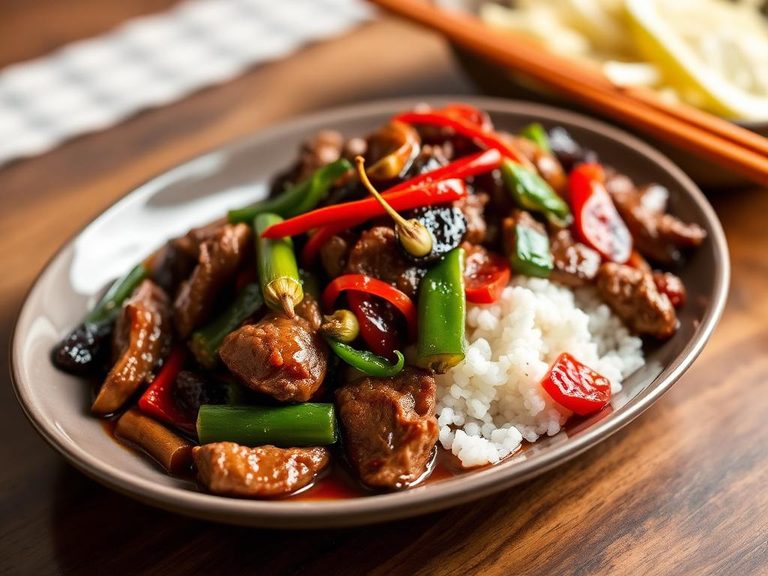
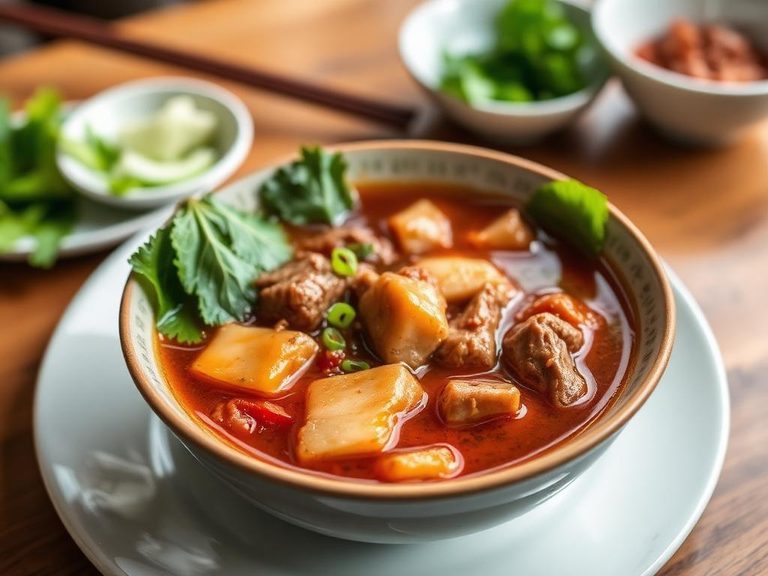
Hunan beef is a vibrant, stir-fried dish featuring tender slices of beef wok-tossed with crisp vegetables in a savory, spicy, and slightly tangy sauce. The texture is a delightful contrast between the soft, yielding beef and the crunchy peppers or celery. Nutritionally, it's a lean, protein-rich option that packs significant flavor without excessive calories.
Calorie split: 27% protein · 28% carbs · 45% fat
↓ Full nutrition💚 Why it's loved
People adore Hunan beef for its explosive, layered flavor profile that balances heat, savoriness, and a hint of acidity. It's a versatile dish that can be adjusted for spice level and is a staple of communal, family-style dining in Hunan cuisine.
⚠️ Watch-outs & how to enjoy it better
The dish can be high in sodium from soy sauce and other seasonings, which is a consideration for those monitoring salt intake. To mitigate this, you can request less sauce, pair it with unsalted steamed rice, or use low-sodium soy sauce in home cooking. The spicy oils may also cause discomfort for those with sensitive digestive systems.
Key benefits
- Excellent source of high-quality protein for muscle maintenance
- Low in calories relative to its high protein content
- Contains capsaicin from chili peppers, which may boost metabolism
- Provides dietary fiber and vitamins from stir-fried vegetables
🍽️ Popular dishes
🌍 Where it's eaten
💡 Did you know?
Authentic Hunan cuisine is known for its 'dry heat' spiciness, which comes from fresh chili peppers rather than the oily, numbing heat of Sichuan peppercorns, making the spice more direct and sharp.
Full nutrition (USDA data · scales with serving)
| Water | 78.8 g |
| Energy | 105 kcal |
| Protein | 7.1 g |
| Total lipid (fat) | 5.3 g |
| Carbohydrate, by difference | 7.3 g |
| Fiber, total dietary | 1.5 g |
| Total Sugars | 2.4 g |
| Calcium, Ca | 22.0 mg |
| Iron, Fe | 1.1 mg |
| Magnesium, Mg | 15.0 mg |
| Phosphorus, P | 76.0 mg |
| Potassium, K | 204 mg |
| Sodium, Na | 409 mg |
| Zinc, Zn | 1.5 mg |
| Copper, Cu | 0.05 mg |
| Selenium, Se | 6.7 ug |
| Vitamin C, total ascorbic acid | 11.6 mg |
| Thiamin | 0.03 mg |
| Riboflavin | 0.06 mg |
| Niacin | 1.3 mg |
| Vitamin B-6 | 0.16 mg |
| Folate, total | 45.0 ug |
| Folic acid | 0.00 ug |
| Folate, food | 45.0 ug |
| Folate, DFE | 45.0 ug |
| Choline, total | 34.5 mg |
| Vitamin B-12 | 0.48 ug |
| Vitamin B-12, added | 0.00 ug |
| Vitamin A, RAE | 63.0 ug |
| Retinol | 0.00 ug |
| Carotene, beta | 595 ug |
| Carotene, alpha | 323 ug |
| Cryptoxanthin, beta | 1.0 ug |
| Lycopene | 4.0 ug |
| Lutein + zeaxanthin | 268 ug |
| Vitamin E (alpha-tocopherol) | 0.82 mg |
| Vitamin E, added | 0.00 mg |
| Vitamin D (D2 + D3) | 0.10 ug |
| Vitamin K (phylloquinone) | 51.3 ug |
| Alcohol, ethyl | 0.00 g |
| Caffeine | 0.00 mg |
| Theobromine | 0.00 mg |
Fat & fatty acid profile (per 100g)
| Fatty acids, total saturated | 0.98 g |
| SFA 4:0 | 0.00 g |
| SFA 6:0 | 0.01 g |
| SFA 8:0 | 0.00 g |
| SFA 10:0 | 0.00 g |
| SFA 12:0 | 0.00 g |
| SFA 14:0 | 0.03 g |
| SFA 16:0 | 0.63 g |
| SFA 18:0 | 0.25 g |
| Fatty acids, total monounsaturated | 1.2 g |
| MUFA 16:1 | 0.05 g |
| MUFA 18:1 | 1.1 g |
| MUFA 20:1 | 0.02 g |
| MUFA 22:1 | 0.00 g |
| Fatty acids, total polyunsaturated | 2.1 g |
| PUFA 18:2 | 1.8 g |
| PUFA 18:3 | 0.26 g |
| PUFA 18:4 | 0.00 g |
| PUFA 20:4 | 0.01 g |
| PUFA 20:5 n-3 (EPA) | 0.00 g |
| PUFA 22:5 n-3 (DPA) | 0.01 g |
| PUFA 22:6 n-3 (DHA) | 0.00 g |
| Cholesterol | 14.0 mg |
FAQ
Is Hunan beef the same as Szechuan beef?
No, they are distinct. Hunan beef (from Hunan province) uses fresh chilies for a sharp, dry heat and often incorporates pickled ingredients for tang. Szechuan beef (from Sichuan province) is famous for its 'málà' flavor, combining chili oil with the numbing sensation of Sichuan peppercorns.
Can I make Hunan beef less spicy?
Absolutely. Reduce or omit the fresh chili peppers and chili oil. You can increase the amount of garlic, ginger, and a splash of vinegar or rice wine to maintain the dish's characteristic savory and tangy profile without the intense heat.
What cut of beef is best for Hunan beef?
Tender cuts like sirloin, flank steak, or tenderloin are ideal. They cook quickly in the high heat of a wok and remain tender. It's important to slice the beef thinly against the grain to ensure maximum tenderness.
Nutrient density (calculated · NRF9.3)
Nutrient Rich Foods index: beneficial nutrients (protein, fiber, vitamins, minerals) minus saturated fat, added sugar & sodium, per 100 kcal.
NRF9.3 index — Fulgoni, Keast & Drewnowski, 2009. Computed from USDA nutrients.
Weight-loss friendliness (composite index)
Energy density 1.05 kcal/g · 27% calories from protein · 1.5 g fiber · 2.4 g sugar per 100 g.
Composite of energy density (Rolls et al., 1999), protein & fiber satiety, minus sugar. A calculated heuristic — ranks satiety-per-calorie, not a clinical measure.
Dietary load (calculated from USDA values)
Potential renal acid load. Positive = acid-forming, negative = alkaline-forming.
Sodium-to-potassium ratio: 2.00 (lower is better — aim for ≤ 1)
Sodium:potassium per WHO potassium guidance. Computed from USDA nutrients.