

Ham stroganoff
Common food

Photo: Wikipedia
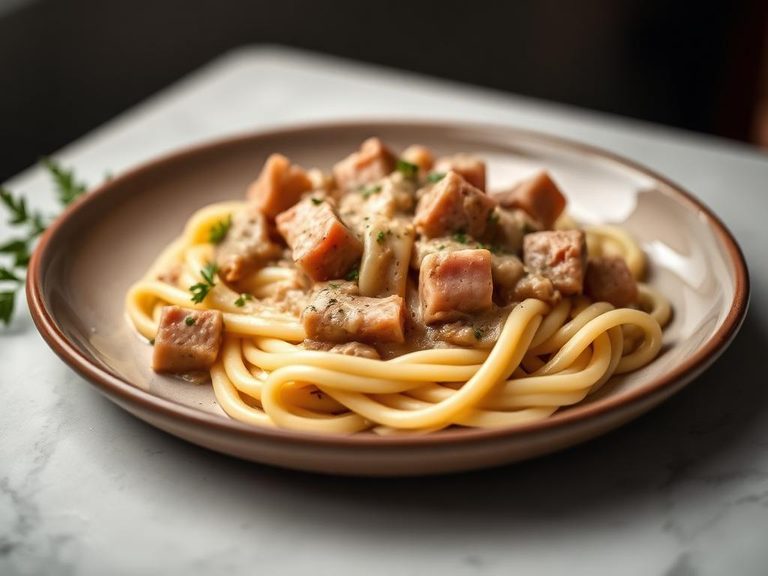
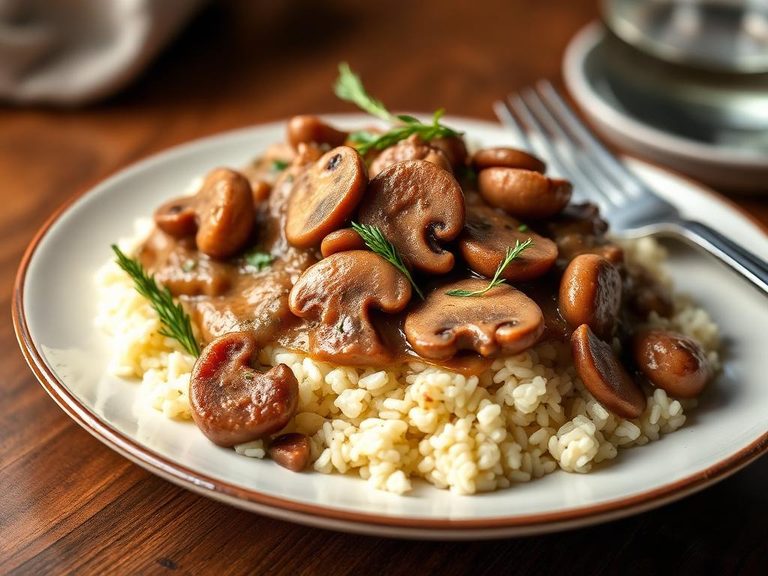
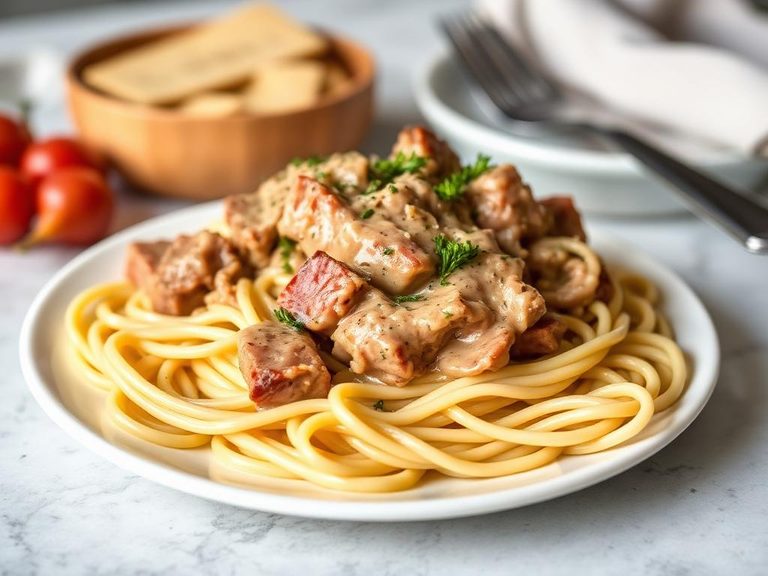
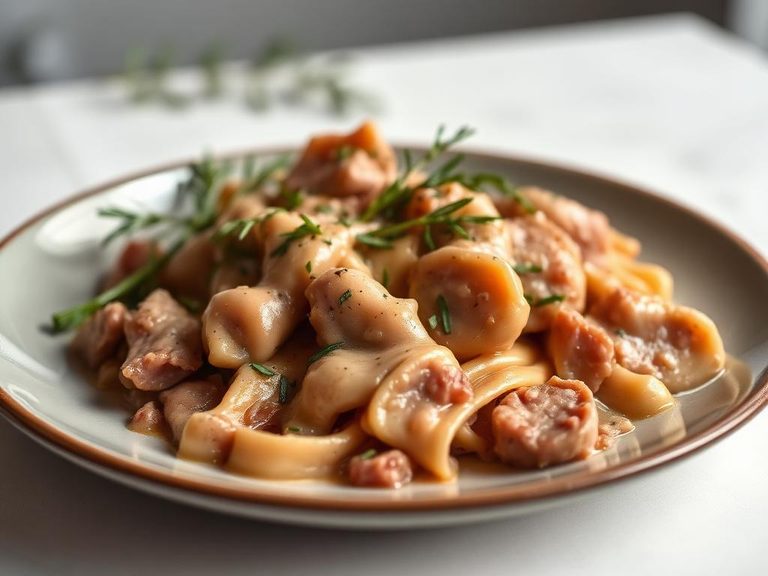
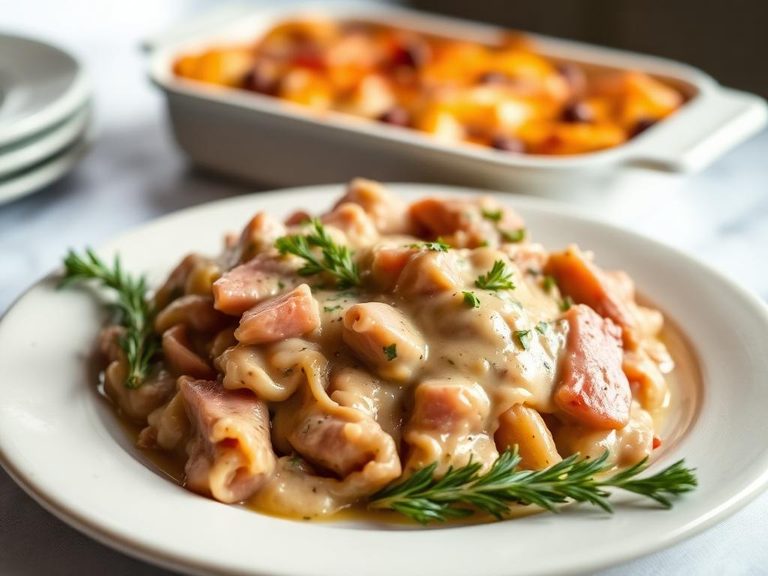
Ham stroganoff is a creamy, savory dish featuring tender strips of ham simmered in a rich sauce of sour cream, mushrooms, and onions. Its texture is a delightful contrast between the soft, yielding ham and the earthy bite of mushrooms, all coated in a velvety, tangy sauce. Nutritionally, it's a protein-rich option, with over 7.5g per 100g, making it a satisfying meal component.
Calorie split: 23% protein · 16% carbs · 61% fat
↓ Full nutrition💚 Why it's loved
People love ham stroganoff for its comforting, umami-rich flavor profile and its ability to transform simple, leftover ham into an elegant dish. It's a beloved staple in many home kitchens for its creamy indulgence and quick preparation time.
⚠️ Watch-outs & how to enjoy it better
The dish can be high in sodium due to the cured ham and added salt, which may be a concern for those monitoring blood pressure. To counteract this, use a lower-sodium ham, rinse it before cooking, and balance the meal with potassium-rich sides like steamed broccoli or a fresh salad. The creamy sauce is also calorie-dense, so practicing portion control is key.
Key benefits
- High-quality protein source for muscle maintenance.
- Provides B vitamins like thiamine and niacin from ham.
- Contains minerals such as zinc and selenium.
- Quick to prepare, ideal for a fast weeknight meal.
- Versatile base for adding other vegetables.
🍽️ Popular dishes
🌍 Where it's eaten
💡 Did you know?
The original 'Beef Stroganoff' is named after a 19th-century Russian aristocratic family, the Stroganovs, but the ham variation became a popular, budget-friendly adaptation in the mid-20th century, especially in the United States, as a clever way to use up holiday leftovers.
Full nutrition (USDA data · scales with serving)
| Water | 76.1 g |
| Energy | 131 kcal |
| Protein | 7.6 g |
| Total lipid (fat) | 8.8 g |
| Carbohydrate, by difference | 5.2 g |
| Fiber, total dietary | 0.70 g |
| Total Sugars | 1.9 g |
| Calcium, Ca | 35.0 mg |
| Iron, Fe | 0.43 mg |
| Magnesium, Mg | 12.0 mg |
| Phosphorus, P | 113 mg |
| Potassium, K | 175 mg |
| Sodium, Na | 703 mg |
| Zinc, Zn | 0.87 mg |
| Copper, Cu | 0.07 mg |
| Selenium, Se | 10.4 ug |
| Vitamin C, total ascorbic acid | 0.70 mg |
| Thiamin | 0.18 mg |
| Riboflavin | 0.11 mg |
| Niacin | 1.8 mg |
| Vitamin B-6 | 0.15 mg |
| Folate, total | 6.0 ug |
| Folic acid | 0.00 ug |
| Folate, food | 6.0 ug |
| Folate, DFE | 6.0 ug |
| Choline, total | 35.9 mg |
| Vitamin B-12 | 0.17 ug |
| Vitamin B-12, added | 0.00 ug |
| Vitamin A, RAE | 39.0 ug |
| Retinol | 39.0 ug |
| Carotene, beta | 0.00 ug |
| Carotene, alpha | 0.00 ug |
| Cryptoxanthin, beta | 0.00 ug |
| Lycopene | 0.00 ug |
| Lutein + zeaxanthin | 3.0 ug |
| Vitamin E (alpha-tocopherol) | 0.59 mg |
| Vitamin E, added | 0.00 mg |
| Vitamin D (D2 + D3) | 0.30 ug |
| Vitamin K (phylloquinone) | 7.9 ug |
| Alcohol, ethyl | 0.00 g |
| Caffeine | 0.00 mg |
| Theobromine | 0.00 mg |
Fat & fatty acid profile (per 100g)
| Fatty acids, total saturated | 3.6 g |
| SFA 4:0 | 0.01 g |
| SFA 6:0 | 0.05 g |
| SFA 8:0 | 0.04 g |
| SFA 10:0 | 0.10 g |
| SFA 12:0 | 0.14 g |
| SFA 14:0 | 0.45 g |
| SFA 16:0 | 1.8 g |
| SFA 18:0 | 0.65 g |
| Fatty acids, total monounsaturated | 2.5 g |
| MUFA 16:1 | 0.13 g |
| MUFA 18:1 | 2.5 g |
| MUFA 20:1 | 0.03 g |
| MUFA 22:1 | 0.00 g |
| Fatty acids, total polyunsaturated | 1.8 g |
| PUFA 18:2 | 1.5 g |
| PUFA 18:3 | 0.20 g |
| PUFA 18:4 | 0.00 g |
| PUFA 20:4 | 0.02 g |
| PUFA 20:5 n-3 (EPA) | 0.00 g |
| PUFA 22:5 n-3 (DPA) | 0.00 g |
| PUFA 22:6 n-3 (DHA) | 0.00 g |
| Cholesterol | 28.0 mg |
FAQ
Can I use a different meat instead of ham?
Absolutely. While ham is traditional for this variation, you can substitute with leftover roast pork, turkey, or even cooked chicken for a different twist on the classic stroganoff.
How can I make the sauce lighter?
For a lighter sauce, you can replace some or all of the sour cream with plain Greek yogurt or a blend of yogurt and a small amount of cream cheese. Ensure the sauce is off the heat before stirring in the yogurt to prevent curdling.
What are the best sides to serve with ham stroganoff?
It's most commonly served over egg noodles, rice, or mashed potatoes. For a balanced meal, pair it with a simple green vegetable like steamed green beans, peas, or a crisp side salad.
Nutrient density (calculated · NRF9.3)
Nutrient Rich Foods index: beneficial nutrients (protein, fiber, vitamins, minerals) minus saturated fat, added sugar & sodium, per 100 kcal.
NRF9.3 index — Fulgoni, Keast & Drewnowski, 2009. Computed from USDA nutrients.
Weight-loss friendliness (composite index)
Energy density 1.31 kcal/g · 23% calories from protein · 0.7 g fiber · 1.9 g sugar per 100 g.
Composite of energy density (Rolls et al., 1999), protein & fiber satiety, minus sugar. A calculated heuristic — ranks satiety-per-calorie, not a clinical measure.
Dietary load (calculated from USDA values)
Potential renal acid load. Positive = acid-forming, negative = alkaline-forming.
Sodium-to-potassium ratio: 4.02 (lower is better — aim for ≤ 1)
Sodium:potassium per WHO potassium guidance. Computed from USDA nutrients.