

Ghee, clarified butter
Common food
Ghee is a rich, golden clarified butter with a deep, nutty aroma and a smooth, velvety texture that solidifies when cool. It is essentially pure butterfat, with nearly all water and milk solids removed, resulting in a highly concentrated source of energy. Nutritionally, it is almost 100% fat, providing a potent 876 calories per 100g.
Calorie split: 0% protein · 0% carbs · 100% fat
↓ Full nutrition💚 Why it's loved
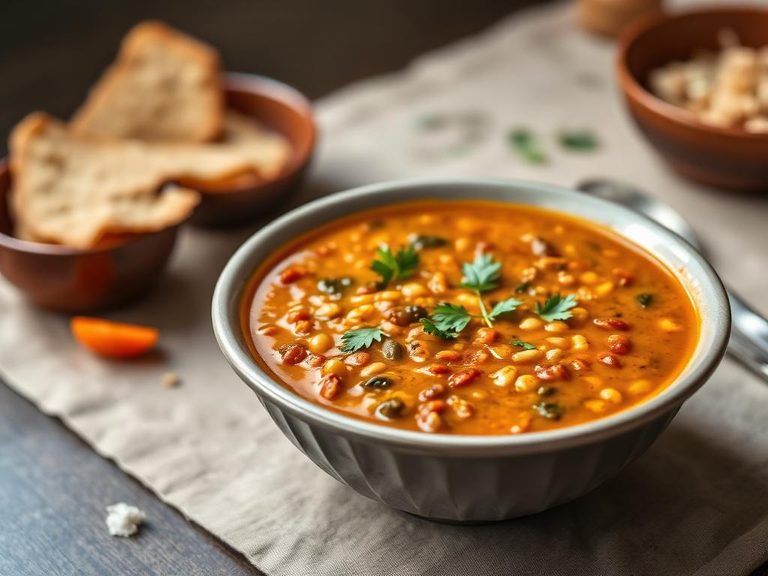
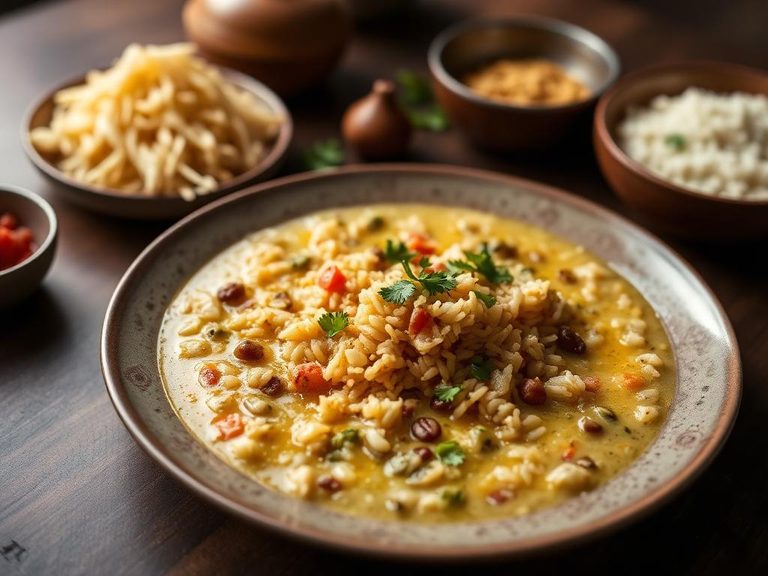
People adore ghee for its intense, nutty flavor that elevates everything from lentils to popcorn. Its versatility as a cooking fat and its revered status in Ayurvedic and South Asian culinary traditions make it a beloved staple.
⚠️ Watch-outs & how to enjoy it better
Its extremely high calorie and saturated fat content means it should be used sparingly by those monitoring calorie intake or heart health. To counteract this, practice strict portion control (e.g., 1 teaspoon per serving) and use it to replace, not add to, other fats in a dish.
Key benefits
- High smoke point (around 250°C/482°F) ideal for high-heat cooking
- Lactose and casein-free due to the removal of milk solids
- Contains fat-soluble vitamins A, E, and K2
- Rich in butyrate, a short-chain fatty acid that may support gut health
- Long shelf life without refrigeration
🍽️ Popular dishes
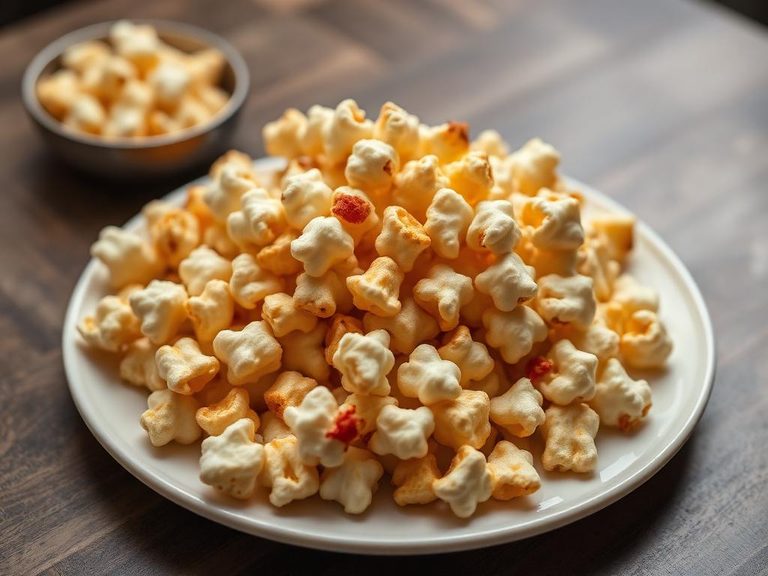
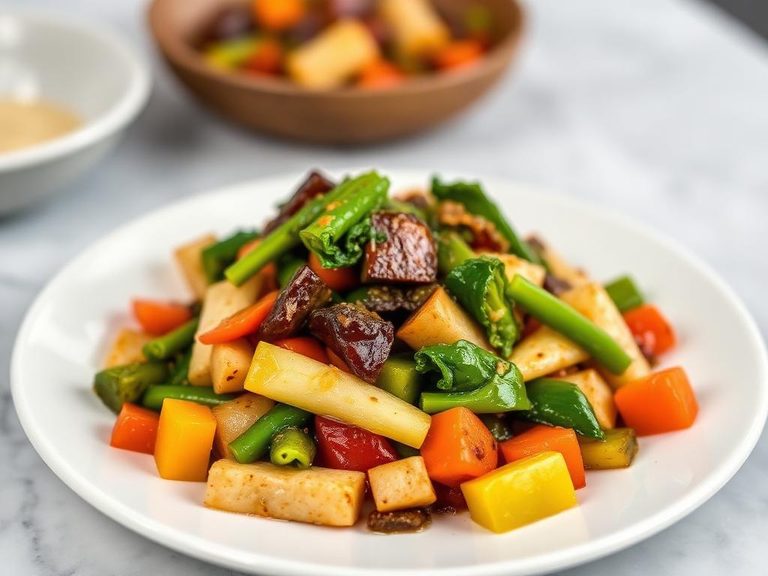
🌍 Where it's eaten
💡 Did you know?
Traditional ghee is made by simmering butter until the milk solids caramelize and sink, then straining them out; the resulting clear golden liquid is ghee, while the leftover browned solids are a prized, nutty treat called 'mawa' or 'khoya'.
Full nutrition (USDA data · scales with serving)
| Water | 0.24 g |
| Energy | 876 kcal |
| Protein | 0.28 g |
| Total lipid (fat) | 99.5 g |
| Carbohydrate, by difference | 0.00 g |
| Fiber, total dietary | 0.00 g |
| Total Sugars | 0.00 g |
| Calcium, Ca | 4.0 mg |
| Iron, Fe | 0.00 mg |
| Magnesium, Mg | 0.00 mg |
| Phosphorus, P | 3.0 mg |
| Potassium, K | 5.0 mg |
| Sodium, Na | 2.0 mg |
| Zinc, Zn | 0.01 mg |
| Copper, Cu | 0.00 mg |
| Selenium, Se | 0.00 ug |
| Vitamin C, total ascorbic acid | 0.00 mg |
| Thiamin | 0.00 mg |
| Riboflavin | 0.01 mg |
| Niacin | 0.00 mg |
| Vitamin B-6 | 0.00 mg |
| Folate, total | 0.00 ug |
| Folic acid | 0.00 ug |
| Folate, food | 0.00 ug |
| Folate, DFE | 0.00 ug |
| Choline, total | 22.3 mg |
| Vitamin B-12 | 0.01 ug |
| Vitamin B-12, added | 0.00 ug |
| Vitamin A, RAE | 840 ug |
| Retinol | 824 ug |
| Carotene, beta | 193 ug |
| Carotene, alpha | 0.00 ug |
| Cryptoxanthin, beta | 0.00 ug |
| Lycopene | 0.00 ug |
| Lutein + zeaxanthin | 0.00 ug |
| Vitamin E (alpha-tocopherol) | 2.8 mg |
| Vitamin E, added | 0.00 mg |
| Vitamin D (D2 + D3) | 0.00 ug |
| Vitamin K (phylloquinone) | 8.6 ug |
| Alcohol, ethyl | 0.00 g |
| Caffeine | 0.00 mg |
| Theobromine | 0.00 mg |
Fat & fatty acid profile (per 100g)
| Fatty acids, total saturated | 61.9 g |
| SFA 4:0 | 3.2 g |
| SFA 6:0 | 1.9 g |
| SFA 8:0 | 1.1 g |
| SFA 10:0 | 2.5 g |
| SFA 12:0 | 2.8 g |
| SFA 14:0 | 10.0 g |
| SFA 16:0 | 26.2 g |
| SFA 18:0 | 12.1 g |
| Fatty acids, total monounsaturated | 28.7 g |
| MUFA 16:1 | 2.2 g |
| MUFA 18:1 | 25.0 g |
| MUFA 20:1 | 0.00 g |
| MUFA 22:1 | 0.00 g |
| Fatty acids, total polyunsaturated | 3.7 g |
| PUFA 18:2 | 2.2 g |
| PUFA 18:3 | 1.4 g |
| PUFA 18:4 | 0.00 g |
| PUFA 20:4 | 0.00 g |
| PUFA 20:5 n-3 (EPA) | 0.00 g |
| PUFA 22:5 n-3 (DPA) | 0.00 g |
| PUFA 22:6 n-3 (DHA) | 0.00 g |
| Cholesterol | 256 mg |
FAQ
What's the difference between ghee and clarified butter?
Ghee is a type of clarified butter that is cooked slightly longer, allowing the milk solids to brown and caramelize before being strained out. This gives ghee a deeper, nuttier flavor and aroma compared to standard clarified butter.
Is ghee suitable for a lactose-free diet?
Yes, the process of making ghee involves removing the milk solids (which contain lactose and casein), making it a safe fat choice for most people with lactose intolerance or dairy allergies.
How should I store ghee?
Store ghee in an airtight container at room temperature in a cool, dark place like a pantry. It has a very long shelf life and does not require refrigeration, thanks to the removal of water and milk solids.
Nutrient density (calculated · NRF9.3)
Nutrient Rich Foods index: beneficial nutrients (protein, fiber, vitamins, minerals) minus saturated fat, added sugar & sodium, per 100 kcal.
NRF9.3 index — Fulgoni, Keast & Drewnowski, 2009. Computed from USDA nutrients.
Weight-loss friendliness (composite index)
Energy density 8.76 kcal/g · 0% calories from protein · 0.0 g fiber · 0.0 g sugar per 100 g.
Composite of energy density (Rolls et al., 1999), protein & fiber satiety, minus sugar. A calculated heuristic — ranks satiety-per-calorie, not a clinical measure.
Dietary load (calculated from USDA values)
Potential renal acid load. Positive = acid-forming, negative = alkaline-forming.
Sodium-to-potassium ratio: 0.40 (lower is better — aim for ≤ 1)
Sodium:potassium per WHO potassium guidance. Computed from USDA nutrients.