Paratha
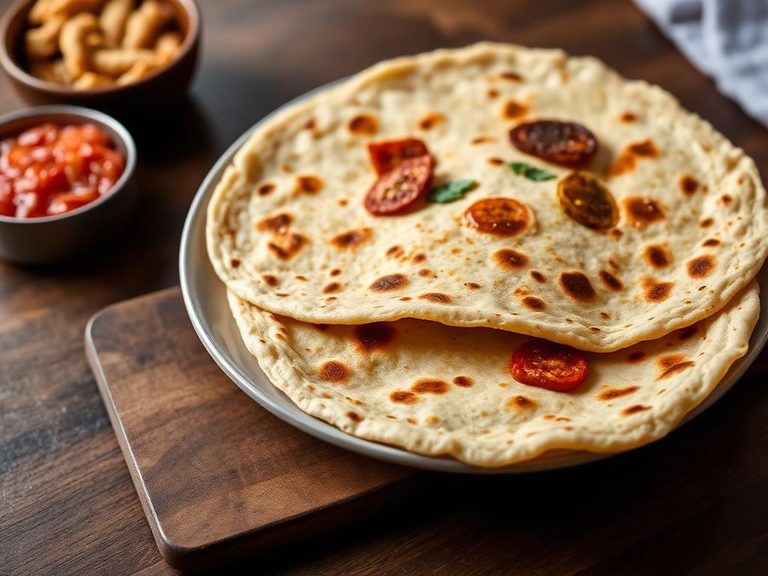
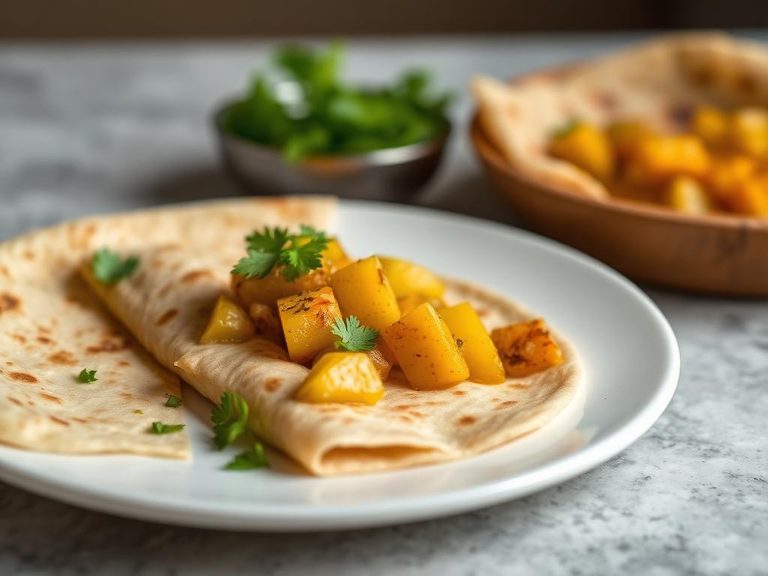
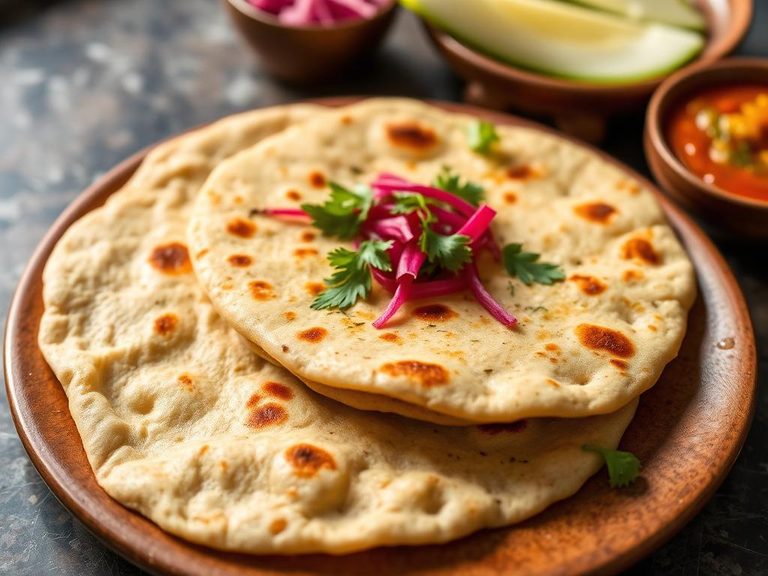
Paratha is a layered, flaky Indian flatbread originating from the Indian subcontinent, typically made from whole wheat flour, water, salt, and ghee or oil. It is often stuffed with savory fillings like spiced potatoes, paneer, or cauliflower, and cooked on a griddle with a generous amount of fat to achieve its signature crispness and soft layers.
🍽️ Nutrition at a glance
Paratha is high in carbohydrates from the whole wheat flour, with a moderate amount of fat from the ghee or oil used in cooking and sometimes in the dough, and a small amount of protein from the wheat. A single, medium-sized paratha can provide roughly 250-350 calories, along with dietary fiber, iron, and B vitamins from the whole grain.
Nutrition breakdown
| Calories | 300 kcal |
| Protein | 6 g |
| Carbs | 40 g |
| Fat | 12 g |
| Fiber | 3 g |
| Sugar | 2 g |
| Sodium | 400 mg |
| Iron | 2.5 mg |
| Calcium | 60 mg |
| Potassium | 150 mg |
| Magnesium | 25 mg |
| Phosphorus | 80 mg |
| Thiamin (B1) | 0.2 mg |
| Niacin (B3) | 2.5 mg |
| Folate | 40 mcg |
Per 1 piece (approx. 80-100 g) · estimated, varies by recipe
💡 What's interesting
The art of making paratha is a celebrated skill, with the technique of folding and rolling to create multiple flaky layers being passed down through generations. Nutritionally, using whole wheat flour makes it a more fiber-rich and sustained energy source compared to many refined breads.