Breakfast Paratha

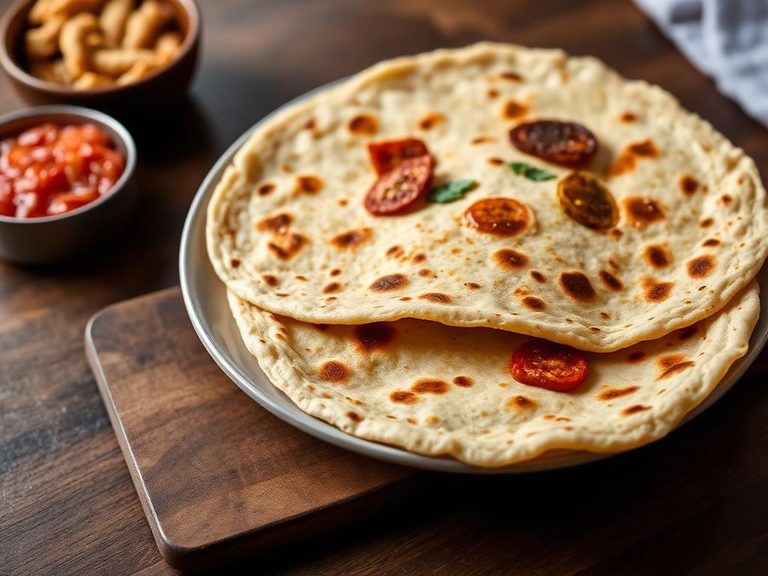
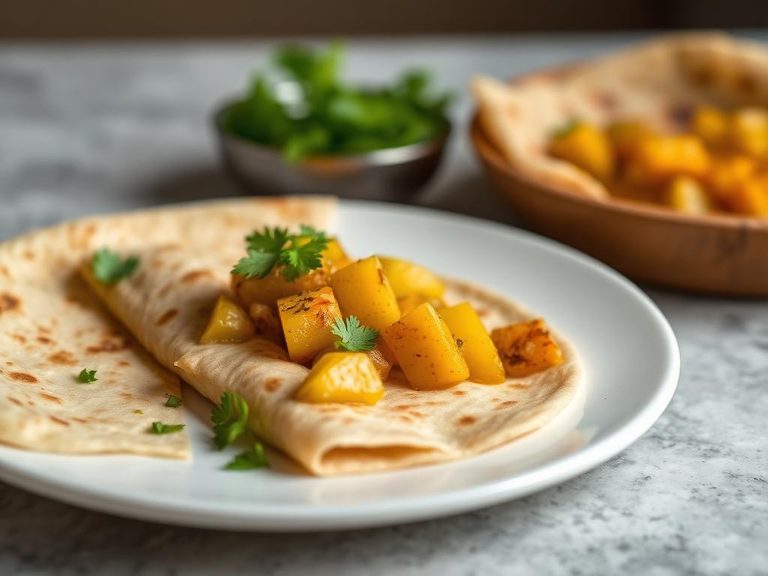
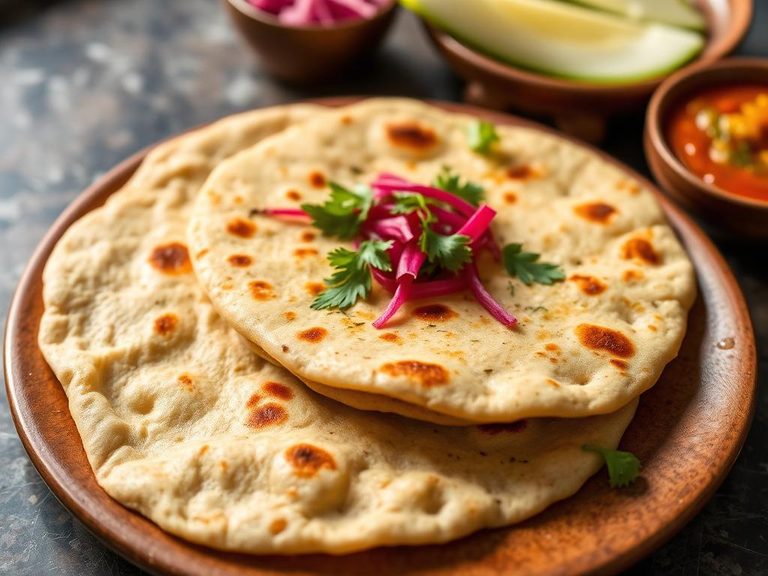
Breakfast Paratha is a popular North Indian flatbread, typically made by stuffing whole wheat dough with a savory filling before pan-frying. Common stuffings include spiced potatoes (Aloo Paratha), paneer (Indian cottage cheese), cauliflower, or onions, and it is often served with yogurt, pickles, or butter.
🍽️ Nutrition at a glance
It is a carbohydrate-rich dish from the whole wheat flour, with moderate protein from the wheat and filling, and fat from the ghee or oil used for cooking. A single paratha can range from 250 to 400 calories, depending on size, filling, and amount of fat used.
Nutrition breakdown
| Calories | 290 kcal |
| Protein | 7.5 g |
| Carbs | 42 g |
| Fat | 10 g |
| Fiber | 3.5 g |
| Sugar | 2 g |
| Sodium | 450 mg |
| Iron | 2.5 mg |
| Calcium | 60 mg |
| Potassium | 150 mg |
| Magnesium | 30 mg |
| Phosphorus | 90 mg |
| Vitamin B1 (Thiamine) | 0.2 mg |
| Vitamin B3 (Niacin) | 2.5 mg |
| Folate | 40 µg |
Per 1 medium paratha (100 g) · estimated, varies by recipe
💡 What's interesting
Culturally, paratha is a staple breakfast or meal item across the Indian subcontinent, with regional variations in stuffing and preparation, and it's prized for being a complete, portable meal. Nutritionally, the whole wheat provides fiber, and the filling can add vitamins and minerals, making it a more balanced option than plain bread.