

Fruit smoothie juice drink, with dairy
Common food

Photo: Wikipedia
A chilled, blended beverage that combines the vibrant sweetness of fruit with the creamy, smooth texture of dairy. It offers a refreshing, drinkable treat with a naturally sweet flavor profile and a light, satisfying mouthfeel. Nutritionally, it's a low-calorie option that provides a quick source of carbohydrates for energy.
Calorie split: 5% protein · 93% carbs · 2% fat
↓ Full nutrition💚 Why it's loved
People love it for its perfect balance of fruity freshness and creamy indulgence, making it a feel-good treat. It's incredibly versatile, easily customized with different fruit and dairy combinations to suit any taste.
⚠️ Watch-outs & how to enjoy it better
The high natural sugar content can cause a rapid blood-sugar spike, which is a consideration for those monitoring their glucose levels. To mitigate this, pair it with a source of protein or healthy fat (like a handful of nuts or seeds) to slow sugar absorption and increase satiety.
Key benefits
- Provides a quick source of natural energy from fruit sugars.
- Contains calcium from the dairy component for bone health.
- Offers some dietary fiber from the blended fruit pulp.
- Hydrating and refreshing, especially in warm weather.
- Can be a convenient way to consume fruit.
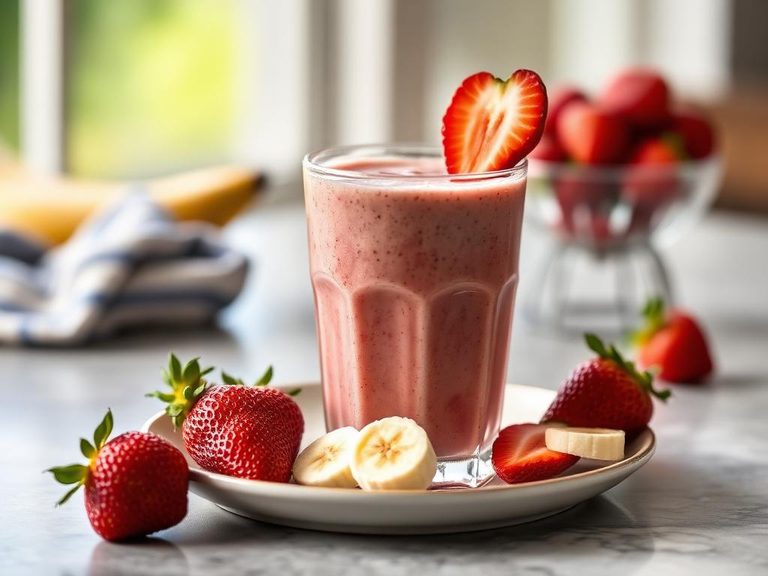
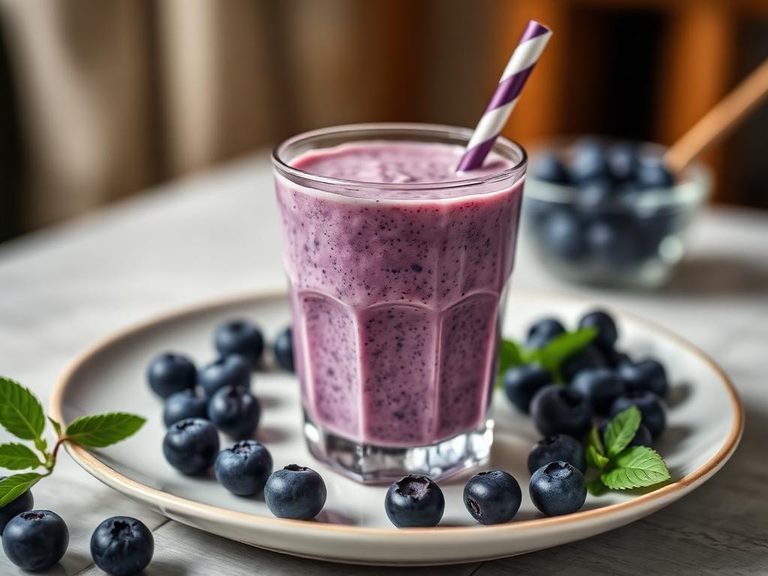
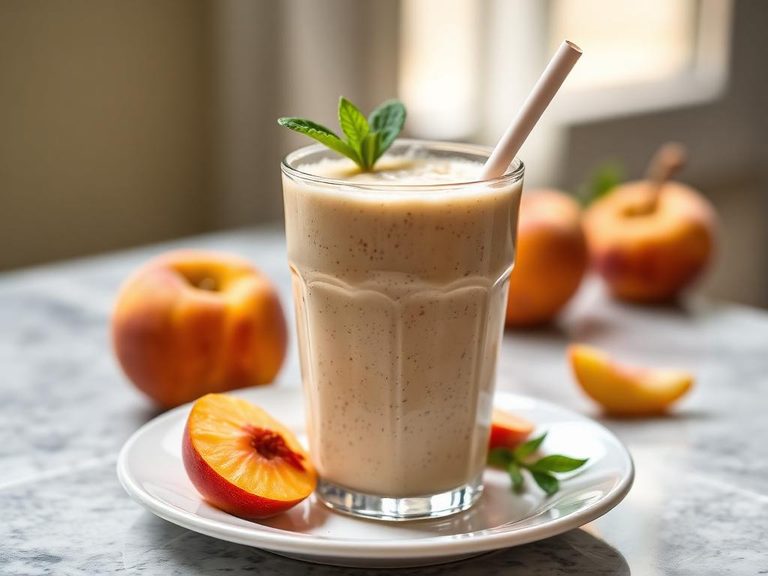
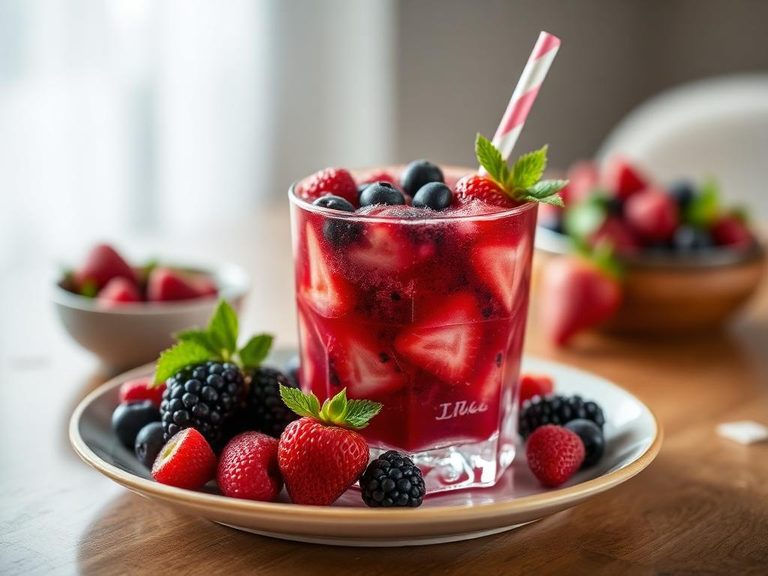
🍽️ Popular dishes


🌍 Where it's eaten
💡 Did you know?
The smoothie as we know it became popular in the United States during the health food movement of the 1960s and 70s, often featuring ingredients from natural food stores.
Full nutrition (USDA data · scales with serving)
| Water | 83.6 g |
| Energy | 65.0 kcal |
| Protein | 0.86 g |
| Total lipid (fat) | 0.14 g |
| Carbohydrate, by difference | 15.1 g |
| Fiber, total dietary | 0.90 g |
| Total Sugars | 12.7 g |
| Calcium, Ca | 20.0 mg |
| Iron, Fe | 0.14 mg |
| Magnesium, Mg | 11.0 mg |
| Phosphorus, P | 11.0 mg |
| Potassium, K | 131 mg |
| Sodium, Na | 14.0 mg |
| Zinc, Zn | 0.09 mg |
| Copper, Cu | 0.04 mg |
| Selenium, Se | 0.30 ug |
| Vitamin C, total ascorbic acid | 5.2 mg |
| Thiamin | 0.02 mg |
| Riboflavin | 0.03 mg |
| Niacin | 0.22 mg |
| Vitamin B-6 | 0.11 mg |
| Folate, total | 8.0 ug |
| Folic acid | 0.00 ug |
| Folate, food | 8.0 ug |
| Folate, DFE | 8.0 ug |
| Choline, total | 4.0 mg |
| Vitamin B-12 | 0.00 ug |
| Vitamin B-12, added | 0.00 ug |
| Vitamin A, RAE | 2.0 ug |
| Retinol | 1.0 ug |
| Carotene, beta | 7.0 ug |
| Carotene, alpha | 5.0 ug |
| Cryptoxanthin, beta | 0.00 ug |
| Lycopene | 0.00 ug |
| Lutein + zeaxanthin | 17.0 ug |
| Vitamin E (alpha-tocopherol) | 0.03 mg |
| Vitamin E, added | 0.00 mg |
| Vitamin D (D2 + D3) | 0.00 ug |
| Vitamin K (phylloquinone) | 0.30 ug |
| Alcohol, ethyl | 0.00 g |
| Caffeine | 0.00 mg |
| Theobromine | 0.00 mg |
Fat & fatty acid profile (per 100g)
| Fatty acids, total saturated | 0.00 g |
| SFA 4:0 | 0.00 g |
| SFA 6:0 | 0.00 g |
| SFA 8:0 | 0.00 g |
| SFA 10:0 | 0.00 g |
| SFA 12:0 | 0.00 g |
| SFA 14:0 | 0.00 g |
| SFA 16:0 | 0.00 g |
| SFA 18:0 | 0.00 g |
| Fatty acids, total monounsaturated | 0.05 g |
| MUFA 16:1 | 0.01 g |
| MUFA 18:1 | 0.04 g |
| MUFA 20:1 | 0.00 g |
| MUFA 22:1 | 0.00 g |
| Fatty acids, total polyunsaturated | 0.05 g |
| PUFA 18:2 | 0.03 g |
| PUFA 18:3 | 0.02 g |
| PUFA 18:4 | 0.00 g |
| PUFA 20:4 | 0.00 g |
| PUFA 20:5 n-3 (EPA) | 0.00 g |
| PUFA 22:5 n-3 (DPA) | 0.00 g |
| PUFA 22:6 n-3 (DHA) | 0.00 g |
| Cholesterol | 1.0 mg |
FAQ
Is this the same as a milkshake?
Not exactly. A smoothie is primarily fruit-based and blended with milk or yogurt, while a milkshake is ice cream-based and typically sweeter and richer.
Can I use frozen fruit?
Yes, using frozen fruit is a great tip! It makes the smoothie thicker and colder without needing to add ice, which can dilute the flavor.
Is it a good breakfast option?
It can be, but to make it more balanced and keep you full longer, consider adding protein powder, nut butter, or oats to boost its protein and fiber content.
Nutrient density (calculated · NRF9.3)
Nutrient Rich Foods index: beneficial nutrients (protein, fiber, vitamins, minerals) minus saturated fat, added sugar & sodium, per 100 kcal.
NRF9.3 index — Fulgoni, Keast & Drewnowski, 2009. Computed from USDA nutrients.
Weight-loss friendliness (composite index)
Energy density 0.65 kcal/g · 5% calories from protein · 0.9 g fiber · 12.7 g sugar per 100 g.
Composite of energy density (Rolls et al., 1999), protein & fiber satiety, minus sugar. A calculated heuristic — ranks satiety-per-calorie, not a clinical measure.
Dietary load (calculated from USDA values)
Potential renal acid load. Positive = acid-forming, negative = alkaline-forming.
Sodium-to-potassium ratio: 0.11 (lower is better — aim for ≤ 1)
Sodium:potassium per WHO potassium guidance. Computed from USDA nutrients.