

Fruit smoothie juice drink, no dairy
Common food

Photo: Wikipedia
A vibrant, dairy-free fruit smoothie is a blended beverage of pureed fruits, often with water, ice, or fruit juice, creating a smooth, refreshing, and naturally sweet drink. Its texture is typically velvety and slightly thick, depending on the fruit and liquid ratio. Nutritionally, it's a low-calorie, low-fat source of quick energy from natural sugars and provides a modest amount of dietary fiber.
Calorie split: 5% protein · 91% carbs · 4% fat
↓ Full nutrition💚 Why it's loved
People love it for its refreshing, naturally sweet taste and the ability to customize it with endless fruit combinations, making it a versatile treat for breakfast, snacks, or post-workout recovery. It's a staple in health-conscious cultures and a convenient way to consume fruit.
⚠️ Watch-outs & how to enjoy it better
The high natural sugar content (over 8g per 100g) can cause rapid blood-sugar spikes, especially for those with insulin sensitivity or diabetes. To counteract this, pair it with a source of protein or healthy fat (like a handful of nuts or seeds) to slow sugar absorption, and practice portion control by enjoying a smaller glass.
Key benefits
- Provides quick, natural energy from fruit sugars
- Low in fat and calories, suitable for light hydration
- Contains dietary fiber from blended whole fruits
- Naturally dairy-free, avoiding common lactose issues
- Offers vitamins and antioxidants from the fruit base
🍽️ Popular dishes
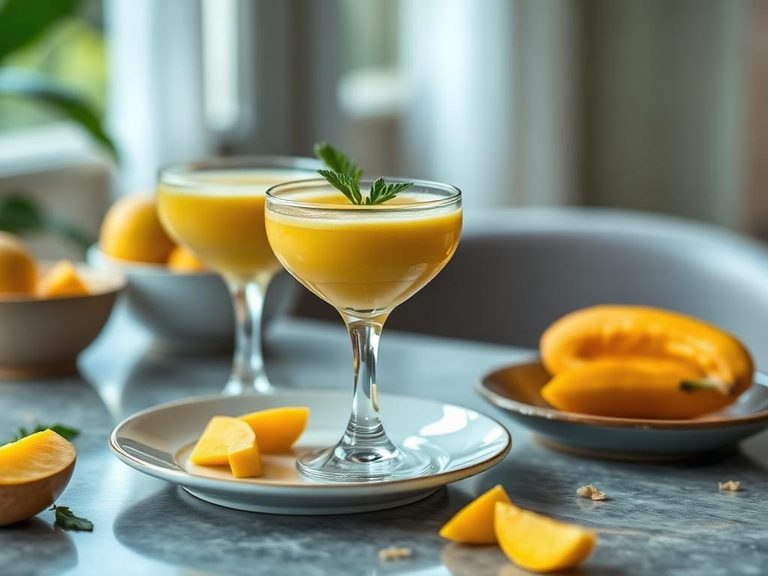
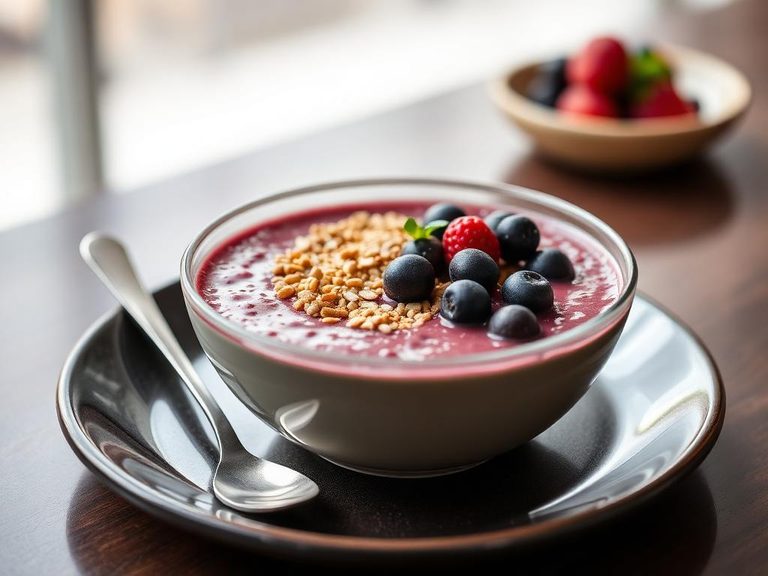

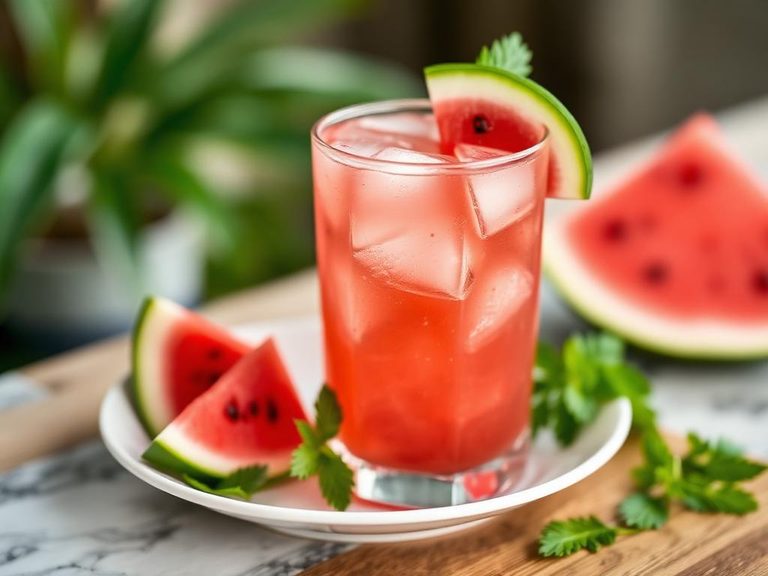
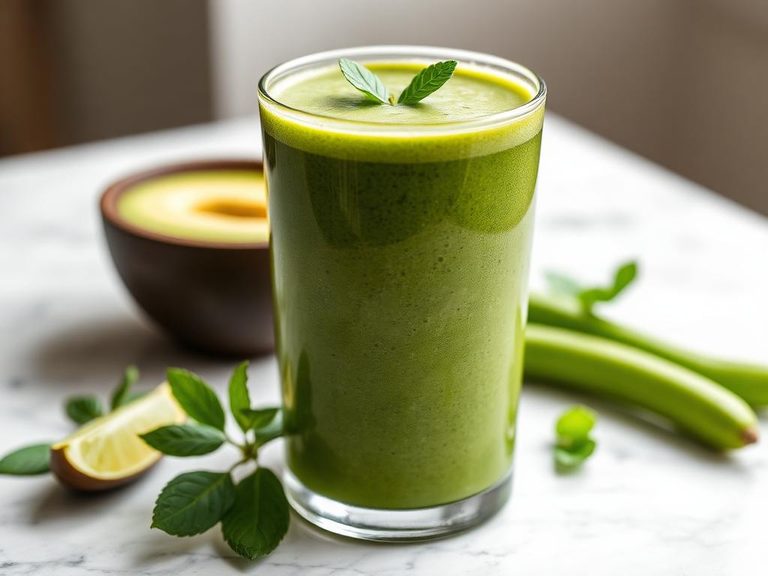

🌍 Where it's eaten
💡 Did you know?
The term 'smoothie' was trademarked in the U.S. in 1940, but the concept of blended fruit drinks dates back centuries in tropical regions where abundant fruit was crushed with mortar and pestle.
Full nutrition (USDA data · scales with serving)
| Water | 86.9 g |
| Energy | 51.0 kcal |
| Protein | 0.60 g |
| Total lipid (fat) | 0.24 g |
| Carbohydrate, by difference | 11.9 g |
| Fiber, total dietary | 1.0 g |
| Total Sugars | 8.3 g |
| Calcium, Ca | 30.0 mg |
| Iron, Fe | 0.22 mg |
| Magnesium, Mg | 13.0 mg |
| Phosphorus, P | 16.0 mg |
| Potassium, K | 184 mg |
| Sodium, Na | 2.0 mg |
| Zinc, Zn | 0.08 mg |
| Copper, Cu | 0.05 mg |
| Selenium, Se | 0.20 ug |
| Vitamin C, total ascorbic acid | 25.7 mg |
| Thiamin | 0.05 mg |
| Riboflavin | 0.03 mg |
| Niacin | 0.27 mg |
| Vitamin B-6 | 0.07 mg |
| Folate, total | 20.0 ug |
| Folic acid | 0.00 ug |
| Folate, food | 20.0 ug |
| Folate, DFE | 20.0 ug |
| Choline, total | 6.2 mg |
| Vitamin B-12 | 0.00 ug |
| Vitamin B-12, added | 0.00 ug |
| Vitamin A, RAE | 2.0 ug |
| Retinol | 0.00 ug |
| Carotene, beta | 12.0 ug |
| Carotene, alpha | 5.0 ug |
| Cryptoxanthin, beta | 12.0 ug |
| Lycopene | 0.00 ug |
| Lutein + zeaxanthin | 23.0 ug |
| Vitamin E (alpha-tocopherol) | 0.18 mg |
| Vitamin E, added | 0.00 mg |
| Vitamin D (D2 + D3) | 0.20 ug |
| Vitamin K (phylloquinone) | 0.60 ug |
| Alcohol, ethyl | 0.00 g |
| Caffeine | 0.00 mg |
| Theobromine | 0.00 mg |
Fat & fatty acid profile (per 100g)
| Fatty acids, total saturated | 0.03 g |
| SFA 4:0 | 0.00 g |
| SFA 6:0 | 0.00 g |
| SFA 8:0 | 0.00 g |
| SFA 10:0 | 0.00 g |
| SFA 12:0 | 0.00 g |
| SFA 14:0 | 0.00 g |
| SFA 16:0 | 0.03 g |
| SFA 18:0 | 0.00 g |
| Fatty acids, total monounsaturated | 0.02 g |
| MUFA 16:1 | 0.00 g |
| MUFA 18:1 | 0.02 g |
| MUFA 20:1 | 0.00 g |
| MUFA 22:1 | 0.00 g |
| Fatty acids, total polyunsaturated | 0.04 g |
| PUFA 18:2 | 0.03 g |
| PUFA 18:3 | 0.01 g |
| PUFA 18:4 | 0.00 g |
| PUFA 20:4 | 0.00 g |
| PUFA 20:5 n-3 (EPA) | 0.00 g |
| PUFA 22:5 n-3 (DPA) | 0.00 g |
| PUFA 22:6 n-3 (DHA) | 0.00 g |
| Cholesterol | 0.00 mg |
FAQ
Is a fruit smoothie a good source of protein?
No, as per the nutritional data (0.6g protein per 100g), it is very low in protein. It is primarily a source of carbohydrates and hydration.
Can I use frozen fruit instead of ice?
Yes, using frozen fruit is an excellent technique. It chills and thickens the smoothie without diluting the flavor, creating a richer texture.
How can I reduce the sugar content?
Choose lower-sugar fruits like berries, add a handful of leafy greens (like spinach), and avoid adding extra fruit juice or sweeteners. Using water or unsweetened plant milk as the liquid base also helps.
Nutrient density (calculated · NRF9.3)
Nutrient Rich Foods index: beneficial nutrients (protein, fiber, vitamins, minerals) minus saturated fat, added sugar & sodium, per 100 kcal.
NRF9.3 index — Fulgoni, Keast & Drewnowski, 2009. Computed from USDA nutrients.
Weight-loss friendliness (composite index)
Energy density 0.51 kcal/g · 5% calories from protein · 1.0 g fiber · 8.3 g sugar per 100 g.
Composite of energy density (Rolls et al., 1999), protein & fiber satiety, minus sugar. A calculated heuristic — ranks satiety-per-calorie, not a clinical measure.
Dietary load (calculated from USDA values)
Potential renal acid load. Positive = acid-forming, negative = alkaline-forming.
Sodium-to-potassium ratio: 0.01 (lower is better — aim for ≤ 1)
Sodium:potassium per WHO potassium guidance. Computed from USDA nutrients.