

Fruit flavored drink, with high vitamin C, powdered, reconstituted
Common food

Photo: Wikipedia
This is a vibrant, thirst-quenching drink made from a flavored powder mixed with water, delivering a sweet, fruity punch with a smooth, non-carbonated texture. It's a low-calorie way to enjoy a burst of flavor, fortified with a significant dose of Vitamin C, often providing over 100% of the daily value per serving.
Calorie split: 0% protein · 100% carbs · 0% fat
↓ Full nutrition💚 Why it's loved
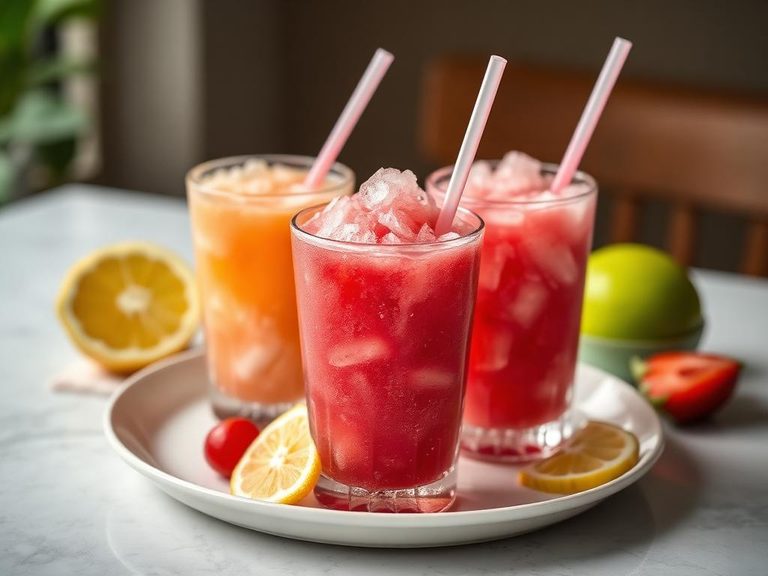
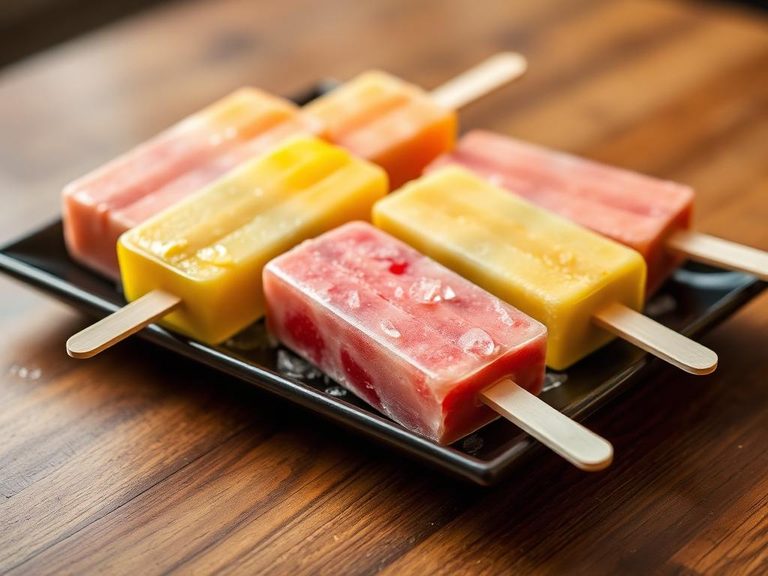
People love it for its intensely sweet, nostalgic fruit flavors—like orange, lemon-lime, or tropical punch—that are instantly refreshing and fun. It's a versatile base for slushies, popsicles, or cocktail mixers, and holds cultural significance as a staple at children's parties and a common rehydration aid in many households.
⚠️ Watch-outs & how to enjoy it better
The high sugar content (9.75g per 100g) can cause rapid blood sugar spikes, making it a poor choice for those managing diabetes or insulin resistance. To mitigate this, consume it in small portions and pair it with a source of protein or fat (like nuts or yogurt) to slow sugar absorption. Also, be mindful of total daily sugar intake.
Key benefits
- Excellent source of Vitamin C, supporting immune function.
- Very low in calories (41 kcal per 100g).
- Fat-free and cholesterol-free.
- Provides quick energy from simple carbohydrates.
- Convenient, shelf-stable, and easy to prepare.
🍽️ Popular dishes



🌍 Where it's eaten
💡 Did you know?
Many powdered fruit drinks were originally developed as practical, shelf-stable sources of Vitamin C for military rations and emergency supplies before becoming popular consumer beverages.
Full nutrition (USDA data · scales with serving)
| Water | 89.4 g |
| Energy | 41.0 kcal |
| Protein | 0.00 g |
| Total lipid (fat) | 0.00 g |
| Carbohydrate, by difference | 10.4 g |
| Fiber, total dietary | 0.00 g |
| Total Sugars | 9.8 g |
| Calcium, Ca | 43.0 mg |
| Iron, Fe | 0.00 mg |
| Magnesium, Mg | 1.0 mg |
| Phosphorus, P | 16.0 mg |
| Potassium, K | 20.0 mg |
| Sodium, Na | 5.0 mg |
| Zinc, Zn | 0.01 mg |
| Copper, Cu | 0.01 mg |
| Selenium, Se | 0.10 ug |
| Vitamin C, total ascorbic acid | 24.4 mg |
| Thiamin | 0.00 mg |
| Riboflavin | 0.07 mg |
| Niacin | 0.84 mg |
| Vitamin B-6 | 0.09 mg |
| Folate, total | 0.00 ug |
| Folic acid | 0.00 ug |
| Folate, food | 0.00 ug |
| Folate, DFE | 0.00 ug |
| Choline, total | 0.00 mg |
| Vitamin B-12 | 0.00 ug |
| Vitamin B-12, added | 0.00 ug |
| Vitamin A, RAE | 63.0 ug |
| Retinol | 63.0 ug |
| Carotene, beta | 0.00 ug |
| Carotene, alpha | 0.00 ug |
| Cryptoxanthin, beta | 0.00 ug |
| Lycopene | 0.00 ug |
| Lutein + zeaxanthin | 0.00 ug |
| Vitamin E (alpha-tocopherol) | 0.00 mg |
| Vitamin E, added | 0.00 mg |
| Vitamin D (D2 + D3) | 0.00 ug |
| Vitamin K (phylloquinone) | 0.00 ug |
| Alcohol, ethyl | 0.00 g |
| Caffeine | 0.00 mg |
| Theobromine | 0.00 mg |
Fat & fatty acid profile (per 100g)
| Fatty acids, total saturated | 0.00 g |
| SFA 4:0 | 0.00 g |
| SFA 6:0 | 0.00 g |
| SFA 8:0 | 0.00 g |
| SFA 10:0 | 0.00 g |
| SFA 12:0 | 0.00 g |
| SFA 14:0 | 0.00 g |
| SFA 16:0 | 0.00 g |
| SFA 18:0 | 0.00 g |
| Fatty acids, total monounsaturated | 0.00 g |
| MUFA 16:1 | 0.00 g |
| MUFA 18:1 | 0.00 g |
| MUFA 20:1 | 0.00 g |
| MUFA 22:1 | 0.00 g |
| Fatty acids, total polyunsaturated | 0.00 g |
| PUFA 18:2 | 0.00 g |
| PUFA 18:3 | 0.00 g |
| PUFA 18:4 | 0.00 g |
| PUFA 20:4 | 0.00 g |
| PUFA 20:5 n-3 (EPA) | 0.00 g |
| PUFA 22:5 n-3 (DPA) | 0.00 g |
| PUFA 22:6 n-3 (DHA) | 0.00 g |
| Cholesterol | 0.00 mg |
FAQ
Is this the same as fruit juice?
No. Fruit juice is pressed from fruit and contains natural fruit sugars and some nutrients. This is a flavored sugar-water solution, often with added vitamins and artificial or natural flavors.
Why is it called 'reconstituted'?
Reconstituted means the powder has been mixed back with water to return it to a drinkable liquid form, mimicking the consistency of a ready-to-drink beverage.
Can I use it in baking?
Yes, it can be used to add fruity flavor and color to cakes, frostings, or glazes. However, it will add sugar and may affect the liquid balance in recipes.
Nutrient density (calculated · NRF9.3)
Nutrient Rich Foods index: beneficial nutrients (protein, fiber, vitamins, minerals) minus saturated fat, added sugar & sodium, per 100 kcal.
NRF9.3 index — Fulgoni, Keast & Drewnowski, 2009. Computed from USDA nutrients.
Weight-loss friendliness (composite index)
Energy density 0.41 kcal/g · 0% calories from protein · 0.0 g fiber · 9.8 g sugar per 100 g.
Composite of energy density (Rolls et al., 1999), protein & fiber satiety, minus sugar. A calculated heuristic — ranks satiety-per-calorie, not a clinical measure.
Dietary load (calculated from USDA values)
Potential renal acid load. Positive = acid-forming, negative = alkaline-forming.
Sodium-to-potassium ratio: 0.25 (lower is better — aim for ≤ 1)
Sodium:potassium per WHO potassium guidance. Computed from USDA nutrients.