

Fruit flavored drink, with high vitamin C, powdered, not reconstituted
Common food
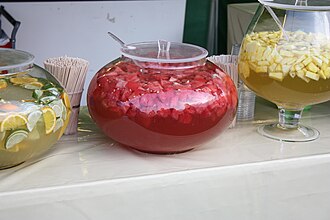
Photo: Wikipedia
This is a vibrant, dehydrated powder designed to transform water into a sweet, fruit-forward beverage, typically bursting with citrus or tropical notes. Its texture is fine and crystalline, dissolving quickly into a brightly colored, translucent liquid. Nutritionally, it is a concentrated source of carbohydrates, primarily from sugar, with a significant boost of Vitamin C, but contains no protein or fat.
Calorie split: 0% protein · 100% carbs · 0% fat
↓ Full nutrition💚 Why it's loved
People love it for its intense, nostalgic fruit flavors and the sheer convenience of making a refreshing drink from a small packet. It's a popular choice for quick energy boosts and as a flavorful alternative to plain water, especially for children and during outdoor activities.
⚠️ Watch-outs & how to enjoy it better
The extremely high sugar content (over 92g per 100g) can cause rapid blood-sugar spikes and contributes to empty calories. To mitigate this, consider mixing it with a larger volume of water to dilute the sugar, or pairing the drink with a source of protein or healthy fat (like nuts or yogurt) to slow sugar absorption. Those monitoring sugar intake should use it sparingly.
Key benefits
- Provides a significant dose of Vitamin C per serving.
- Offers quick energy from simple carbohydrates.
- Highly portable and shelf-stable for long periods.
- Convenient for rapid hydration and flavor enhancement.
- Low in fat and contains no cholesterol.
🍽️ Popular dishes


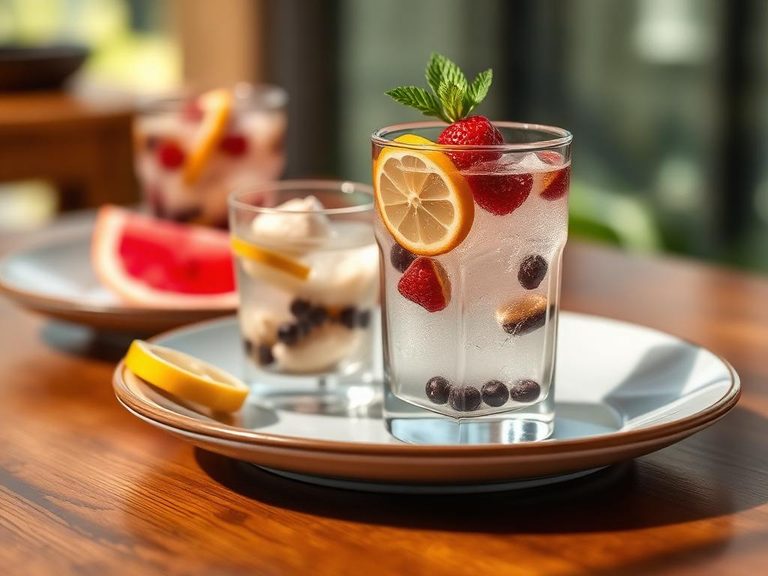


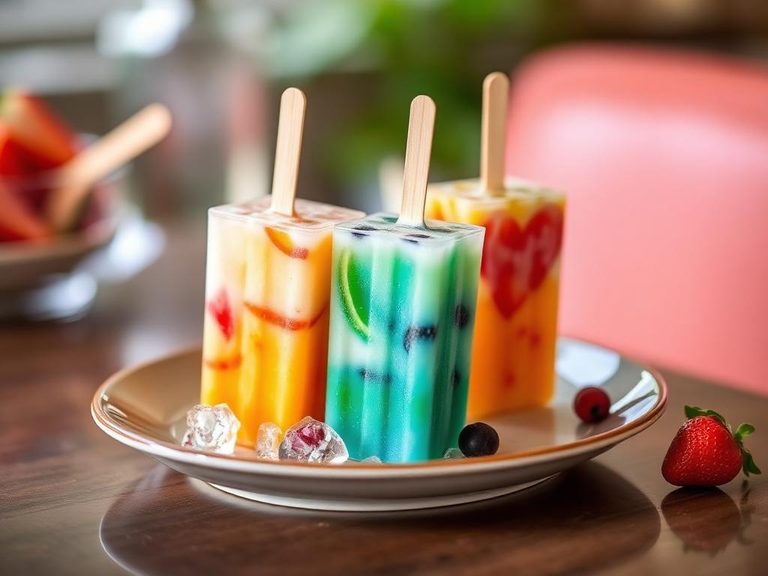
🌍 Where it's eaten
💡 Did you know?
The vivid colors of many powdered fruit drinks often come from synthetic dyes like Red 40, Yellow 5, or Blue 1, which are derived from petroleum, not fruit.
Full nutrition (USDA data · scales with serving)
| Water | 0.14 g |
| Energy | 386 kcal |
| Protein | 0.00 g |
| Total lipid (fat) | 0.00 g |
| Carbohydrate, by difference | 98.9 g |
| Fiber, total dietary | 0.40 g |
| Total Sugars | 92.3 g |
| Calcium, Ca | 385 mg |
| Iron, Fe | 0.02 mg |
| Magnesium, Mg | 0.00 mg |
| Phosphorus, P | 151 mg |
| Potassium, K | 190 mg |
| Sodium, Na | 17.0 mg |
| Zinc, Zn | 0.01 mg |
| Copper, Cu | 0.01 mg |
| Selenium, Se | 0.50 ug |
| Vitamin C, total ascorbic acid | 231 mg |
| Thiamin | 0.00 mg |
| Riboflavin | 0.68 mg |
| Niacin | 8.0 mg |
| Vitamin B-6 | 0.80 mg |
| Folate, total | 0.00 ug |
| Folic acid | 0.00 ug |
| Folate, food | 0.00 ug |
| Folate, DFE | 0.00 ug |
| Choline, total | 0.10 mg |
| Vitamin B-12 | 0.00 ug |
| Vitamin B-12, added | 0.00 ug |
| Vitamin A, RAE | 599 ug |
| Retinol | 599 ug |
| Carotene, beta | 0.00 ug |
| Carotene, alpha | 0.00 ug |
| Cryptoxanthin, beta | 1.0 ug |
| Lycopene | 0.00 ug |
| Lutein + zeaxanthin | 1.0 ug |
| Vitamin E (alpha-tocopherol) | 0.00 mg |
| Vitamin E, added | 0.00 mg |
| Vitamin D (D2 + D3) | 0.00 ug |
| Vitamin K (phylloquinone) | 0.00 ug |
| Alcohol, ethyl | 0.00 g |
| Caffeine | 0.00 mg |
| Theobromine | 0.00 mg |
Fat & fatty acid profile (per 100g)
| Fatty acids, total saturated | 0.00 g |
| SFA 4:0 | 0.00 g |
| SFA 6:0 | 0.00 g |
| SFA 8:0 | 0.00 g |
| SFA 10:0 | 0.00 g |
| SFA 12:0 | 0.00 g |
| SFA 14:0 | 0.00 g |
| SFA 16:0 | 0.00 g |
| SFA 18:0 | 0.00 g |
| Fatty acids, total monounsaturated | 0.00 g |
| MUFA 16:1 | 0.00 g |
| MUFA 18:1 | 0.00 g |
| MUFA 20:1 | 0.00 g |
| MUFA 22:1 | 0.00 g |
| Fatty acids, total polyunsaturated | 0.00 g |
| PUFA 18:2 | 0.00 g |
| PUFA 18:3 | 0.00 g |
| PUFA 18:4 | 0.00 g |
| PUFA 20:4 | 0.00 g |
| PUFA 20:5 n-3 (EPA) | 0.00 g |
| PUFA 22:5 n-3 (DPA) | 0.00 g |
| PUFA 22:6 n-3 (DHA) | 0.00 g |
| Cholesterol | 0.00 mg |
FAQ
Does this powdered drink contain real fruit juice?
Typically, no. It is usually a blend of sugar, citric acid, artificial flavors, and colors, with added vitamins like ascorbic acid (Vitamin C). Real fruit juice is rarely a primary ingredient.
Is it suitable for a diabetic diet?
Due to the very high sugar content (over 92g per 100g), it is generally not recommended for diabetics without strict portion control and medical advice, as it can cause significant blood glucose fluctuations.
How does the nutrition compare to whole fruit?
Whole fruit provides fiber, water, and a broader range of vitamins and minerals with natural sugars. This powdered drink is a concentrated source of sugar and added Vitamin C, lacking the beneficial fiber and phytonutrients of whole fruit.
Nutrient density (calculated · NRF9.3)
Nutrient Rich Foods index: beneficial nutrients (protein, fiber, vitamins, minerals) minus saturated fat, added sugar & sodium, per 100 kcal.
NRF9.3 index — Fulgoni, Keast & Drewnowski, 2009. Computed from USDA nutrients.
Weight-loss friendliness (composite index)
Energy density 3.86 kcal/g · 0% calories from protein · 0.4 g fiber · 92.3 g sugar per 100 g.
Composite of energy density (Rolls et al., 1999), protein & fiber satiety, minus sugar. A calculated heuristic — ranks satiety-per-calorie, not a clinical measure.
Dietary load (calculated from USDA values)
Potential renal acid load. Positive = acid-forming, negative = alkaline-forming.
Sodium-to-potassium ratio: 0.09 (lower is better — aim for ≤ 1)
Sodium:potassium per WHO potassium guidance. Computed from USDA nutrients.