

Fruit flavored drink, powdered, not reconstituted, diet
Common food
This is a concentrated, dehydrated powder designed to be mixed with water, delivering a sweet, fruity punch with virtually no fat or sugar. Its texture is a fine, free-flowing powder that dissolves instantly, creating a vibrant, often brightly colored beverage. Nutritionally, it's a high-carbohydrate, low-calorie option, primarily providing quick energy through its carb content.
Calorie split: 1% protein · 99% carbs · 0% fat
↓ Full nutrition💚 Why it's loved
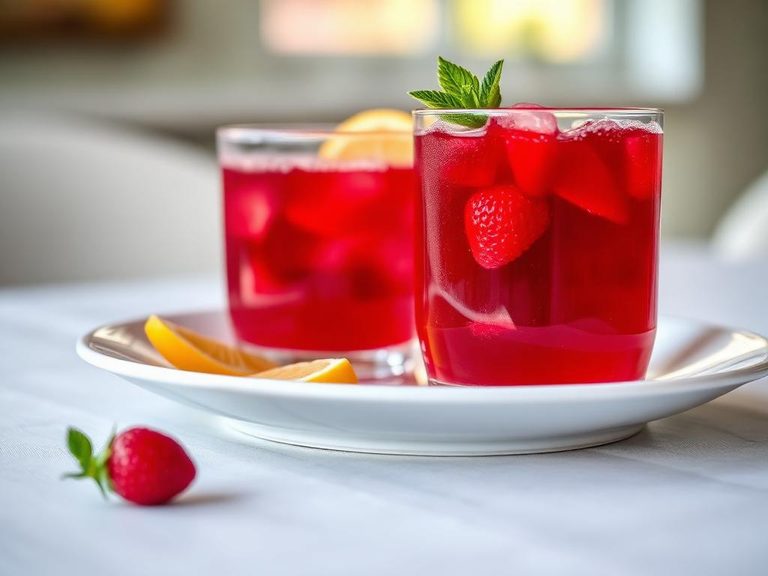
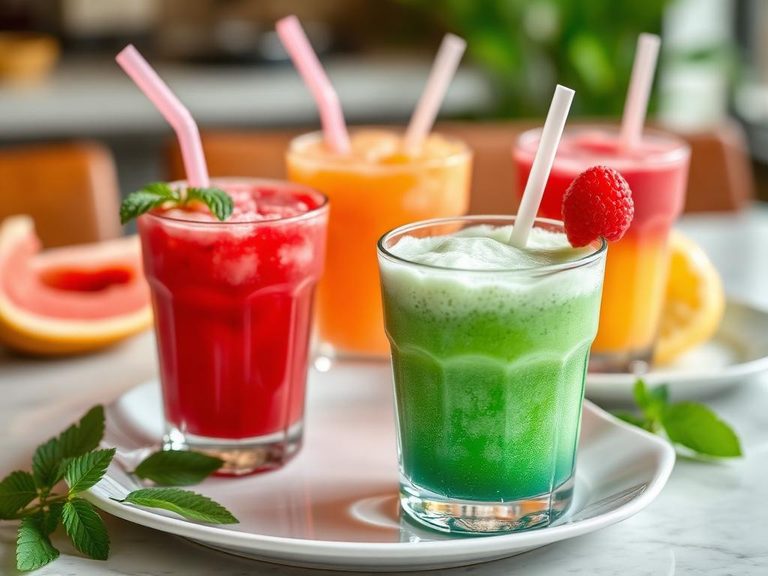
People love it for its intense, nostalgic fruit flavors and the convenience of having a sweet, refreshing drink ready in seconds. Its versatility makes it a popular base for cocktails, mocktails, and even frozen treats, fitting into various social and cultural contexts.
⚠️ Watch-outs & how to enjoy it better
The high carbohydrate content can lead to rapid blood-sugar spikes, especially for those with insulin sensitivity or diabetes. It may contain artificial sweeteners or additives that some individuals prefer to avoid. To counteract this, pair the drink with a source of protein or healthy fat (like nuts or cheese) to slow sugar absorption, and practice portion control by using a smaller amount of powder or diluting it further.
Key benefits
- Extremely low in fat and sugar, making it a low-calorie beverage option.
- Provides a quick source of carbohydrates for immediate energy.
- Highly portable and shelf-stable, requiring no refrigeration.
- Easy to prepare by simply adding water, offering instant refreshment.
- Often fortified with vitamins and minerals, adding nutritional value.
🍽️ Popular dishes




🌍 Where it's eaten
💡 Did you know?
The concept of powdered drink mixes dates back to the 19th century, but they became a household staple in the 1950s and 1960s with the rise of brands like Kool-Aid and Tang, often marketed as a fun, affordable treat for children.
Full nutrition (USDA data · scales with serving)
| Water | 1.8 g |
| Energy | 218 kcal |
| Protein | 0.45 g |
| Total lipid (fat) | 0.04 g |
| Carbohydrate, by difference | 87.4 g |
| Fiber, total dietary | 0.10 g |
| Total Sugars | 0.00 g |
| Calcium, Ca | 1047 mg |
| Iron, Fe | 0.08 mg |
| Magnesium, Mg | 3.0 mg |
| Phosphorus, P | 1239 mg |
| Potassium, K | 498 mg |
| Sodium, Na | 404 mg |
| Zinc, Zn | 0.00 mg |
| Copper, Cu | 0.00 mg |
| Selenium, Se | 0.00 ug |
| Vitamin C, total ascorbic acid | 560 mg |
| Thiamin | 0.00 mg |
| Riboflavin | 0.00 mg |
| Niacin | 0.00 mg |
| Vitamin B-6 | 0.00 mg |
| Folate, total | 0.00 ug |
| Folic acid | 0.00 ug |
| Folate, food | 0.00 ug |
| Folate, DFE | 0.00 ug |
| Choline, total | 0.10 mg |
| Vitamin B-12 | 0.00 ug |
| Vitamin B-12, added | 0.00 ug |
| Vitamin A, RAE | 0.00 ug |
| Retinol | 0.00 ug |
| Carotene, beta | 0.00 ug |
| Carotene, alpha | 0.00 ug |
| Cryptoxanthin, beta | 0.00 ug |
| Lycopene | 0.00 ug |
| Lutein + zeaxanthin | 0.00 ug |
| Vitamin E (alpha-tocopherol) | 0.00 mg |
| Vitamin E, added | 0.00 mg |
| Vitamin D (D2 + D3) | 0.00 ug |
| Vitamin K (phylloquinone) | 0.00 ug |
| Alcohol, ethyl | 0.00 g |
| Caffeine | 0.00 mg |
| Theobromine | 0.00 mg |
Fat & fatty acid profile (per 100g)
| Fatty acids, total saturated | 0.00 g |
| SFA 4:0 | 0.00 g |
| SFA 6:0 | 0.00 g |
| SFA 8:0 | 0.00 g |
| SFA 10:0 | 0.00 g |
| SFA 12:0 | 0.00 g |
| SFA 14:0 | 0.00 g |
| SFA 16:0 | 0.00 g |
| SFA 18:0 | 0.00 g |
| Fatty acids, total monounsaturated | 0.00 g |
| MUFA 16:1 | 0.00 g |
| MUFA 18:1 | 0.00 g |
| MUFA 20:1 | 0.00 g |
| MUFA 22:1 | 0.00 g |
| Fatty acids, total polyunsaturated | 0.00 g |
| PUFA 18:2 | 0.00 g |
| PUFA 18:3 | 0.00 g |
| PUFA 18:4 | 0.00 g |
| PUFA 20:4 | 0.00 g |
| PUFA 20:5 n-3 (EPA) | 0.00 g |
| PUFA 22:5 n-3 (DPA) | 0.00 g |
| PUFA 22:6 n-3 (DHA) | 0.00 g |
| Cholesterol | 0.00 mg |
FAQ
Is this drink suitable for a low-carb diet?
No, it is very high in carbohydrates (87.38g per 100g of powder), making it unsuitable for strict low-carb or ketogenic diets.
Does it contain sugar?
The nutritional data shows 0g sugar per 100g, indicating it is likely sweetened with non-nutritive or artificial sweeteners like aspartame or sucralose.
How long does the powder last?
When stored in a cool, dry place in an airtight container, it can remain stable for several years, though flavor may diminish over time.
Can it be used in baking?
Yes, it can be added to cake batters, frostings, or cookie dough to impart a fruity flavor and vibrant color.
Nutrient density (calculated · NRF9.3)
Nutrient Rich Foods index: beneficial nutrients (protein, fiber, vitamins, minerals) minus saturated fat, added sugar & sodium, per 100 kcal.
NRF9.3 index — Fulgoni, Keast & Drewnowski, 2009. Computed from USDA nutrients.
Weight-loss friendliness (composite index)
Energy density 2.18 kcal/g · 1% calories from protein · 0.1 g fiber · 0.0 g sugar per 100 g.
Composite of energy density (Rolls et al., 1999), protein & fiber satiety, minus sugar. A calculated heuristic — ranks satiety-per-calorie, not a clinical measure.
Dietary load (calculated from USDA values)
Potential renal acid load. Positive = acid-forming, negative = alkaline-forming.
Sodium-to-potassium ratio: 0.81 (lower is better — aim for ≤ 1)
Sodium:potassium per WHO potassium guidance. Computed from USDA nutrients.