

Fruit and vegetable smoothie, bottled
Common food
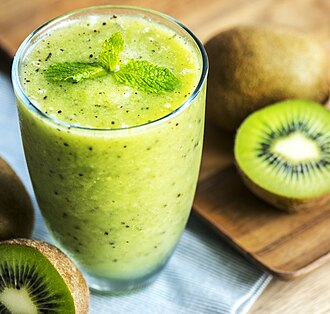
Photo: Wikipedia
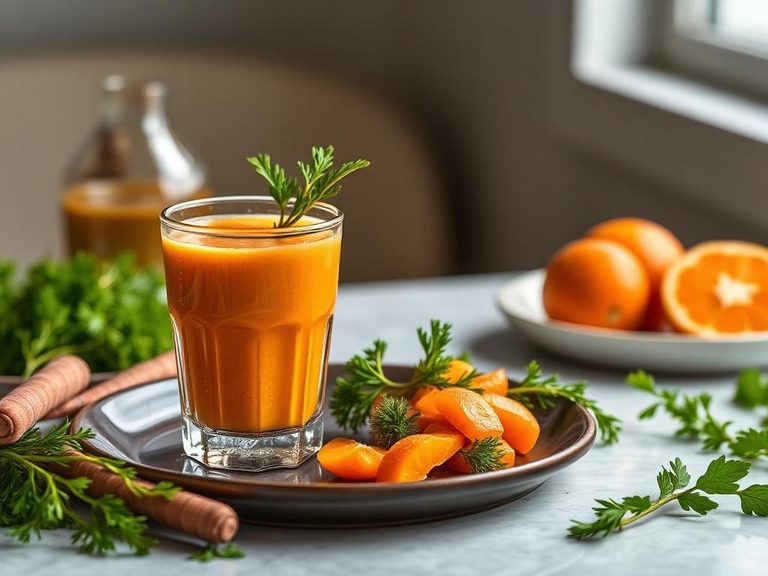
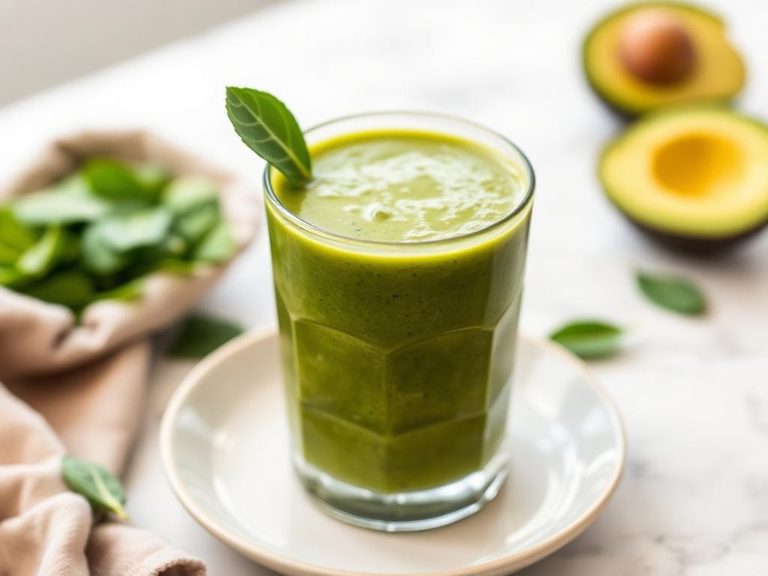
A bottled fruit and vegetable smoothie is a vibrant, ready-to-drink blend of pureed produce, offering a sweet, earthy, and refreshing taste with a smooth, slightly pulpy texture. Its primary nutritional highlight is its low calorie density (53 kcal per 100g) and very low fat content, making it a light, hydrating option. However, its sugar content (11.15g per 100g) is significant, often derived from fruit juices or added sweeteners.
Calorie split: 4% protein · 91% carbs · 4% fat
↓ Full nutrition💚 Why it's loved
People love it for its vibrant, refreshing flavor that combines the sweetness of fruit with the earthy notes of vegetables, making healthy eating feel like a treat. Its convenience and versatility as a quick breakfast, post-workout refresher, or on-the-go snack make it a popular choice in busy lifestyles.
⚠️ Watch-outs & how to enjoy it better
The high sugar content (over 11g per 100g) can cause blood-sugar spikes, especially in those with insulin sensitivity or diabetes. To counteract this, pair it with a source of protein (like nuts or yogurt) or healthy fat (like chia seeds) to slow sugar absorption, and consider smaller portions or diluting it with water or unsweetened almond milk.
Key benefits
- Low in calories and fat, suitable for light snacking or meal supplementation.
- Provides a convenient source of vitamins and minerals from blended produce.
- High water content contributes to hydration.
- Contains dietary fiber, though minimal in this bottled form.
- Offers a quick, portable way to consume fruit and vegetable servings.
🍽️ Popular dishes
🌍 Where it's eaten
💡 Did you know?
The modern smoothie boom in the U.S. is often traced back to the 1960s health food movement, with the first commercial smoothie machine, the 'Waring Blender,' being patented in 1937, originally for making martinis and soups.
Full nutrition (USDA data · scales with serving)
| Water | 86.3 g |
| Energy | 53.0 kcal |
| Protein | 0.60 g |
| Total lipid (fat) | 0.26 g |
| Carbohydrate, by difference | 12.5 g |
| Fiber, total dietary | 0.70 g |
| Total Sugars | 11.2 g |
| Calcium, Ca | 11.0 mg |
| Iron, Fe | 0.42 mg |
| Magnesium, Mg | 10.0 mg |
| Phosphorus, P | 15.0 mg |
| Potassium, K | 165 mg |
| Sodium, Na | 6.0 mg |
| Zinc, Zn | 0.06 mg |
| Copper, Cu | 0.05 mg |
| Selenium, Se | 0.40 ug |
| Vitamin C, total ascorbic acid | 8.2 mg |
| Thiamin | 0.07 mg |
| Riboflavin | 0.09 mg |
| Niacin | 0.29 mg |
| Vitamin B-6 | 0.07 mg |
| Folate, total | 15.0 ug |
| Folic acid | 0.00 ug |
| Folate, food | 15.0 ug |
| Folate, DFE | 15.0 ug |
| Choline, total | 4.3 mg |
| Vitamin B-12 | 0.63 ug |
| Vitamin B-12, added | 0.00 ug |
| Vitamin A, RAE | 21.0 ug |
| Retinol | 0.00 ug |
| Carotene, beta | 247 ug |
| Carotene, alpha | 5.0 ug |
| Cryptoxanthin, beta | 15.0 ug |
| Lycopene | 0.00 ug |
| Lutein + zeaxanthin | 183 ug |
| Vitamin E (alpha-tocopherol) | 0.30 mg |
| Vitamin E, added | 0.00 mg |
| Vitamin D (D2 + D3) | 0.00 ug |
| Vitamin K (phylloquinone) | 21.2 ug |
| Alcohol, ethyl | 0.00 g |
| Caffeine | 0.00 mg |
| Theobromine | 0.00 mg |
Fat & fatty acid profile (per 100g)
| Fatty acids, total saturated | 0.05 g |
| SFA 4:0 | 0.00 g |
| SFA 6:0 | 0.00 g |
| SFA 8:0 | 0.00 g |
| SFA 10:0 | 0.00 g |
| SFA 12:0 | 0.00 g |
| SFA 14:0 | 0.00 g |
| SFA 16:0 | 0.04 g |
| SFA 18:0 | 0.00 g |
| Fatty acids, total monounsaturated | 0.04 g |
| MUFA 16:1 | 0.01 g |
| MUFA 18:1 | 0.03 g |
| MUFA 20:1 | 0.00 g |
| MUFA 22:1 | 0.00 g |
| Fatty acids, total polyunsaturated | 0.07 g |
| PUFA 18:2 | 0.05 g |
| PUFA 18:3 | 0.03 g |
| PUFA 18:4 | 0.00 g |
| PUFA 20:4 | 0.00 g |
| PUFA 20:5 n-3 (EPA) | 0.00 g |
| PUFA 22:5 n-3 (DPA) | 0.00 g |
| PUFA 22:6 n-3 (DHA) | 0.00 g |
| Cholesterol | 0.00 mg |
FAQ
Is a bottled smoothie as healthy as a homemade one?
Not necessarily. Bottled smoothies often contain added sugars, preservatives, and may have reduced fiber due to pasteurization and processing. Homemade versions allow control over ingredients and sugar content.
Can I drink this smoothie if I'm watching my sugar intake?
It's possible but requires caution. With 11.15g of sugar per 100g, a standard 250ml bottle contains about 28g of sugar. Opt for smaller portions, choose unsweetened varieties, or pair it with protein or fat to mitigate blood sugar impact.
Does the low protein content (0.6g per 100g) make it a poor meal replacement?
Yes, for a complete meal. The protein is minimal, so it's better as a snack or supplement. To make it more balanced, add a scoop of protein powder, Greek yogurt, or nuts when preparing or consuming it.
Nutrient density (calculated · NRF9.3)
Nutrient Rich Foods index: beneficial nutrients (protein, fiber, vitamins, minerals) minus saturated fat, added sugar & sodium, per 100 kcal.
NRF9.3 index — Fulgoni, Keast & Drewnowski, 2009. Computed from USDA nutrients.
Weight-loss friendliness (composite index)
Energy density 0.53 kcal/g · 5% calories from protein · 0.7 g fiber · 11.2 g sugar per 100 g.
Composite of energy density (Rolls et al., 1999), protein & fiber satiety, minus sugar. A calculated heuristic — ranks satiety-per-calorie, not a clinical measure.
Dietary load (calculated from USDA values)
Potential renal acid load. Positive = acid-forming, negative = alkaline-forming.
Sodium-to-potassium ratio: 0.04 (lower is better — aim for ≤ 1)
Sodium:potassium per WHO potassium guidance. Computed from USDA nutrients.