

Fruit smoothie, bottled
Common food
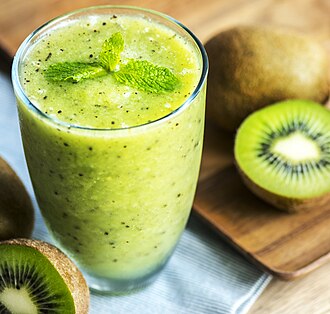
Photo: Wikipedia
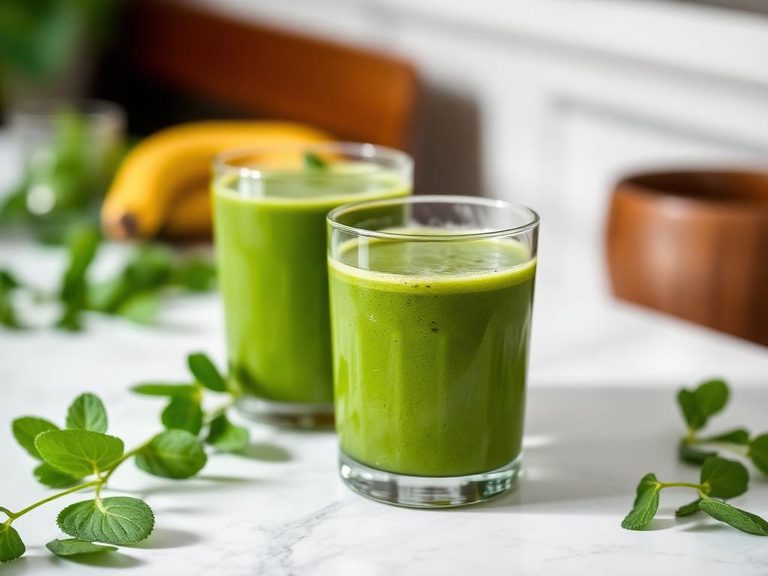
A bottled fruit smoothie is a ready-to-drink, blended beverage typically made from fruit purées or juices, offering a sweet, refreshing taste with a smooth, sometimes slightly pulpy texture. Nutritionally, it's a low-calorie, carbohydrate-dominant drink, providing a quick source of natural sugars for energy with minimal fat or protein.
Calorie split: 4% protein · 91% carbs · 5% fat
↓ Full nutrition💚 Why it's loved
People love bottled smoothies for their instant, sweet, and fruity flavor that serves as a convenient treat or pick-me-up. Their portability and consistent taste make them a popular choice for a quick breakfast, snack, or post-activity refreshment.
⚠️ Watch-outs & how to enjoy it better
The high sugar content (over 10g per 100g) can lead to rapid blood-sugar spikes, especially for those with insulin sensitivity or diabetes. To mitigate this, pair it with a source of protein or healthy fat (like nuts or yogurt) to slow sugar absorption, and practice portion control by choosing smaller bottles or sharing.
Key benefits
- Provides a quick source of natural sugars for energy.
- Low in fat and calories, suitable for light refreshment.
- Contains small amounts of dietary fiber from fruit content.
- Offers a convenient way to consume fruit on the go.
- Can be a hydrating option due to its liquid base.
🍽️ Popular dishes
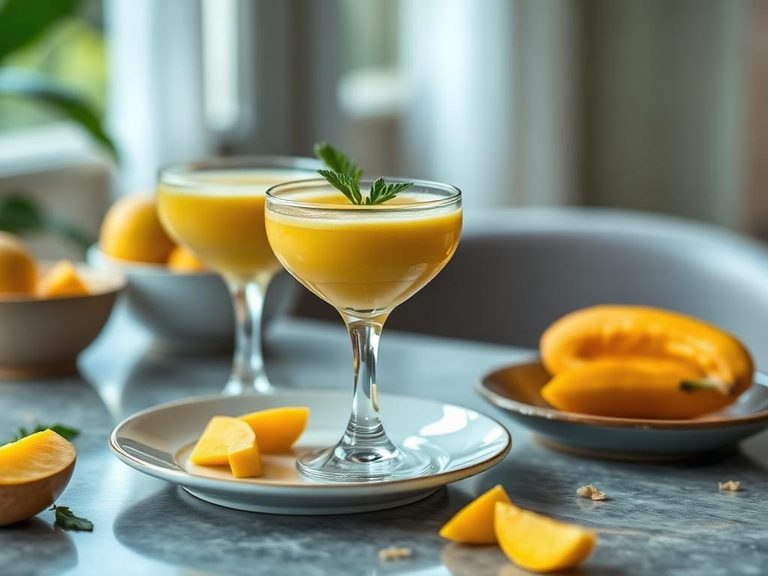
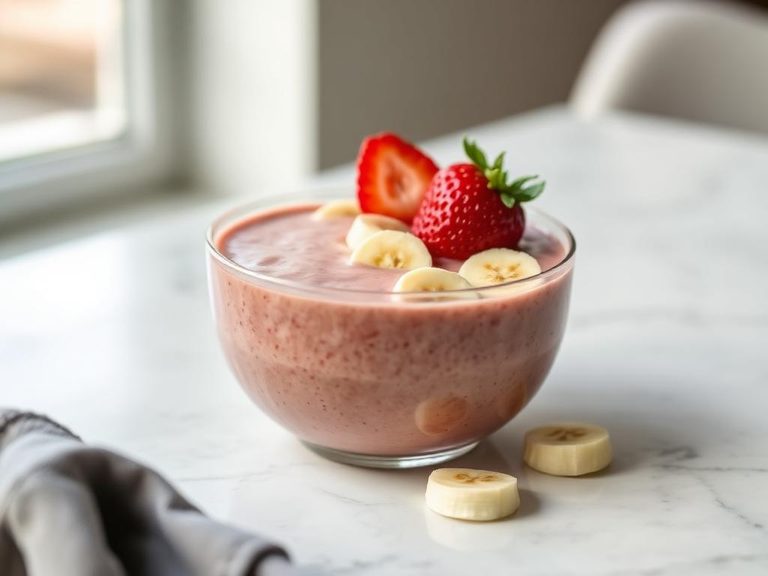
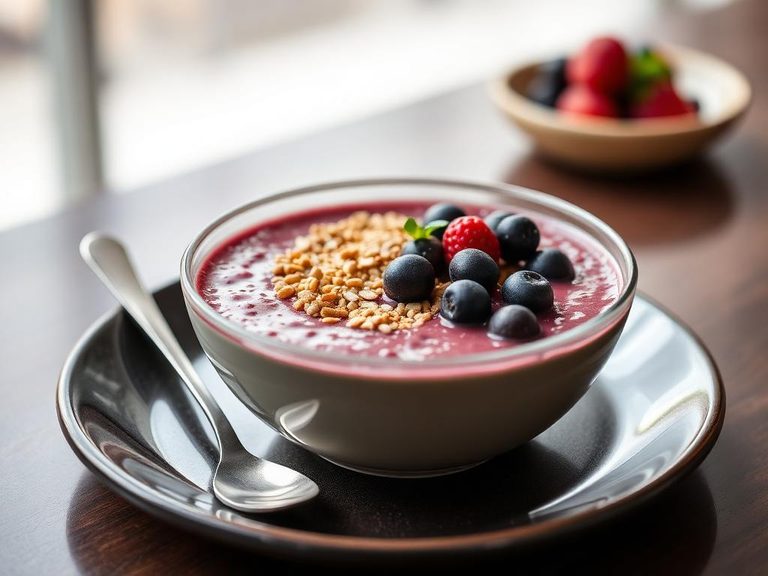


🌍 Where it's eaten
💡 Did you know?
The modern bottled smoothie industry boomed in the 1990s, but the concept of blending fruits with liquid dates back to health food movements in the 1960s and even earlier in tropical cultures.
Full nutrition (USDA data · scales with serving)
| Water | 87.3 g |
| Energy | 50.0 kcal |
| Protein | 0.48 g |
| Total lipid (fat) | 0.27 g |
| Carbohydrate, by difference | 11.7 g |
| Fiber, total dietary | 0.60 g |
| Total Sugars | 10.1 g |
| Calcium, Ca | 10.0 mg |
| Iron, Fe | 0.20 mg |
| Magnesium, Mg | 14.0 mg |
| Phosphorus, P | 18.0 mg |
| Potassium, K | 201 mg |
| Sodium, Na | 2.0 mg |
| Zinc, Zn | 0.08 mg |
| Copper, Cu | 0.04 mg |
| Selenium, Se | 0.40 ug |
| Vitamin C, total ascorbic acid | 8.4 mg |
| Thiamin | 0.04 mg |
| Riboflavin | 0.06 mg |
| Niacin | 0.31 mg |
| Vitamin B-6 | 0.12 mg |
| Folate, total | 35.0 ug |
| Folic acid | 0.00 ug |
| Folate, food | 35.0 ug |
| Folate, DFE | 35.0 ug |
| Choline, total | 3.8 mg |
| Vitamin B-12 | 0.00 ug |
| Vitamin B-12, added | 0.00 ug |
| Vitamin A, RAE | 2.0 ug |
| Retinol | 0.00 ug |
| Carotene, beta | 11.0 ug |
| Carotene, alpha | 7.0 ug |
| Cryptoxanthin, beta | 9.0 ug |
| Lycopene | 0.00 ug |
| Lutein + zeaxanthin | 26.0 ug |
| Vitamin E (alpha-tocopherol) | 0.13 mg |
| Vitamin E, added | 0.00 mg |
| Vitamin D (D2 + D3) | 0.00 ug |
| Vitamin K (phylloquinone) | 2.1 ug |
| Alcohol, ethyl | 0.00 g |
| Caffeine | 0.00 mg |
| Theobromine | 0.00 mg |
Fat & fatty acid profile (per 100g)
| Fatty acids, total saturated | 0.06 g |
| SFA 4:0 | 0.00 g |
| SFA 6:0 | 0.01 g |
| SFA 8:0 | 0.00 g |
| SFA 10:0 | 0.01 g |
| SFA 12:0 | 0.00 g |
| SFA 14:0 | 0.00 g |
| SFA 16:0 | 0.03 g |
| SFA 18:0 | 0.01 g |
| Fatty acids, total monounsaturated | 0.02 g |
| MUFA 16:1 | 0.00 g |
| MUFA 18:1 | 0.01 g |
| MUFA 20:1 | 0.00 g |
| MUFA 22:1 | 0.00 g |
| Fatty acids, total polyunsaturated | 0.03 g |
| PUFA 18:2 | 0.02 g |
| PUFA 18:3 | 0.01 g |
| PUFA 18:4 | 0.00 g |
| PUFA 20:4 | 0.00 g |
| PUFA 20:5 n-3 (EPA) | 0.00 g |
| PUFA 22:5 n-3 (DPA) | 0.00 g |
| PUFA 22:6 n-3 (DHA) | 0.00 g |
| Cholesterol | 0.00 mg |
FAQ
Is bottled fruit smoothie the same as fresh juice?
No. Smoothies typically include the whole fruit (pulp and fiber), while juice is extracted from the fruit, often removing most of the fiber. Bottled smoothies may also have added ingredients or preservatives.
Can I use bottled smoothie as a meal replacement?
Generally not recommended. Due to its low protein, fat, and fiber content, it lacks the balanced macronutrients needed for a full meal and may leave you hungry soon after. It's better suited as a snack or supplement.
How should I store an opened bottle of fruit smoothie?
Once opened, it should be refrigerated and consumed within 24-48 hours to maintain freshness and prevent bacterial growth. Always check the label for specific storage instructions.
Nutrient density (calculated · NRF9.3)
Nutrient Rich Foods index: beneficial nutrients (protein, fiber, vitamins, minerals) minus saturated fat, added sugar & sodium, per 100 kcal.
NRF9.3 index — Fulgoni, Keast & Drewnowski, 2009. Computed from USDA nutrients.
Weight-loss friendliness (composite index)
Energy density 0.50 kcal/g · 4% calories from protein · 0.6 g fiber · 10.1 g sugar per 100 g.
Composite of energy density (Rolls et al., 1999), protein & fiber satiety, minus sugar. A calculated heuristic — ranks satiety-per-calorie, not a clinical measure.
Dietary load (calculated from USDA values)
Potential renal acid load. Positive = acid-forming, negative = alkaline-forming.
Sodium-to-potassium ratio: 0.01 (lower is better — aim for ≤ 1)
Sodium:potassium per WHO potassium guidance. Computed from USDA nutrients.