

Fritter, corn
Common food

Photo: Wikipedia
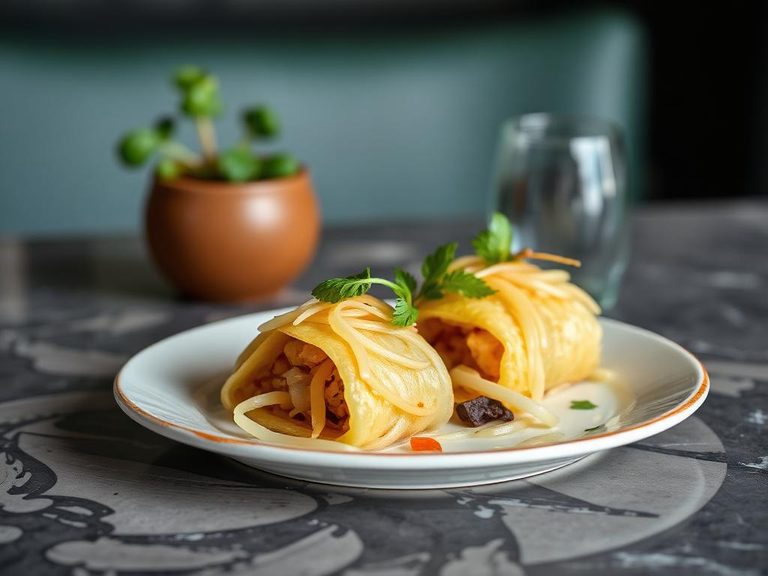
A corn fritter is a golden, pan-fried patty or ball made from a batter of corn kernels, flour, and egg, often with added milk or buttermilk. It offers a delightful contrast: a crispy, slightly oily exterior giving way to a soft, sweet, and starchy interior bursting with corn flavor. Nutritionally, it's a calorie-dense treat, packing significant energy from fats and carbohydrates in a small serving.
Calorie split: 7% protein · 33% carbs · 60% fat
↓ Full nutrition💚 Why it's loved
People adore corn fritters for their irresistible combination of sweet corn flavor and satisfying crispy texture. They are beloved as a nostalgic comfort food, easily adapting to be a savory side, a snack with dipping sauce, or even a sweet dessert with powdered sugar.
⚠️ Watch-outs & how to enjoy it better
The high fat content from frying and refined carbohydrates can lead to blood sugar spikes and are less ideal for low-fat or low-carb diets. To counteract, pair with a protein-rich dip like Greek yogurt or a side salad to slow digestion, and practice portion control by having one fritter as part of a balanced meal.
Key benefits
- Provides quick energy from carbohydrates.
- Contains some plant-based protein from corn and flour.
- Offers dietary fiber, especially if made with whole corn kernels.
- A versatile base for sweet or savory toppings.
- A comforting, classic side dish in many cuisines.
🍽️ Popular dishes
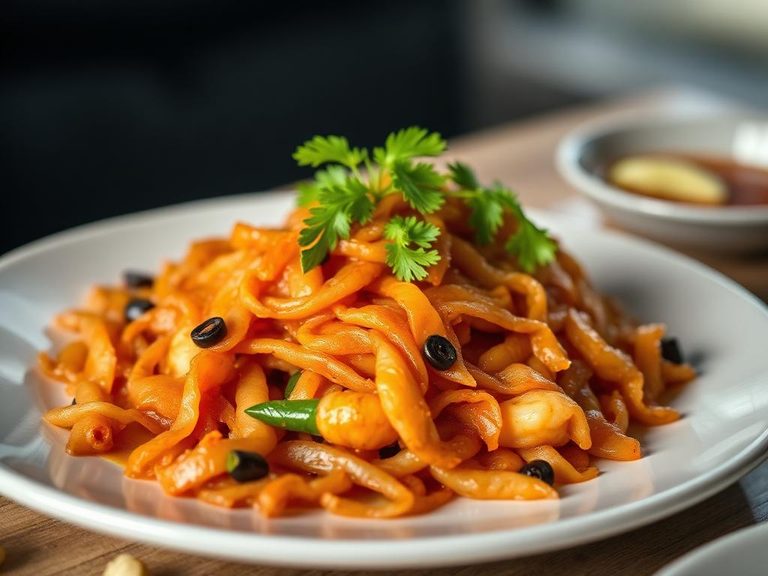
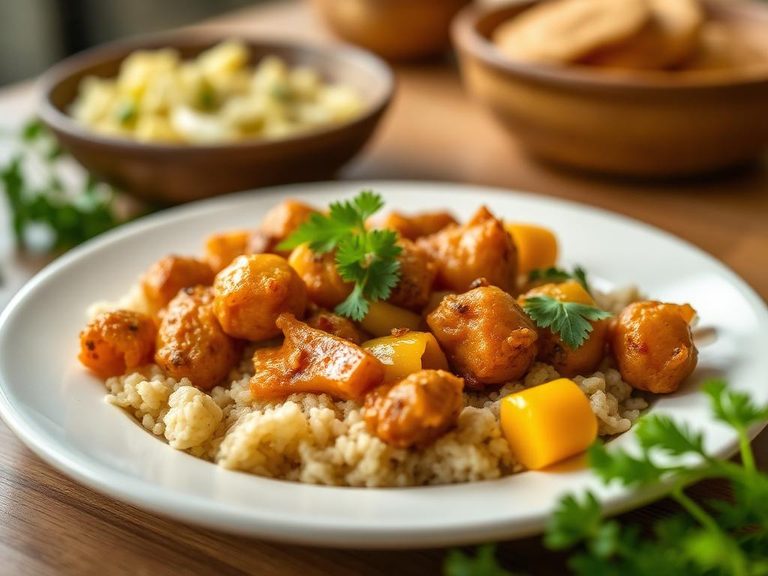
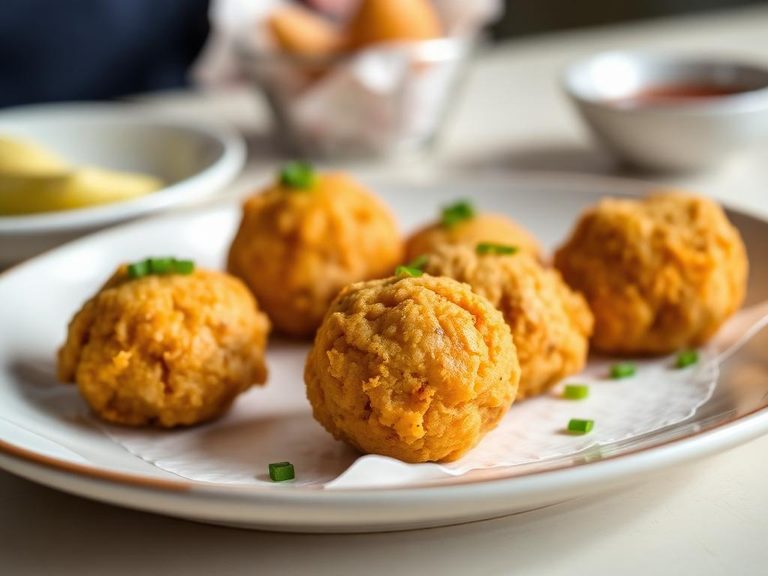
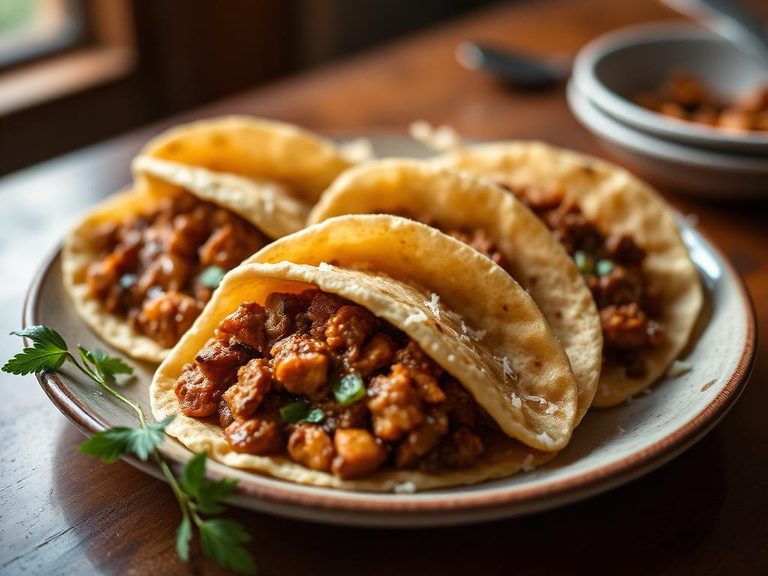
🌍 Where it's eaten
💡 Did you know?
The corn fritter's cousin, the hush puppy, is said to have been named from the practice of Southern US fishermen frying cornmeal batter to 'hush the puppies' begging for scraps.
Full nutrition (USDA data · scales with serving)
| Water | 30.4 g |
| Energy | 404 kcal |
| Protein | 7.4 g |
| Total lipid (fat) | 27.1 g |
| Carbohydrate, by difference | 33.5 g |
| Fiber, total dietary | 1.6 g |
| Total Sugars | 3.0 g |
| Calcium, Ca | 64.0 mg |
| Iron, Fe | 2.3 mg |
| Magnesium, Mg | 24.0 mg |
| Phosphorus, P | 126 mg |
| Potassium, K | 198 mg |
| Sodium, Na | 339 mg |
| Zinc, Zn | 0.77 mg |
| Copper, Cu | 0.07 mg |
| Selenium, Se | 10.2 ug |
| Vitamin C, total ascorbic acid | 1.1 mg |
| Thiamin | 0.28 mg |
| Riboflavin | 0.26 mg |
| Niacin | 2.5 mg |
| Vitamin B-6 | 0.08 mg |
| Folate, total | 55.0 ug |
| Folic acid | 32.0 ug |
| Folate, food | 24.0 ug |
| Folate, DFE | 78.0 ug |
| Choline, total | 51.5 mg |
| Vitamin B-12 | 0.23 ug |
| Vitamin B-12, added | 0.00 ug |
| Vitamin A, RAE | 79.0 ug |
| Retinol | 75.0 ug |
| Carotene, beta | 24.0 ug |
| Carotene, alpha | 5.0 ug |
| Cryptoxanthin, beta | 41.0 ug |
| Lycopene | 0.00 ug |
| Lutein + zeaxanthin | 287 ug |
| Vitamin E (alpha-tocopherol) | 4.2 mg |
| Vitamin E, added | 0.00 mg |
| Vitamin D (D2 + D3) | 0.80 ug |
| Vitamin K (phylloquinone) | 21.7 ug |
| Alcohol, ethyl | 0.00 g |
| Caffeine | 0.00 mg |
| Theobromine | 0.00 mg |
Fat & fatty acid profile (per 100g)
| Fatty acids, total saturated | 5.6 g |
| SFA 4:0 | 0.10 g |
| SFA 6:0 | 0.07 g |
| SFA 8:0 | 0.04 g |
| SFA 10:0 | 0.10 g |
| SFA 12:0 | 0.11 g |
| SFA 14:0 | 0.38 g |
| SFA 16:0 | 3.5 g |
| SFA 18:0 | 1.1 g |
| Fatty acids, total monounsaturated | 10.3 g |
| MUFA 16:1 | 0.16 g |
| MUFA 18:1 | 10.0 g |
| MUFA 20:1 | 0.15 g |
| MUFA 22:1 | 0.00 g |
| Fatty acids, total polyunsaturated | 8.7 g |
| PUFA 18:2 | 7.7 g |
| PUFA 18:3 | 0.95 g |
| PUFA 18:4 | 0.00 g |
| PUFA 20:4 | 0.01 g |
| PUFA 20:5 n-3 (EPA) | 0.00 g |
| PUFA 22:5 n-3 (DPA) | 0.00 g |
| PUFA 22:6 n-3 (DHA) | 0.00 g |
| Cholesterol | 67.0 mg |
FAQ
What's the difference between a corn fritter and a hush puppy?
Corn fritters are typically flatter patties made with whole or creamed corn kernels, while hush puppies are denser, ball-shaped fritters made primarily from a cornmeal batter without visible corn kernels.
Can I bake corn fritters instead of frying?
Yes, you can bake them at 400°F (200°C) on a greased sheet for about 15-20 minutes, flipping once. They won't be as crispy as fried versions but will be lower in fat.
What can I serve with corn fritters?
They pair well with a wide range of dips: sour cream, salsa, guacamole, or a spicy aioli for savory versions. For sweet versions, try maple syrup, honey, or a dusting of powdered sugar.
Nutrient density (calculated · NRF9.3)
Nutrient Rich Foods index: beneficial nutrients (protein, fiber, vitamins, minerals) minus saturated fat, added sugar & sodium, per 100 kcal.
NRF9.3 index — Fulgoni, Keast & Drewnowski, 2009. Computed from USDA nutrients.
Weight-loss friendliness (composite index)
Energy density 4.04 kcal/g · 7% calories from protein · 1.6 g fiber · 3.0 g sugar per 100 g.
Composite of energy density (Rolls et al., 1999), protein & fiber satiety, minus sugar. A calculated heuristic — ranks satiety-per-calorie, not a clinical measure.
Dietary load (calculated from USDA values)
Potential renal acid load. Positive = acid-forming, negative = alkaline-forming.
Sodium-to-potassium ratio: 1.71 (lower is better — aim for ≤ 1)
Sodium:potassium per WHO potassium guidance. Computed from USDA nutrients.