

Fritter, fruit
Common food

Photo: Wikipedia
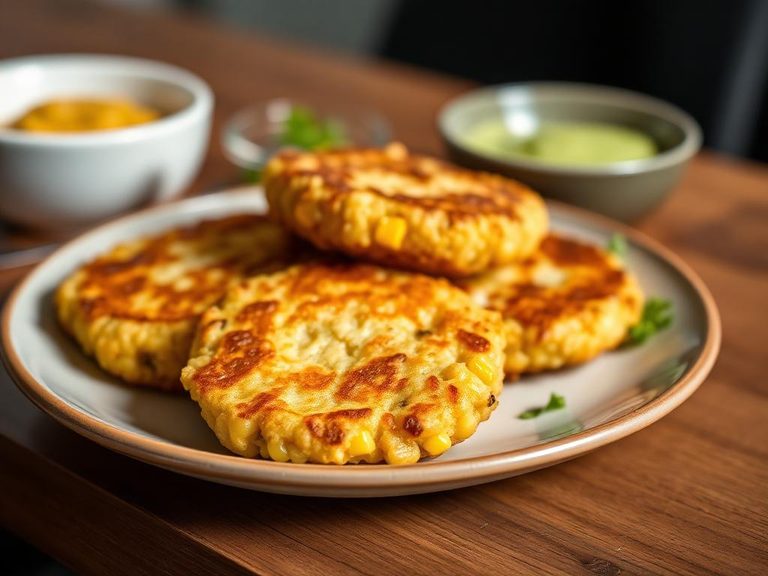
A fruit fritter is a piece of fruit, often banana or apple, encased in a sweet, airy batter and deep-fried until golden brown and crispy. The exterior shatters with a satisfying crunch, giving way to a warm, soft, and sweet interior that tastes of caramelized fruit and fried dough. With 403 kcal per 100g, it is a calorie-dense treat, primarily from its significant fat and carbohydrate content.
Calorie split: 6% protein · 37% carbs · 57% fat
↓ Full nutrition💚 Why it's loved
People love fruit fritters for their irresistible contrast of textures—the shattering, sugary crust against the tender, warm fruit inside. They are a beloved comfort food across many cultures, often enjoyed as a sweet snack, dessert, or festive treat.
⚠️ Watch-outs & how to enjoy it better
The high fat and sugar content can lead to blood sugar spikes and is not ideal for those managing weight or diabetes. To counteract this, enjoy a small portion (2-3 pieces) and pair it with a source of protein like Greek yogurt or a handful of nuts to slow sugar absorption. Choosing baked or air-fried versions can also reduce fat intake.
Key benefits
- Provides quick energy from carbohydrates and sugars.
- Can be a source of some vitamins and minerals from the fruit used.
- Offers a comforting, indulgent sensory experience.
- Often made with simple, accessible ingredients.
🍽️ Popular dishes
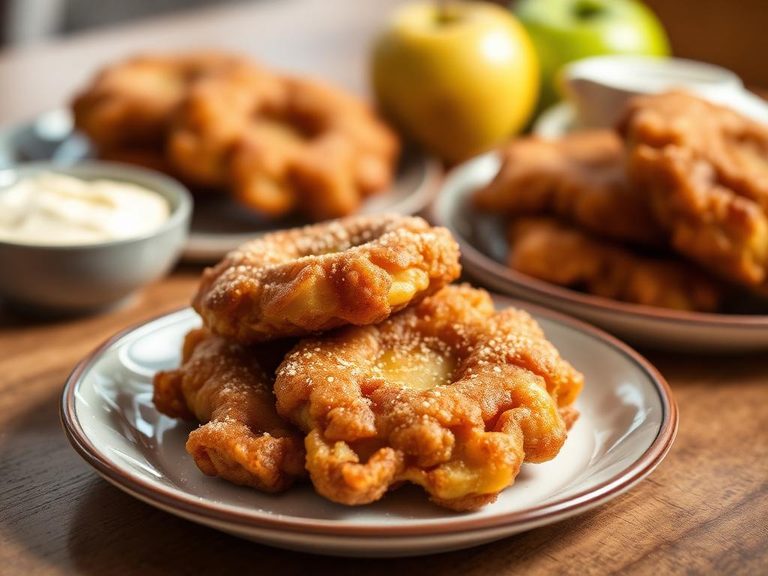
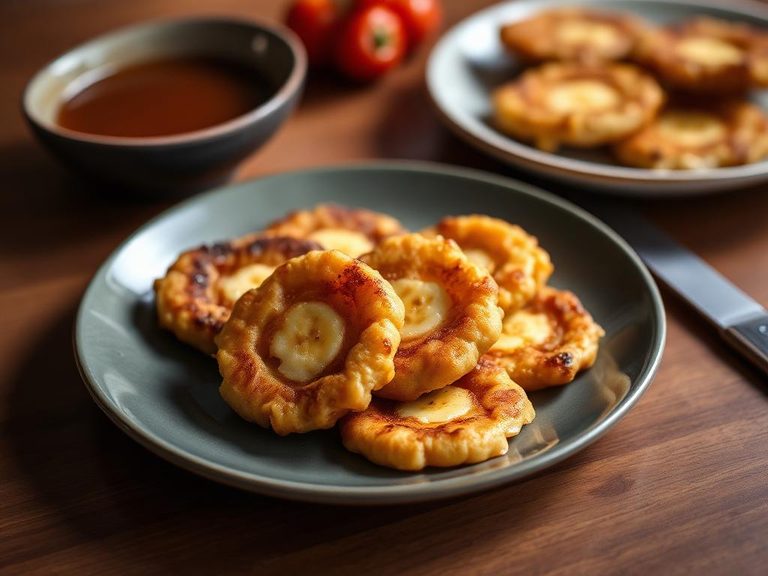
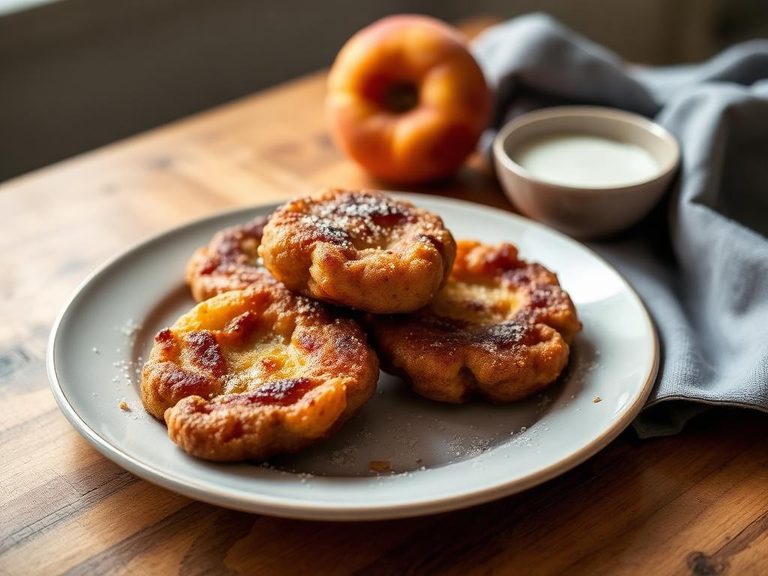
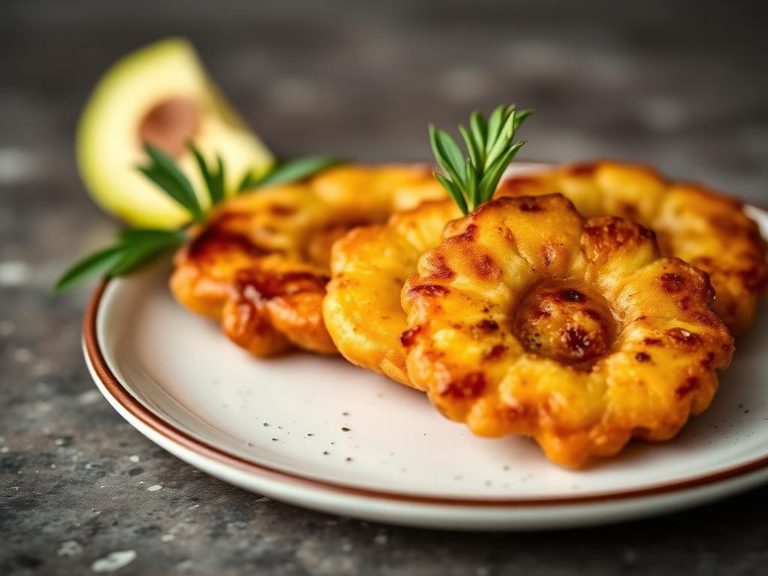
🌍 Where it's eaten
💡 Did you know?
The word 'fritter' comes from the Latin 'frictura,' meaning 'a frying,' but the concept of frying fruit in batter is ancient, with variations appearing in Roman and medieval European cookbooks.
Full nutrition (USDA data · scales with serving)
| Water | 29.4 g |
| Energy | 403 kcal |
| Protein | 6.3 g |
| Total lipid (fat) | 25.6 g |
| Carbohydrate, by difference | 37.3 g |
| Fiber, total dietary | 1.2 g |
| Total Sugars | 12.4 g |
| Calcium, Ca | 61.0 mg |
| Iron, Fe | 2.0 mg |
| Magnesium, Mg | 16.0 mg |
| Phosphorus, P | 99.0 mg |
| Potassium, K | 143 mg |
| Sodium, Na | 321 mg |
| Zinc, Zn | 0.56 mg |
| Copper, Cu | 0.06 mg |
| Selenium, Se | 9.5 ug |
| Vitamin C, total ascorbic acid | 1.0 mg |
| Thiamin | 0.26 mg |
| Riboflavin | 0.23 mg |
| Niacin | 2.0 mg |
| Vitamin B-6 | 0.05 mg |
| Folate, total | 42.0 ug |
| Folic acid | 30.0 ug |
| Folate, food | 12.0 ug |
| Folate, DFE | 63.0 ug |
| Choline, total | 43.3 mg |
| Vitamin B-12 | 0.22 ug |
| Vitamin B-12, added | 0.00 ug |
| Vitamin A, RAE | 73.0 ug |
| Retinol | 72.0 ug |
| Carotene, beta | 12.0 ug |
| Carotene, alpha | 0.00 ug |
| Cryptoxanthin, beta | 5.0 ug |
| Lycopene | 0.00 ug |
| Lutein + zeaxanthin | 72.0 ug |
| Vitamin E (alpha-tocopherol) | 4.0 mg |
| Vitamin E, added | 0.00 mg |
| Vitamin D (D2 + D3) | 0.70 ug |
| Vitamin K (phylloquinone) | 20.7 ug |
| Alcohol, ethyl | 0.00 g |
| Caffeine | 0.00 mg |
| Theobromine | 0.00 mg |
Fat & fatty acid profile (per 100g)
| Fatty acids, total saturated | 5.3 g |
| SFA 4:0 | 0.09 g |
| SFA 6:0 | 0.07 g |
| SFA 8:0 | 0.04 g |
| SFA 10:0 | 0.09 g |
| SFA 12:0 | 0.11 g |
| SFA 14:0 | 0.36 g |
| SFA 16:0 | 3.3 g |
| SFA 18:0 | 1.0 g |
| Fatty acids, total monounsaturated | 9.7 g |
| MUFA 16:1 | 0.15 g |
| MUFA 18:1 | 9.4 g |
| MUFA 20:1 | 0.14 g |
| MUFA 22:1 | 0.00 g |
| Fatty acids, total polyunsaturated | 8.1 g |
| PUFA 18:2 | 7.2 g |
| PUFA 18:3 | 0.90 g |
| PUFA 18:4 | 0.00 g |
| PUFA 20:4 | 0.01 g |
| PUFA 20:5 n-3 (EPA) | 0.00 g |
| PUFA 22:5 n-3 (DPA) | 0.00 g |
| PUFA 22:6 n-3 (DHA) | 0.00 g |
| Cholesterol | 63.0 mg |
FAQ
Are fruit fritters healthy?
Fruit fritters are a treat, not a health food. They are high in calories, fat, and sugar due to the deep-frying process and batter. Enjoy them in moderation as an occasional indulgence.
What fruits are best for fritters?
Sturdy fruits like apples, bananas, and pineapple hold up well to frying. Softer fruits like berries can be used but may need a thicker batter to prevent them from breaking apart.
Can I make fruit fritters without deep-frying?
Yes, you can bake or air-fry them. While they won't be as crispy as deep-fried versions, these methods significantly reduce the fat content and still yield a delicious result.
Nutrient density (calculated · NRF9.3)
Nutrient Rich Foods index: beneficial nutrients (protein, fiber, vitamins, minerals) minus saturated fat, added sugar & sodium, per 100 kcal.
NRF9.3 index — Fulgoni, Keast & Drewnowski, 2009. Computed from USDA nutrients.
Weight-loss friendliness (composite index)
Energy density 4.03 kcal/g · 6% calories from protein · 1.2 g fiber · 12.4 g sugar per 100 g.
Composite of energy density (Rolls et al., 1999), protein & fiber satiety, minus sugar. A calculated heuristic — ranks satiety-per-calorie, not a clinical measure.
Dietary load (calculated from USDA values)
Potential renal acid load. Positive = acid-forming, negative = alkaline-forming.
Sodium-to-potassium ratio: 2.24 (lower is better — aim for ≤ 1)
Sodium:potassium per WHO potassium guidance. Computed from USDA nutrients.