

Freezer pop
Common food

Photo: Wikipedia
A Freezer Pop is a frozen, water-based confection, typically sold in a flexible plastic tube. It delivers a burst of intensely sweet, often fruity flavor with a smooth, icy texture that melts quickly on the tongue. Nutritionally, it's a source of quick energy from simple carbohydrates, with virtually no fat, protein, or fiber.
Calorie split: 0% protein · 97% carbs · 3% fat
↓ Full nutrition💚 Why it's loved
People love Freezer Pops for their refreshing, intensely sweet burst of flavor on a hot day and the nostalgic, playful experience of eating them straight from the tube. They are a versatile, no-mess, and affordable treat enjoyed by both children and adults.
⚠️ Watch-outs & how to enjoy it better
The primary downside is the high sugar content (over 13g per 100g), which can contribute to blood-sugar spikes and offers little nutritional value. To counteract this, enjoy them occasionally, pair with a source of protein or fat (like a handful of nuts) to slow sugar absorption, or look for brands with reduced sugar or natural sweeteners.
Key benefits
- Provides quick hydration and energy.
- Low in fat and contains no cholesterol.
- A simple, nostalgic treat for hot weather.
- Offers a wide variety of artificial fruit flavors.
🍽️ Popular dishes
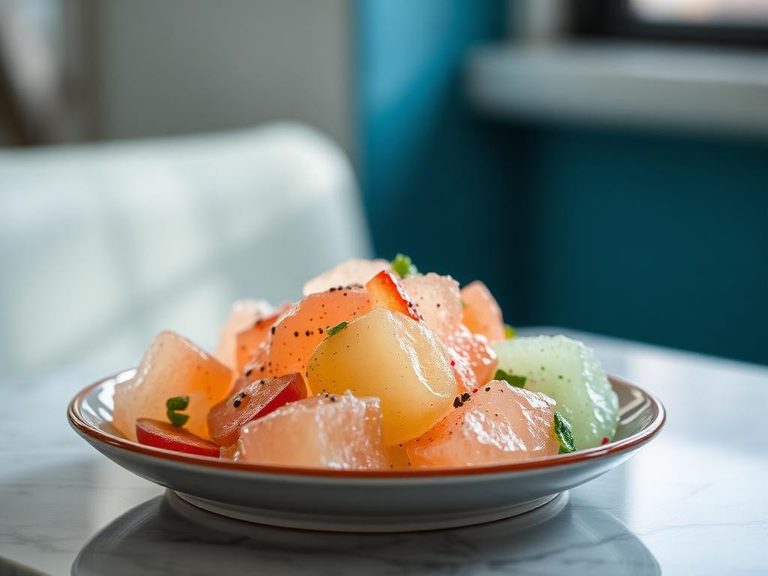
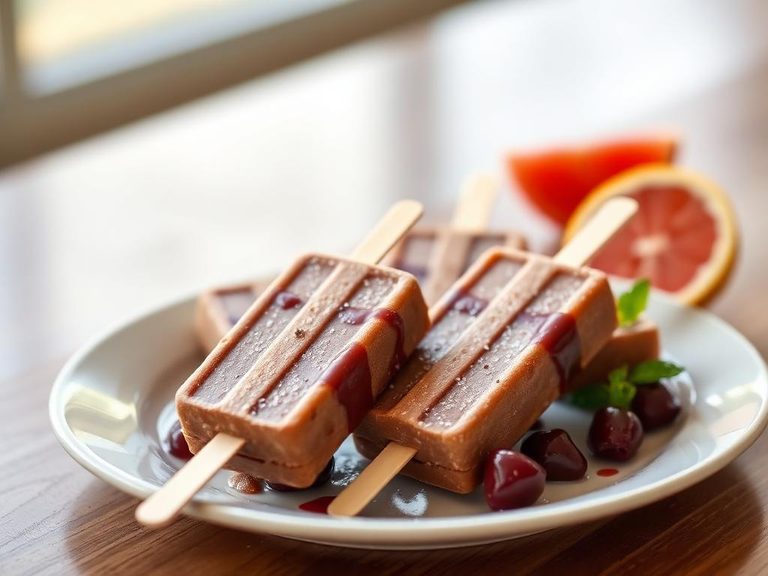
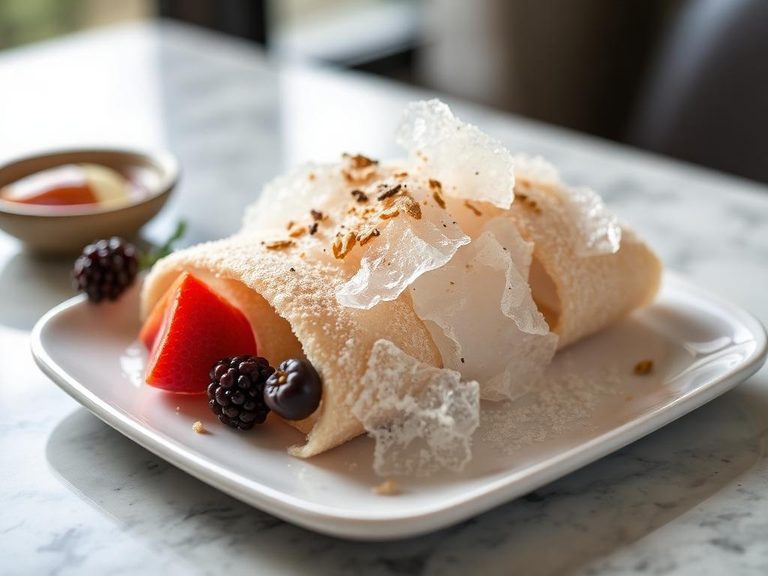
🌍 Where it's eaten
💡 Did you know?
The first patented freezer pop was invented in 1923 by Frank Epperson, who originally called his wooden-stick version the 'Epsicle' before renaming it the Popsicle.
Full nutrition (USDA data · scales with serving)
| Water | 80.5 g |
| Energy | 79.0 kcal |
| Protein | 0.00 g |
| Total lipid (fat) | 0.24 g |
| Carbohydrate, by difference | 19.2 g |
| Fiber, total dietary | 0.00 g |
| Total Sugars | 13.7 g |
| Calcium, Ca | 0.00 mg |
| Iron, Fe | 0.54 mg |
| Magnesium, Mg | 1.0 mg |
| Phosphorus, P | 0.00 mg |
| Potassium, K | 15.0 mg |
| Sodium, Na | 7.0 mg |
| Zinc, Zn | 0.15 mg |
| Copper, Cu | 0.00 mg |
| Selenium, Se | 0.20 ug |
| Vitamin C, total ascorbic acid | 0.70 mg |
| Thiamin | 0.00 mg |
| Riboflavin | 0.00 mg |
| Niacin | 0.00 mg |
| Vitamin B-6 | 0.00 mg |
| Folate, total | 0.00 ug |
| Folic acid | 0.00 ug |
| Folate, food | 0.00 ug |
| Folate, DFE | 0.00 ug |
| Choline, total | 0.00 mg |
| Vitamin B-12 | 0.00 ug |
| Vitamin B-12, added | 0.00 ug |
| Vitamin A, RAE | 0.00 ug |
| Retinol | 0.00 ug |
| Carotene, beta | 0.00 ug |
| Carotene, alpha | 0.00 ug |
| Cryptoxanthin, beta | 0.00 ug |
| Lycopene | 0.00 ug |
| Lutein + zeaxanthin | 0.00 ug |
| Vitamin E (alpha-tocopherol) | 0.00 mg |
| Vitamin E, added | 0.00 mg |
| Vitamin D (D2 + D3) | 0.00 ug |
| Vitamin K (phylloquinone) | 0.00 ug |
| Alcohol, ethyl | 0.00 g |
| Caffeine | 0.00 mg |
| Theobromine | 0.00 mg |
Fat & fatty acid profile (per 100g)
| Fatty acids, total saturated | 0.01 g |
| SFA 4:0 | 0.00 g |
| SFA 6:0 | 0.00 g |
| SFA 8:0 | 0.00 g |
| SFA 10:0 | 0.00 g |
| SFA 12:0 | 0.00 g |
| SFA 14:0 | 0.00 g |
| SFA 16:0 | 0.01 g |
| SFA 18:0 | 0.00 g |
| Fatty acids, total monounsaturated | 0.05 g |
| MUFA 16:1 | 0.00 g |
| MUFA 18:1 | 0.05 g |
| MUFA 20:1 | 0.00 g |
| MUFA 22:1 | 0.00 g |
| Fatty acids, total polyunsaturated | 0.02 g |
| PUFA 18:2 | 0.01 g |
| PUFA 18:3 | 0.00 g |
| PUFA 18:4 | 0.00 g |
| PUFA 20:4 | 0.00 g |
| PUFA 20:5 n-3 (EPA) | 0.00 g |
| PUFA 22:5 n-3 (DPA) | 0.00 g |
| PUFA 22:6 n-3 (DHA) | 0.00 g |
| Cholesterol | 0.00 mg |
FAQ
Are freezer pops the same as popsicles?
While often used interchangeably, 'popsicle' typically refers to the brand name and the classic shape on a stick. 'Freezer pop' or 'ice pop' is a more general term for the frozen confection, often in a flexible plastic tube.
Why do freezer pops sometimes have a weird texture?
The texture is purely icy because they are made from flavored sugar water without stabilizers or dairy. The plastic tube can also make the ice crystals feel smoother as they melt against the packaging.
Can I make freezer pops at home?
Yes! You can easily make them by mixing fruit juice, flavored drinks, or even blended smoothies and pouring them into reusable plastic molds or small zip-top bags to freeze.
Nutrient density (calculated · NRF9.3)
Nutrient Rich Foods index: beneficial nutrients (protein, fiber, vitamins, minerals) minus saturated fat, added sugar & sodium, per 100 kcal.
NRF9.3 index — Fulgoni, Keast & Drewnowski, 2009. Computed from USDA nutrients.
Weight-loss friendliness (composite index)
Energy density 0.79 kcal/g · 0% calories from protein · 0.0 g fiber · 13.7 g sugar per 100 g.
Composite of energy density (Rolls et al., 1999), protein & fiber satiety, minus sugar. A calculated heuristic — ranks satiety-per-calorie, not a clinical measure.
Dietary load (calculated from USDA values)
Potential renal acid load. Positive = acid-forming, negative = alkaline-forming.
Sodium-to-potassium ratio: 0.47 (lower is better — aim for ≤ 1)
Sodium:potassium per WHO potassium guidance. Computed from USDA nutrients.