

Snacks, popcorn, oil-popped, white popcorn, salt added
Whole food · Snacks
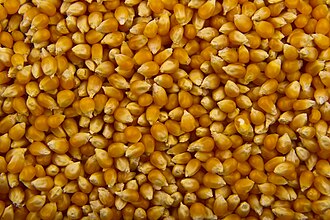
Photo: Wikipedia
This is classic, oil-popped white popcorn, seasoned with salt. Each kernel transforms into a light, airy puff with a satisfying crunch and a savory, buttery flavor from the popping oil. Nutritionally, it's a high-fiber, whole-grain snack that delivers a significant energy boost with a notable fat content from the oil.
Calorie split: 7% protein · 44% carbs · 49% fat
↓ Full nutrition💚 Why it's loved
People adore its addictive, savory crunch and the nostalgic, communal experience of sharing a bowl during movies or gatherings. Its versatility allows for endless flavor experimentation, from simple salt to gourmet seasonings.
⚠️ Watch-outs & how to enjoy it better
The high sodium content from added salt can be a concern for those monitoring blood pressure, and the fat from the oil makes it calorie-dense. To counteract this, opt for air-popped versions, use light salting, or pair it with a protein source like nuts to enhance satiety and moderate blood sugar response.
Key benefits
- Excellent source of dietary fiber (10g per 100g)
- Provides a good plant-based protein source (9g per 100g)
- Whole-grain snack with complex carbohydrates
- Naturally low in sugar (0g)
- Can be a satisfying, volume-dense food for portion control
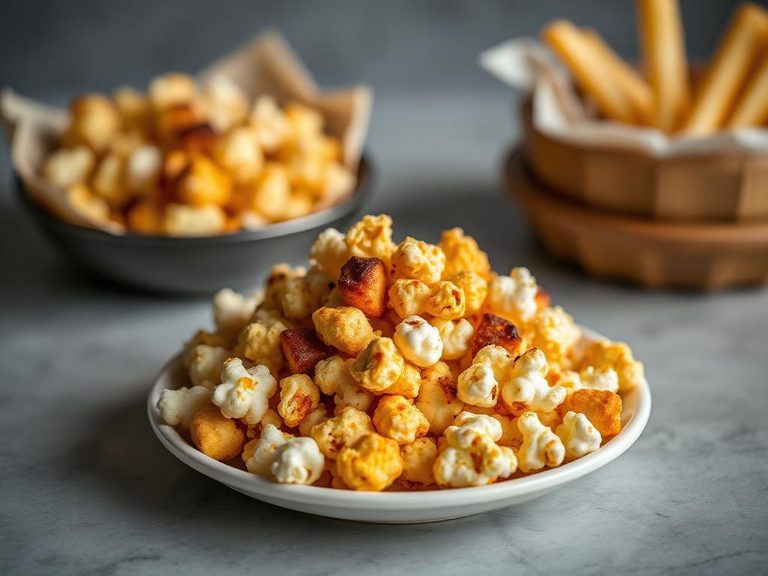
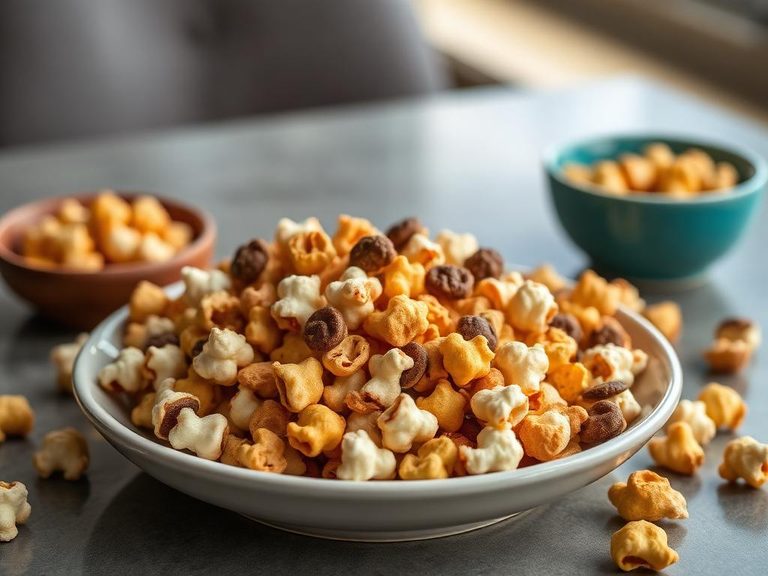
🍽️ Popular dishes




🌍 Where it's eaten
💡 Did you know?
The 'pop' of a popcorn kernel is caused by steam pressure building inside the hard outer hull until it explosively inverts the starchy interior, with kernels reaching temperatures over 180°C (356°F) at the moment of popping.
Full nutrition (USDA data · scales with serving)
| Water | 2.8 g |
| Energy | 500 kcal |
| Energy | 2092 kj |
| Protein | 9.0 g |
| Total lipid (fat) | 28.1 g |
| Ash | 2.9 g |
| Carbohydrate, by difference | 57.2 g |
| Fiber, total dietary | 10.0 g |
| Calcium, Ca | 10.0 mg |
| Iron, Fe | 2.8 mg |
| Magnesium, Mg | 108 mg |
| Phosphorus, P | 250 mg |
| Potassium, K | 225 mg |
| Sodium, Na | 884 mg |
| Zinc, Zn | 2.6 mg |
| Copper, Cu | 0.22 mg |
| Manganese, Mn | 0.88 mg |
| Selenium, Se | 7.3 ug |
| Vitamin C, total ascorbic acid | 0.30 mg |
| Thiamin | 0.13 mg |
| Riboflavin | 0.14 mg |
| Niacin | 1.6 mg |
| Pantothenic acid | 0.30 mg |
| Vitamin B-6 | 0.21 mg |
| Folate, total | 17.0 ug |
| Folic acid | 0.00 ug |
| Folate, food | 17.0 ug |
| Folate, DFE | 17.0 ug |
| Vitamin B-12 | 0.00 ug |
| Vitamin A, RAE | 1.0 ug |
| Retinol | 0.00 ug |
| Vitamin A, IU | 11.0 iu |
Fat & fatty acid profile (per 100g)
| Fatty acids, total saturated | 4.9 g |
| SFA 14:0 | 0.07 g |
| SFA 16:0 | 3.9 g |
| SFA 18:0 | 0.96 g |
| Fatty acids, total monounsaturated | 8.2 g |
| MUFA 16:1 | 0.05 g |
| MUFA 18:1 | 8.1 g |
| Fatty acids, total polyunsaturated | 13.4 g |
| PUFA 18:2 | 12.7 g |
| PUFA 18:3 | 0.73 g |
| Cholesterol | 0.00 mg |
Amino acid profile (per 100g)
| Tryptophan | 0.06 g |
| Threonine | 0.34 g |
| Isoleucine | 0.32 g |
| Leucine | 1.1 g |
| Lysine | 0.25 g |
| Methionine | 0.19 g |
| Cystine | 0.16 g |
| Phenylalanine | 0.44 g |
| Tyrosine | 0.37 g |
| Valine | 0.46 g |
| Arginine | 0.45 g |
| Histidine | 0.28 g |
| Alanine | 0.67 g |
| Aspartic acid | 0.63 g |
| Glutamic acid | 1.7 g |
| Glycine | 0.37 g |
| Proline | 0.79 g |
| Serine | 0.43 g |
FAQ
Is oil-popped popcorn a healthy snack?
It can be a nutritious choice as a whole-grain, high-fiber food. Its healthiness depends on preparation; air-popped with minimal salt is the lightest option, while oil-popped versions are higher in fat and calories but still offer fiber and protein.
Why does popcorn have so much fiber?
Popcorn is a whole grain, meaning it includes all parts of the kernel—the bran, germ, and endosperm. The fibrous bran layer is retained, which is why a 100g serving provides an impressive 10g of dietary fiber.
What is the best way to store popped popcorn?
To maintain crispness, store it in an airtight container or resealable bag at room temperature. Avoid refrigeration, as the moisture can make it stale. Consume within a few days for optimal texture.
Nutrient density (calculated · NRF9.3)
Nutrient Rich Foods index: beneficial nutrients (protein, fiber, vitamins, minerals) minus saturated fat, added sugar & sodium, per 100 kcal.
NRF9.3 index — Fulgoni, Keast & Drewnowski, 2009. Computed from USDA nutrients.
Weight-loss friendliness (composite index)
Energy density 5.00 kcal/g · 7% calories from protein · 10.0 g fiber · 0.0 g sugar per 100 g.
Composite of energy density (Rolls et al., 1999), protein & fiber satiety, minus sugar. A calculated heuristic — ranks satiety-per-calorie, not a clinical measure.
Dietary load (calculated from USDA values)
Potential renal acid load. Positive = acid-forming, negative = alkaline-forming.
Sodium-to-potassium ratio: 3.93 (lower is better — aim for ≤ 1)
Sodium:potassium per WHO potassium guidance. Computed from USDA nutrients.