

Fish, catfish, farm raised, raw
Whole food · Finfish and Shellfish Products

Photo: Wikipedia
Farm-raised catfish is a mild, white-fleshed freshwater fish with a clean, slightly sweet flavor and a firm, meaty texture that holds up well to various cooking methods. Its nutritional profile is lean and protein-dense, offering a substantial 16.5 grams of protein per 100 grams with virtually no carbohydrates, making it an excellent choice for low-carb and high-protein diets.
Calorie split: 50% protein · 0% carbs · 50% fat
↓ Full nutrition💚 Why it's loved
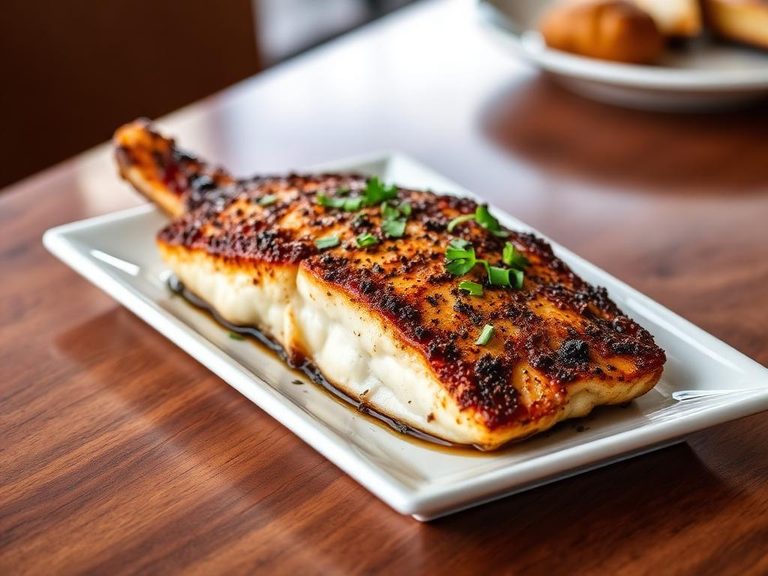
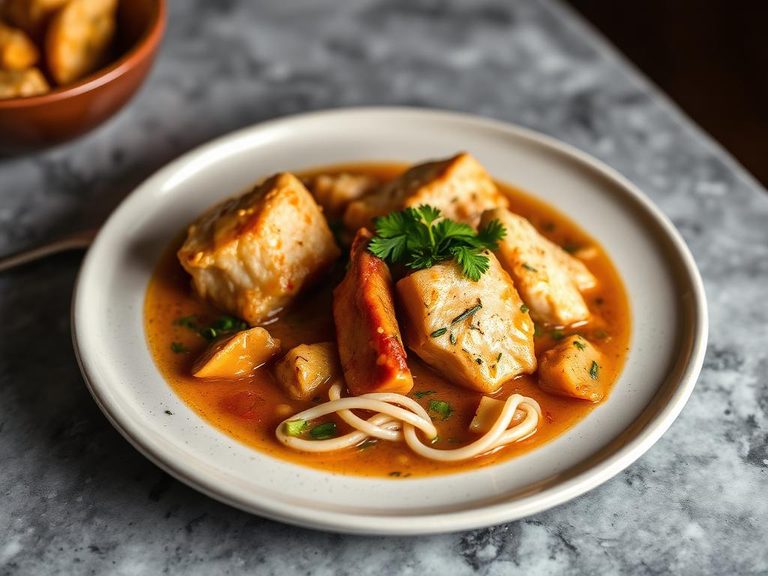
People love catfish for its approachable, non-fishy taste and versatile texture, which acts as a perfect canvas for bold seasonings and sauces. It's a cultural staple in the American South, celebrated in communal fish fries and iconic dishes like blackened catfish.
⚠️ Watch-outs & how to enjoy it better
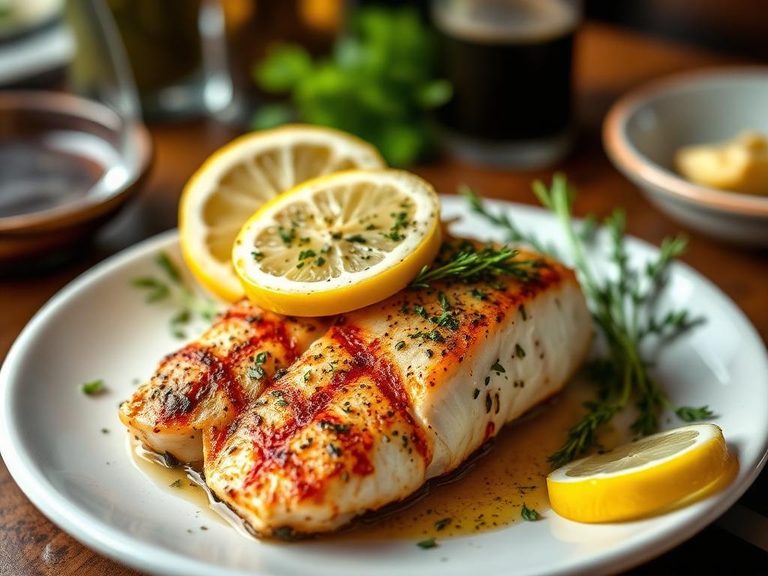
As a farm-raised fish, it can have a slightly muddy or earthy undertone if not properly purged, which some find off-putting. Those monitoring sodium intake should be cautious with common preparations like fried catfish or seasoned fillets, which can be high in salt; opt for baking, grilling, or blackening with herbs to control sodium.
Key benefits
- Excellent source of complete, lean protein
- Very low in carbohydrates and sugars
- Provides essential nutrients like selenium and vitamin B12
- Low in calories for a satisfying, nutrient-dense meal
- Sustainable aquaculture option with a mild flavor profile
🍽️ Popular dishes



🌍 Where it's eaten
💡 Did you know?
Catfish have taste buds not just in their mouths but across their entire bodies, including their whisker-like barbels, allowing them to 'taste' their surroundings as they swim.
Full nutrition (USDA data · scales with serving)
| Water | 75.9 g |
| Energy (Atwater General Factors) | 129 kcal |
| Energy (Atwater Specific Factors) | 134 kcal |
| Nitrogen | 2.6 g |
| Protein | 16.5 g |
| Total lipid (fat) | 7.3 g |
| Ash | 0.97 g |
| Carbohydrate, by difference | 0.00 g |
| Calcium, Ca | 7.8 mg |
| Iron, Fe | 0.00 mg |
| Magnesium, Mg | 20.6 mg |
| Phosphorus, P | 166 mg |
| Potassium, K | 292 mg |
| Sodium, Na | 60.5 mg |
| Zinc, Zn | 0.47 mg |
| Copper, Cu | 0.00 mg |
| Manganese, Mn | 0.00 mg |
| Iodine, I | 1.9 ug |
| Selenium, Se | 9.3 ug |
| Vitamin B-12 | 2.3 ug |
| Retinol | 0.00 ug |
Fat & fatty acid profile (per 100g)
| Fatty acids, total saturated | 1.6 g |
| SFA 4:0 | 0.00 g |
| SFA 6:0 | 0.00 g |
| SFA 8:0 | 0.00 g |
| SFA 10:0 | 0.00 g |
| SFA 12:0 | 0.00 g |
| SFA 14:0 | 0.07 g |
| SFA 16:0 | 1.1 g |
| SFA 18:0 | 0.35 g |
| Fatty acids, total monounsaturated | 3.3 g |
| MUFA 18:1 c | 2.9 g |
| Fatty acids, total polyunsaturated | 1.2 g |
| PUFA 18:2 n-6 c,c | 0.92 g |
| PUFA 18:3 n-3 c,c,c (ALA) | 0.06 g |
| PUFA 20:5 n-3 (EPA) | 0.01 g |
| PUFA 22:5 n-3 (DPA) | 0.01 g |
| PUFA 22:6 n-3 (DHA) | 0.05 g |
| Cholesterol | 66.0 mg |
Amino acid profile (per 100g)
Estimated from Fish, fish sticks, frozen, prepared — USDA does not publish this profile for Fish.
| Tryptophan | 0.12 g |
| Threonine | 0.37 g |
| Isoleucine | 0.43 g |
| Leucine | 0.85 g |
| Lysine | 0.80 g |
| Methionine | 0.30 g |
| Phenylalanine | 0.47 g |
| Tyrosine | 0.29 g |
| Valine | 0.50 g |
| Arginine | 0.59 g |
| Histidine | 0.23 g |
| Alanine | 0.55 g |
| Aspartic acid | 0.82 g |
| Glutamic acid | 2.3 g |
| Glycine | 0.47 g |
| Proline | 0.78 g |
| Serine | 0.49 g |
| Hydroxyproline | 0.00 g |
FAQ
How do I get rid of the muddy taste in farm-raised catfish?
Soak the fillets in milk or buttermilk for 30-60 minutes before cooking. The casein in the milk binds to the compounds causing the earthy flavor, drawing them out.
Is catfish healthy for weight loss?
Yes, it's an excellent choice. It's high in protein, which promotes satiety, and very low in calories and fat, especially when baked or grilled instead of fried.
What's the best way to cook catfish to keep it tender?
Avoid overcooking, as it can dry out. Methods like blackening in a hot skillet, baking in parchment (en papillote), or grilling over medium heat for a short time help retain moisture and tenderness.
Nutrient density (calculated · NRF9.3)
Nutrient Rich Foods index: beneficial nutrients (protein, fiber, vitamins, minerals) minus saturated fat, added sugar & sodium, per 100 kcal.
NRF9.3 index — Fulgoni, Keast & Drewnowski, 2009. Computed from USDA nutrients.
Weight-loss friendliness (composite index)
Energy density 1.29 kcal/g · 51% calories from protein · 0.0 g fiber · 0.0 g sugar per 100 g.
Composite of energy density (Rolls et al., 1999), protein & fiber satiety, minus sugar. A calculated heuristic — ranks satiety-per-calorie, not a clinical measure.
Dietary load (calculated from USDA values)
Potential renal acid load. Positive = acid-forming, negative = alkaline-forming.
Sodium-to-potassium ratio: 0.21 (lower is better — aim for ≤ 1)
Sodium:potassium per WHO potassium guidance. Computed from USDA nutrients.