

Dosa, with filling
Common food
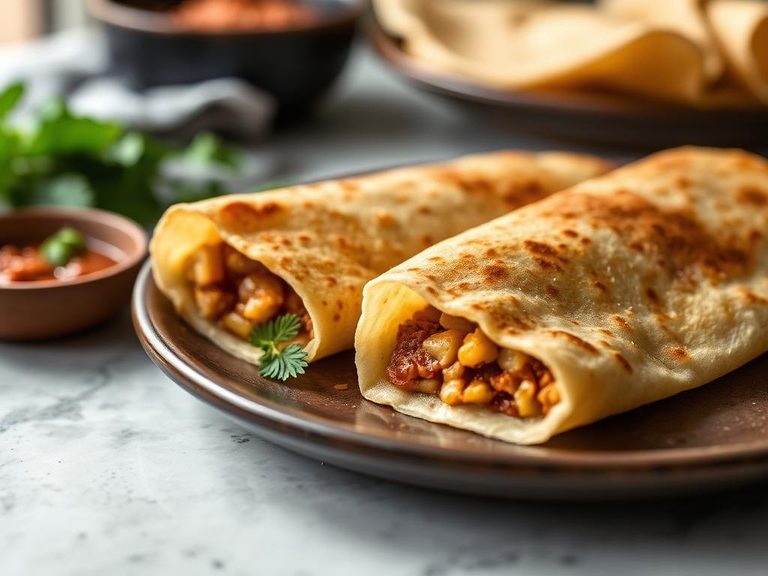
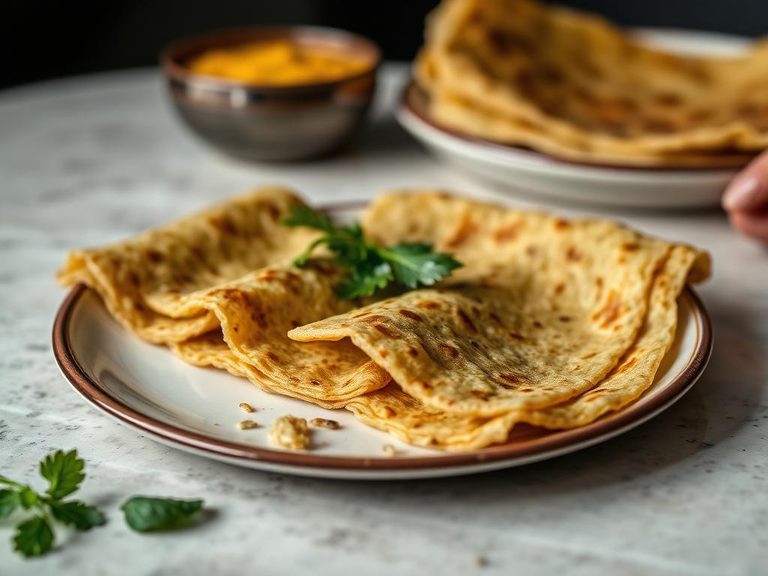
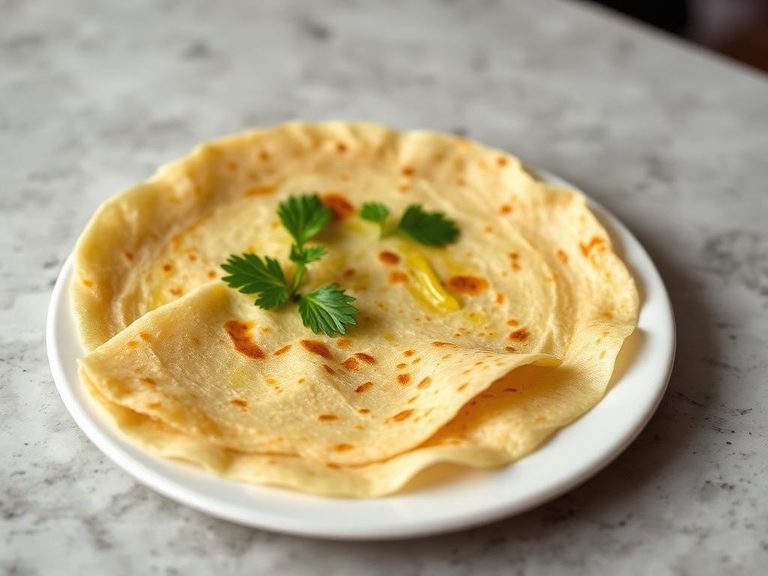
A dosa with filling is a golden, crispy, fermented rice-and-lentil crepe, often rolled or folded around a spiced potato or vegetable mixture. Its texture is a delightful contrast: shatteringly crisp on the outside with a soft, savory interior. Per 100g, it provides a moderate 184 kcal with a good balance of carbs (30.8g) and protein (5.46g), making it a satisfying, energy-dense meal.
Calorie split: 12% protein · 67% carbs · 21% fat
↓ Full nutrition💚 Why it's loved
People love dosa for its irresistible combination of textures and the savory, slightly tangy flavor from fermentation. It's a beloved staple in South Indian cuisine, celebrated for its versatility as a vehicle for countless chutneys, sambar, and fillings.
⚠️ Watch-outs & how to enjoy it better
The high carbohydrate content (30.8g per 100g) can lead to blood-sugar spikes if eaten alone, especially for those managing diabetes. To counteract this, pair it with protein-rich sambar, a side of yogurt, or a filling with lentils and vegetables to slow digestion. Also, be mindful of sodium in accompanying chutneys and sambar.
Key benefits
- Fermentation enhances B-vitamin content and mineral bioavailability.
- Good source of plant-based protein from the rice and lentil batter.
- Provides dietary fiber (2.2g per 100g) for digestive health.
- Fermented foods may support a healthy gut microbiome.
- Versatile base for various vegetable and protein fillings.
🍽️ Popular dishes
🌍 Where it's eaten
💡 Did you know?
The fermentation process that gives dosa its signature tang is achieved by naturally occurring wild yeasts and lactic acid bacteria from the environment, making each household's dosa batter subtly unique.
Full nutrition (USDA data · scales with serving)
| Water | 57.9 g |
| Energy | 184 kcal |
| Protein | 5.5 g |
| Total lipid (fat) | 4.3 g |
| Carbohydrate, by difference | 30.8 g |
| Fiber, total dietary | 2.2 g |
| Total Sugars | 1.1 g |
| Calcium, Ca | 17.0 mg |
| Iron, Fe | 1.9 mg |
| Magnesium, Mg | 17.0 mg |
| Phosphorus, P | 70.0 mg |
| Potassium, K | 137 mg |
| Sodium, Na | 330 mg |
| Zinc, Zn | 0.73 mg |
| Copper, Cu | 0.15 mg |
| Selenium, Se | 3.9 ug |
| Vitamin C, total ascorbic acid | 1.3 mg |
| Thiamin | 0.20 mg |
| Riboflavin | 0.04 mg |
| Niacin | 1.4 mg |
| Vitamin B-6 | 0.12 mg |
| Folate, total | 103 ug |
| Folic acid | 40.0 ug |
| Folate, food | 63.0 ug |
| Folate, DFE | 131 ug |
| Choline, total | 17.5 mg |
| Vitamin B-12 | 0.00 ug |
| Vitamin B-12, added | 0.00 ug |
| Vitamin A, RAE | 1.0 ug |
| Retinol | 0.00 ug |
| Carotene, beta | 10.0 ug |
| Carotene, alpha | 1.0 ug |
| Cryptoxanthin, beta | 1.0 ug |
| Lycopene | 0.00 ug |
| Lutein + zeaxanthin | 4.0 ug |
| Vitamin E (alpha-tocopherol) | 0.82 mg |
| Vitamin E, added | 0.00 mg |
| Vitamin D (D2 + D3) | 0.00 ug |
| Vitamin K (phylloquinone) | 5.3 ug |
| Alcohol, ethyl | 0.00 g |
| Caffeine | 0.00 mg |
| Theobromine | 0.00 mg |
Fat & fatty acid profile (per 100g)
| Fatty acids, total saturated | 0.58 g |
| SFA 4:0 | 0.00 g |
| SFA 6:0 | 0.00 g |
| SFA 8:0 | 0.00 g |
| SFA 10:0 | 0.00 g |
| SFA 12:0 | 0.00 g |
| SFA 14:0 | 0.00 g |
| SFA 16:0 | 0.43 g |
| SFA 18:0 | 0.11 g |
| Fatty acids, total monounsaturated | 1.7 g |
| MUFA 16:1 | 0.01 g |
| MUFA 18:1 | 1.6 g |
| MUFA 20:1 | 0.03 g |
| MUFA 22:1 | 0.00 g |
| Fatty acids, total polyunsaturated | 1.7 g |
| PUFA 18:2 | 1.5 g |
| PUFA 18:3 | 0.18 g |
| PUFA 18:4 | 0.00 g |
| PUFA 20:4 | 0.00 g |
| PUFA 20:5 n-3 (EPA) | 0.00 g |
| PUFA 22:5 n-3 (DPA) | 0.00 g |
| PUFA 22:6 n-3 (DHA) | 0.00 g |
| Cholesterol | 0.00 mg |
FAQ
Is dosa gluten-free?
Traditionally, yes. A classic dosa batter is made from rice and black gram (urad dal), both gluten-free grains/legumes. However, always check for cross-contamination or added wheat flour in some modern recipes.
Why is my dosa not crispy?
Common reasons include under-fermented batter, batter that's too thick, a pan that isn't hot enough, or using too much oil. Ensure proper fermentation (8-12 hours), a thin, pourable batter, and a well-seasoned, hot cast-iron or non-stick pan.
Can I make dosa ahead of time?
Yes, but texture suffers. Cooked dosas can be stacked with parchment paper, refrigerated for 2-3 days, and reheated in a dry pan or toaster. For best crispness, cook fresh. Uncooked fermented batter can be refrigerated for a day or two.
Nutrient density (calculated · NRF9.3)
Nutrient Rich Foods index: beneficial nutrients (protein, fiber, vitamins, minerals) minus saturated fat, added sugar & sodium, per 100 kcal.
NRF9.3 index — Fulgoni, Keast & Drewnowski, 2009. Computed from USDA nutrients.
Weight-loss friendliness (composite index)
Energy density 1.84 kcal/g · 12% calories from protein · 2.2 g fiber · 1.1 g sugar per 100 g.
Composite of energy density (Rolls et al., 1999), protein & fiber satiety, minus sugar. A calculated heuristic — ranks satiety-per-calorie, not a clinical measure.
Dietary load (calculated from USDA values)
Potential renal acid load. Positive = acid-forming, negative = alkaline-forming.
Sodium-to-potassium ratio: 2.41 (lower is better — aim for ≤ 1)
Sodium:potassium per WHO potassium guidance. Computed from USDA nutrients.