

Pesarattu
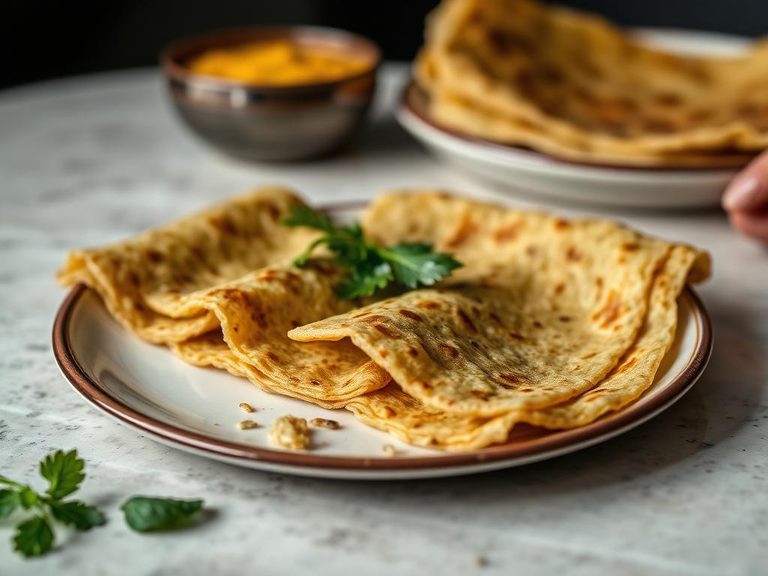
Pesarattu is a savory, thin pancake or crepe from the South Indian state of Andhra Pradesh, primarily made from a batter of whole green moong dal (mung beans). It is often seasoned with ginger, cumin, and green chilies, and is traditionally served with a spicy ginger chutney or Upma (a savory semolina dish).
🍽️ Nutrition at a glance
This dish is a high-protein, high-fiber option due to its main ingredient, green moong dal, and is relatively low in fat and carbohydrates compared to a traditional rice dosa. A typical serving provides a good source of plant-based protein, iron, and complex carbohydrates, with a rough calorie count of 150-200 per pesarattu.
Nutrition breakdown
| Calories | 180 kcal |
| Protein | 10.5 g |
| Carbs | 28 g |
| Fat | 3.5 g |
| Fiber | 5 g |
| Sugar | 1.5 g |
| Sodium | 350 mg |
| Iron | 2.5 mg |
| Folate (B9) | 120 µg |
| Potassium | 380 mg |
| Magnesium | 60 mg |
| Phosphorus | 150 mg |
| Zinc | 1.5 mg |
| Vitamin B6 | 0.2 mg |
| Manganese | 0.8 mg |
Per 1 dosa (approx. 100 g) · estimated, varies by recipe
💡 What's interesting
Pesarattu is nutritionally unique as it is a 'complete' protein source from a single plant ingredient, making it a staple for vegetarians. Culturally, it is a beloved breakfast item in Andhra Pradesh and is famously paired with Upma in a combination known as 'Pesarattu Upma' or 'MLA Pesarattu,' a popular dish in local eateries.
AI estimate may be inaccurate · Terms