

Dosa, plain
Common food
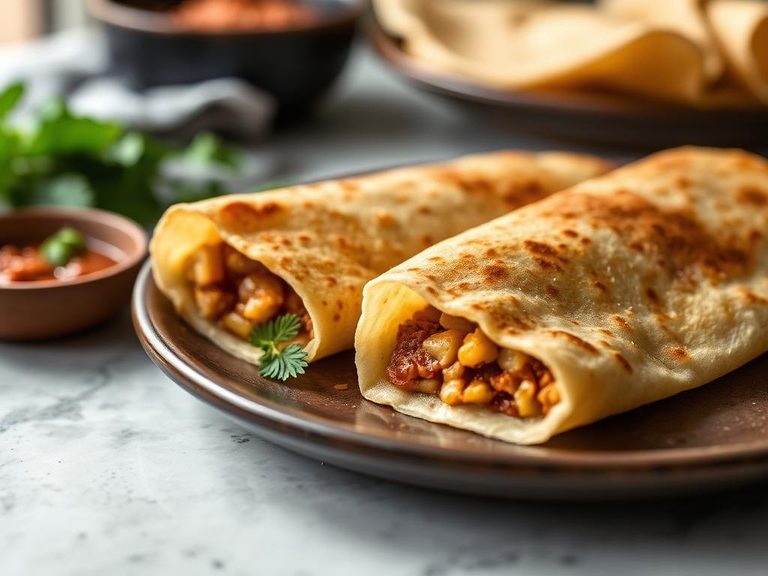
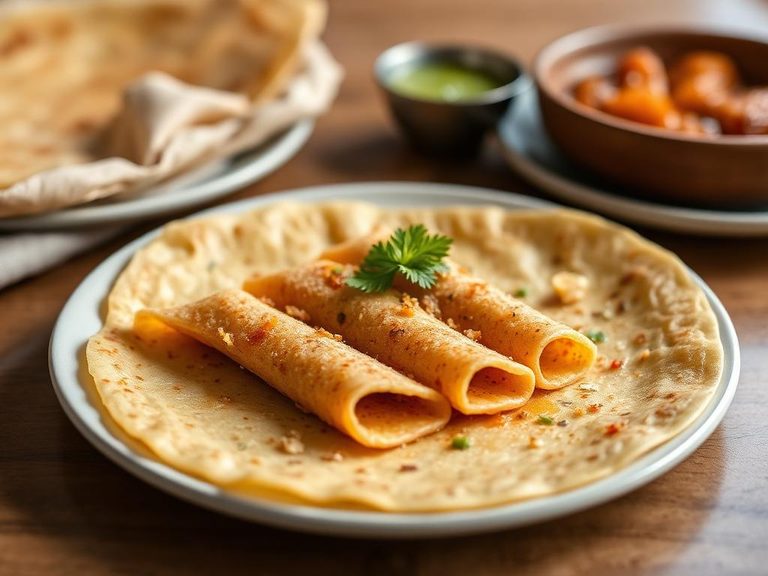
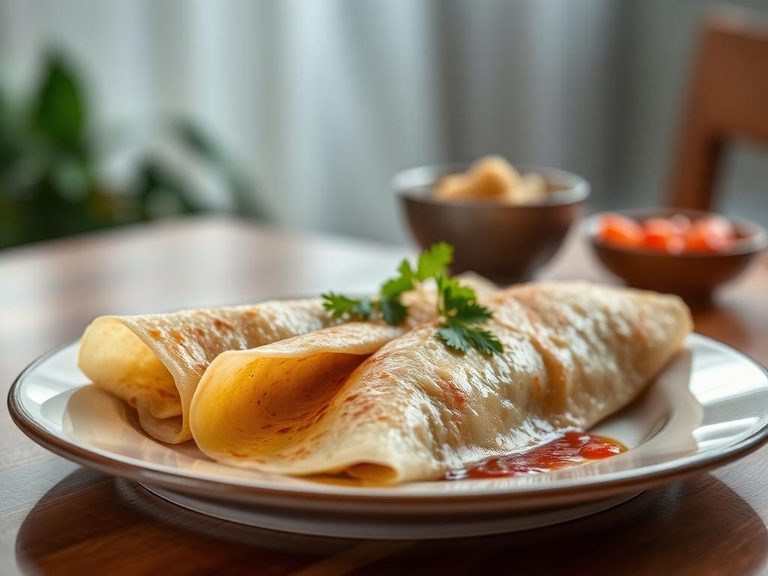
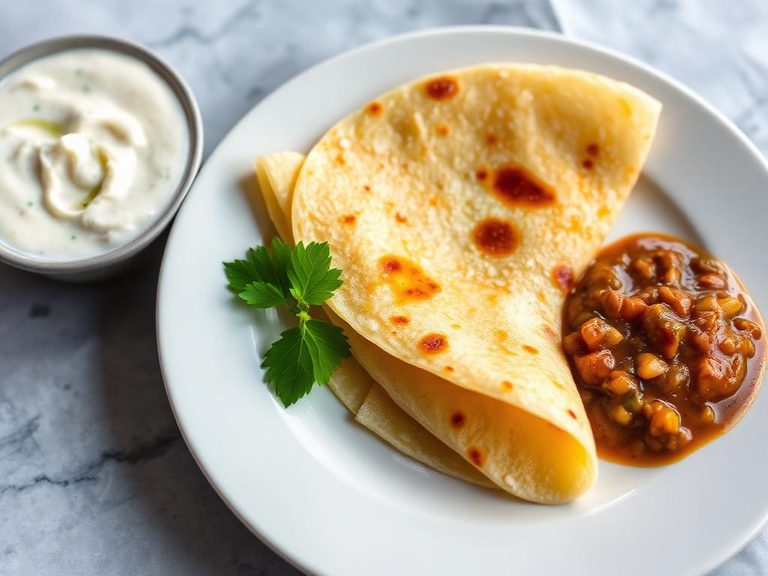
A plain dosa is a thin, crispy, golden-brown crepe made from a fermented batter of rice and lentils, offering a satisfying crunch with a soft, slightly spongy interior. Its signature tang comes from natural fermentation, which also makes it a surprisingly light yet energizing staple. Nutritionally, it's a low-fat, moderate-carb option that provides a good source of plant-based protein and fiber.
Calorie split: 11% protein · 71% carbs · 18% fat
↓ Full nutrition💚 Why it's loved
People love it for its perfect textural contrast—a shatteringly crisp edge giving way to a tender center—and its versatile, mildly tangy flavor that acts as a canvas for countless fillings and accompaniments.
⚠️ Watch-outs & how to enjoy it better
The high carbohydrate content can cause blood-sugar spikes if eaten alone, especially for those with insulin resistance. To counteract this, pair it with protein-rich sambar or chutneys (like coconut or peanut) and a side of vegetables to slow digestion and balance the meal.
Key benefits
- Naturally fermented for improved digestion and nutrient absorption.
- Good source of plant-based protein from lentils.
- Low in fat and sugar.
- Provides dietary fiber.
- Naturally gluten-free (when made traditionally).
🍽️ Popular dishes
🌍 Where it's eaten
💡 Did you know?
The fermentation process for dosa batter is a symbiotic culture of wild yeasts and lactic acid bacteria, similar in principle to sourdough bread, and it's this natural leavening that creates its distinctive flavor and airy texture.
Full nutrition (USDA data · scales with serving)
| Water | 51.8 g |
| Energy | 210 kcal |
| Protein | 5.7 g |
| Total lipid (fat) | 4.0 g |
| Carbohydrate, by difference | 37.0 g |
| Fiber, total dietary | 1.8 g |
| Total Sugars | 0.30 g |
| Calcium, Ca | 16.0 mg |
| Iron, Fe | 2.2 mg |
| Magnesium, Mg | 14.0 mg |
| Phosphorus, P | 72.0 mg |
| Potassium, K | 104 mg |
| Sodium, Na | 309 mg |
| Zinc, Zn | 0.75 mg |
| Copper, Cu | 0.15 mg |
| Selenium, Se | 5.6 ug |
| Vitamin C, total ascorbic acid | 0.30 mg |
| Thiamin | 0.23 mg |
| Riboflavin | 0.04 mg |
| Niacin | 1.7 mg |
| Vitamin B-6 | 0.10 mg |
| Folate, total | 92.0 ug |
| Folic acid | 57.0 ug |
| Folate, food | 35.0 ug |
| Folate, DFE | 132 ug |
| Choline, total | 14.3 mg |
| Vitamin B-12 | 0.00 ug |
| Vitamin B-12, added | 0.00 ug |
| Vitamin A, RAE | 0.00 ug |
| Retinol | 0.00 ug |
| Carotene, beta | 2.0 ug |
| Carotene, alpha | 0.00 ug |
| Cryptoxanthin, beta | 0.00 ug |
| Lycopene | 0.00 ug |
| Lutein + zeaxanthin | 0.00 ug |
| Vitamin E (alpha-tocopherol) | 0.80 mg |
| Vitamin E, added | 0.00 mg |
| Vitamin D (D2 + D3) | 0.00 ug |
| Vitamin K (phylloquinone) | 4.4 ug |
| Alcohol, ethyl | 0.00 g |
| Caffeine | 0.00 mg |
| Theobromine | 0.00 mg |
Fat & fatty acid profile (per 100g)
| Fatty acids, total saturated | 0.58 g |
| SFA 4:0 | 0.00 g |
| SFA 6:0 | 0.00 g |
| SFA 8:0 | 0.00 g |
| SFA 10:0 | 0.00 g |
| SFA 12:0 | 0.00 g |
| SFA 14:0 | 0.00 g |
| SFA 16:0 | 0.43 g |
| SFA 18:0 | 0.11 g |
| Fatty acids, total monounsaturated | 1.7 g |
| MUFA 16:1 | 0.01 g |
| MUFA 18:1 | 1.6 g |
| MUFA 20:1 | 0.03 g |
| MUFA 22:1 | 0.00 g |
| Fatty acids, total polyunsaturated | 1.5 g |
| PUFA 18:2 | 1.4 g |
| PUFA 18:3 | 0.19 g |
| PUFA 18:4 | 0.00 g |
| PUFA 20:4 | 0.00 g |
| PUFA 20:5 n-3 (EPA) | 0.00 g |
| PUFA 22:5 n-3 (DPA) | 0.00 g |
| PUFA 22:6 n-3 (DHA) | 0.00 g |
| Cholesterol | 0.00 mg |
FAQ
Is a plain dosa healthy?
Yes, it's a nutritious choice. It's low in fat, provides plant-based protein and fiber from lentils, and the fermentation process can aid digestion. Its healthiness in a meal depends on what you pair it with—opting for sambar and vegetable sides over heavy, oily accompaniments is best.
Is dosa gluten-free?
Traditional plain dosa, made from rice and lentils, is naturally gluten-free. However, some variations or restaurant preparations might use added wheat flour for crispiness, so it's always good to confirm if you have a strict gluten intolerance.
Why is my dosa not crispy?
The key to crispiness is a well-fermented batter, the right consistency (like heavy cream), a very hot and well-seasoned cast-iron griddle or non-stick pan, and spreading the batter very thinly. Also, using a little sesame oil during cooking helps achieve that golden crunch.
Nutrient density (calculated · NRF9.3)
Nutrient Rich Foods index: beneficial nutrients (protein, fiber, vitamins, minerals) minus saturated fat, added sugar & sodium, per 100 kcal.
NRF9.3 index — Fulgoni, Keast & Drewnowski, 2009. Computed from USDA nutrients.
Weight-loss friendliness (composite index)
Energy density 2.10 kcal/g · 11% calories from protein · 1.8 g fiber · 0.3 g sugar per 100 g.
Composite of energy density (Rolls et al., 1999), protein & fiber satiety, minus sugar. A calculated heuristic — ranks satiety-per-calorie, not a clinical measure.
Dietary load (calculated from USDA values)
Potential renal acid load. Positive = acid-forming, negative = alkaline-forming.
Sodium-to-potassium ratio: 2.97 (lower is better — aim for ≤ 1)
Sodium:potassium per WHO potassium guidance. Computed from USDA nutrients.