

Creamy dressing, made with sour cream and/or buttermilk and oil, reduced calorie, cholesterol-free
Whole food · Fats and Oils

Photo: Wikipedia
This is a tangy, rich, and creamy dressing that masterfully blends the cultured tang of sour cream or buttermilk with the smooth mouthfeel of oil, all while being cholesterol-free. It delivers a satisfying, velvety texture and a bright, acidic flavor that coats salads and vegetables beautifully, without the heavy richness of full-fat dairy. Nutritionally, it's a lighter option, offering a moderate calorie count with a notable carbohydrate content from added sugars.
Calorie split: 3% protein · 46% carbs · 51% fat
↓ Full nutrition💚 Why it's loved
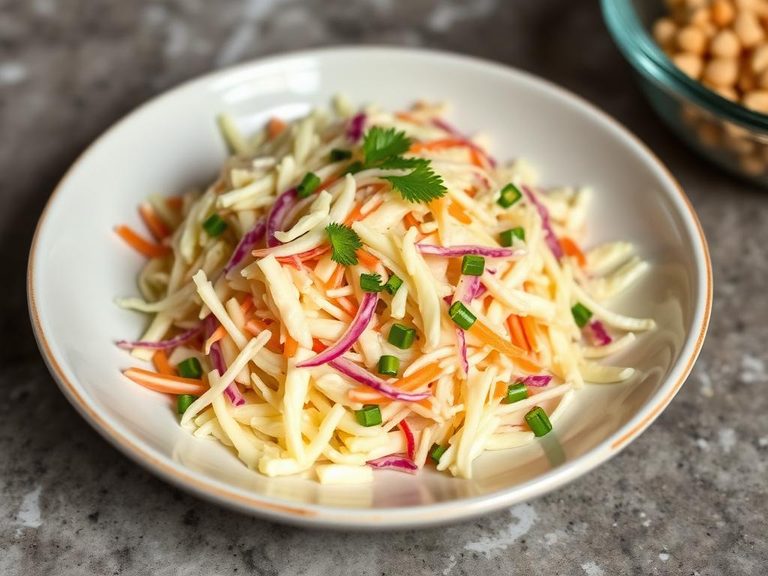
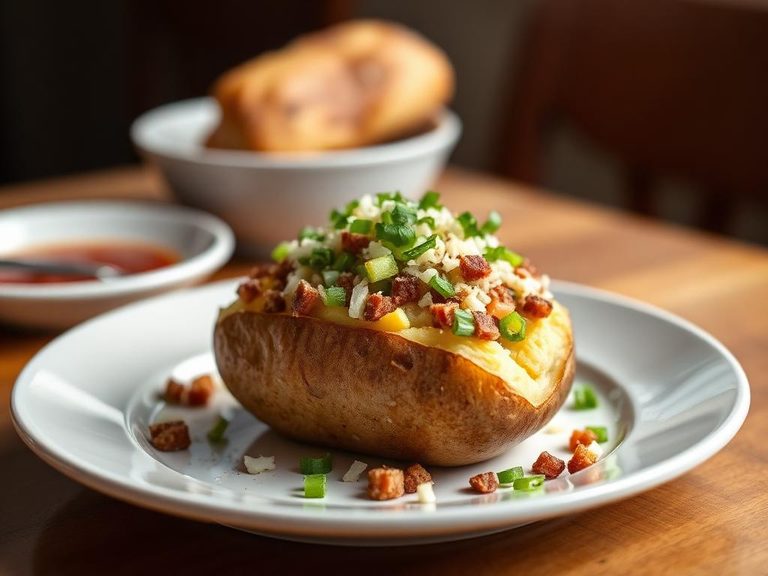
People adore this dressing for its perfect balance of creamy richness and bright tang, which elevates simple salads, baked potatoes, and veggie platters. Its versatility makes it a kitchen staple, easily adapting to various cuisines and serving as a cooling counterpoint to spicy or savory dishes.
⚠️ Watch-outs & how to enjoy it better
The primary downside is its relatively high carbohydrate and sugar content (16g carbs, 3.28g sugar per 100g), which can contribute to blood-sugar spikes if consumed in large quantities, especially for those monitoring glucose levels. To counteract this, pair it with high-fiber vegetables (like leafy greens or broccoli) and a protein source (like grilled chicken or chickpeas) to slow sugar absorption, and practice portion control by using it as a light drizzle rather than a heavy coating.
Key benefits
- Cholesterol-free, making it suitable for heart-conscious diets.
- Reduced-calorie option compared to traditional full-fat creamy dressings.
- Provides a creamy texture and tangy flavor without dairy-based cholesterol.
- Can be a versatile base for dips, marinades, and sauces.
- Offers a source of quick energy from its carbohydrate content.
🍽️ Popular dishes
🌍 Where it's eaten
💡 Did you know?
The 'reduced calorie' label often means this dressing uses a blend of sour cream and buttermilk with a higher ratio of buttermilk or other low-fat dairy to cut calories, while the oil is typically a neutral vegetable oil like soybean or canola, which is what keeps it cholesterol-free despite its creamy texture.
Full nutrition (USDA data · scales with serving)
| Water | 73.0 g |
| Energy | 140 kcal |
| Energy | 586 kj |
| Protein | 1.0 g |
| Total lipid (fat) | 8.0 g |
| Ash | 2.0 g |
| Carbohydrate, by difference | 16.0 g |
| Fiber, total dietary | 0.00 g |
| Total Sugars | 3.3 g |
| Calcium, Ca | 36.0 mg |
| Iron, Fe | 0.26 mg |
| Magnesium, Mg | 5.0 mg |
| Phosphorus, P | 100 mg |
| Potassium, K | 49.0 mg |
| Sodium, Na | 932 mg |
| Zinc, Zn | 0.18 mg |
| Copper, Cu | 0.00 mg |
| Selenium, Se | 1.6 ug |
| Vitamin C, total ascorbic acid | 0.00 mg |
| Thiamin | 0.01 mg |
| Riboflavin | 0.06 mg |
| Niacin | 0.04 mg |
| Vitamin B-6 | 0.02 mg |
| Folate, total | 4.0 ug |
| Folic acid | 0.00 ug |
| Folate, food | 4.0 ug |
| Folate, DFE | 4.0 ug |
| Choline, total | 16.0 mg |
| Vitamin B-12 | 0.10 ug |
| Vitamin B-12, added | 0.00 ug |
| Vitamin A, RAE | 18.0 ug |
| Retinol | 17.0 ug |
| Carotene, beta | 4.0 ug |
| Carotene, alpha | 2.0 ug |
| Cryptoxanthin, beta | 2.0 ug |
| Vitamin A, IU | 67.0 iu |
| Lycopene | 0.00 ug |
| Lutein + zeaxanthin | 49.0 ug |
| Vitamin E (alpha-tocopherol) | 4.9 mg |
| Vitamin E, added | 0.00 mg |
| Vitamin D (D2 + D3), International Units | 0.00 iu |
| Vitamin D (D2 + D3) | 0.00 ug |
| Vitamin K (phylloquinone) | 34.8 ug |
| Alcohol, ethyl | 0.00 g |
| Caffeine | 0.00 mg |
| Theobromine | 0.00 mg |
Fat & fatty acid profile (per 100g)
| Fatty acids, total saturated | 1.4 g |
| SFA 4:0 | 0.01 g |
| SFA 6:0 | 0.01 g |
| SFA 8:0 | 0.00 g |
| SFA 10:0 | 0.01 g |
| SFA 12:0 | 0.01 g |
| SFA 14:0 | 0.04 g |
| SFA 16:0 | 0.84 g |
| SFA 18:0 | 0.42 g |
| Fatty acids, total monounsaturated | 3.4 g |
| MUFA 16:1 | 0.04 g |
| MUFA 18:1 | 3.3 g |
| MUFA 20:1 | 0.00 g |
| MUFA 22:1 | 0.00 g |
| Fatty acids, total polyunsaturated | 2.9 g |
| PUFA 18:2 | 2.7 g |
| PUFA 18:3 | 0.20 g |
| PUFA 18:4 | 0.00 g |
| PUFA 20:4 | 0.00 g |
| PUFA 20:5 n-3 (EPA) | 0.00 g |
| PUFA 22:5 n-3 (DPA) | 0.00 g |
| PUFA 22:6 n-3 (DHA) | 0.00 g |
| Cholesterol | 0.00 mg |
FAQ
Is this dressing suitable for a low-carb diet?
While it's reduced-calorie, its 16g of carbohydrates per 100g (with 3.28g sugar) means it's not ideal for very low-carb diets like keto. It's better suited for moderate-carb or calorie-conscious plans.
What makes it cholesterol-free if it contains oil?
Cholesterol is found in animal products. Since this dressing uses vegetable oil (like soybean or canola) and is made with sour cream/buttermilk that may be processed to remove cholesterol or use plant-based alternatives, it can be cholesterol-free.
Can I use this as a substitute for mayonnaise in recipes?
Yes, it can work as a lighter substitute in recipes like potato salad or egg salad, but its tangy flavor and thinner consistency might alter the taste and texture slightly. Adjust quantities and consider adding a bit of mustard for depth.
Nutrient density (calculated · NRF9.3)
Nutrient Rich Foods index: beneficial nutrients (protein, fiber, vitamins, minerals) minus saturated fat, added sugar & sodium, per 100 kcal.
NRF9.3 index — Fulgoni, Keast & Drewnowski, 2009. Computed from USDA nutrients.
Weight-loss friendliness (composite index)
Energy density 1.40 kcal/g · 3% calories from protein · 0.0 g fiber · 3.3 g sugar per 100 g.
Composite of energy density (Rolls et al., 1999), protein & fiber satiety, minus sugar. A calculated heuristic — ranks satiety-per-calorie, not a clinical measure.
Dietary load (calculated from USDA values)
Potential renal acid load. Positive = acid-forming, negative = alkaline-forming.
Sodium-to-potassium ratio: 19.02 (lower is better — aim for ≤ 1)
Sodium:potassium per WHO potassium guidance. Computed from USDA nutrients.