

Corn, sweet, yellow and white kernels, fresh, raw
Whole food · Vegetables and Vegetable Products
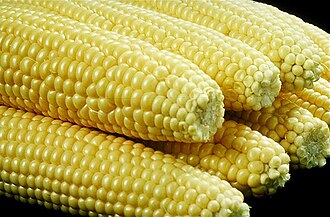
Photo: Wikipedia
Fresh, raw sweet corn kernels are a burst of sunny sweetness and crisp, juicy texture, offering a mild, grassy flavor that's more refreshing than starchy. Nutritionally, they provide a solid source of fiber (2.4g per 100g) and plant-based protein (2.8g), with a moderate calorie count of 85 kcal per 100g. The vibrant yellow and white mix adds visual appeal and a slightly more complex, nutty sweetness compared to all-yellow varieties.
Calorie split: 13% protein · 69% carbs · 17% fat
↓ Full nutrition💚 Why it's loved
People adore sweet corn for its satisfying crunch and natural, honeyed sweetness that feels like a celebration of summer. Its versatility shines in everything from salads and salsas to being eaten straight off the cob, making it a beloved staple in many cultures.
⚠️ Watch-outs & how to enjoy it better
The natural sugars in corn can cause a noticeable blood sugar spike, especially for those with insulin sensitivity or diabetes. To counteract this, pair it with a source of protein or healthy fat (like cheese, nuts, or avocado) to slow sugar absorption, and practice portion control by sticking to about one cup (150g) per serving.
Key benefits
- Good source of dietary fiber for digestive health
- Provides plant-based protein (2.8g per 100g)
- Contains antioxidants like lutein and zeaxanthin for eye health
- Naturally low in fat (1.6g per 100g)
- Rich in B vitamins like thiamine and folate
🍽️ Popular dishes
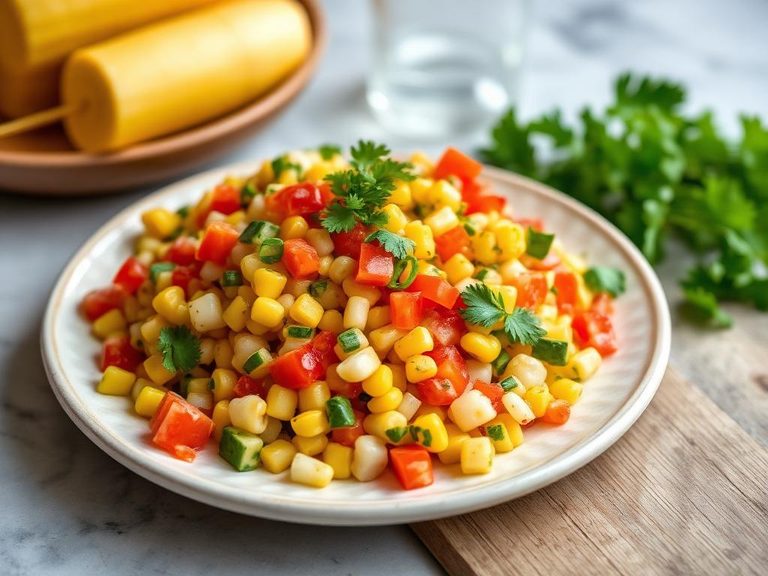

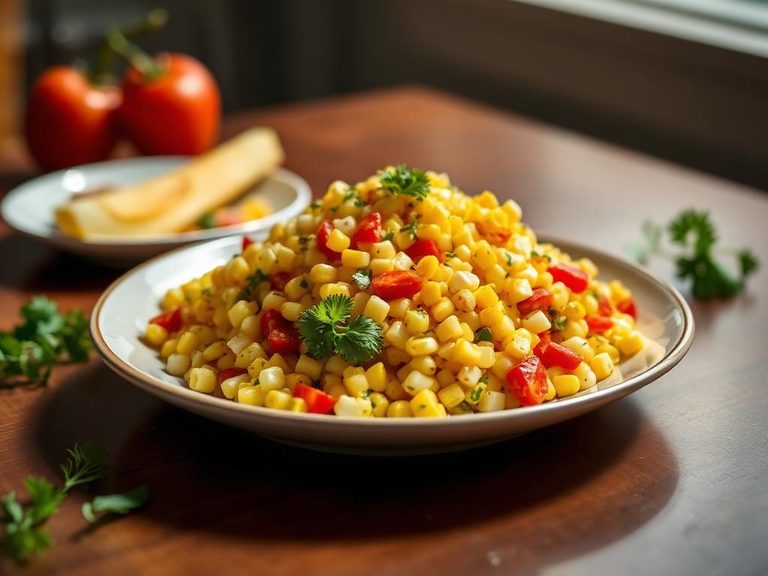



🌍 Where it's eaten
💡 Did you know?
A single ear of corn can have up to 800 kernels arranged in an even number of rows, and each kernel is technically a fruit called a caryopsis.
Full nutrition (USDA data · scales with serving)
| Water | 80.3 g |
| Energy (Atwater General Factors) | 84.5 kcal |
| Energy (Atwater Specific Factors) | 72.9 kcal |
| Nitrogen | 0.45 g |
| Protein | 2.8 g |
| Total lipid (fat) | 1.6 g |
| Ash | 0.65 g |
| Carbohydrate, by difference | 14.7 g |
| Fiber, total dietary | 2.4 g |
| Sugars, Total | 7.4 g |
| Sucrose | 3.1 g |
| Glucose | 2.7 g |
| Fructose | 1.6 g |
| Lactose | 0.00 g |
| Maltose | 0.04 g |
| Starch | 4.1 g |
| Calcium, Ca | 0.66 mg |
| Iron, Fe | 0.39 mg |
| Magnesium, Mg | 25.8 mg |
| Phosphorus, P | 75.5 mg |
| Potassium, K | 237 mg |
| Sodium, Na | 0.00 mg |
| Zinc, Zn | 0.56 mg |
| Copper, Cu | 0.06 mg |
| Manganese, Mn | 0.19 mg |
| Thiamin | 0.08 mg |
| Riboflavin | 0.14 mg |
| Niacin | 1.6 mg |
| Vitamin B-6 | 0.15 mg |
| Biotin | 2.5 ug |
Fat & fatty acid profile (per 100g)
Estimated from Succotash, (corn and limas), canned, with cream style corn — USDA does not publish this profile for Corn.
| Fatty acids, total saturated | 0.10 g |
| SFA 14:0 | 0.00 g |
| SFA 16:0 | 0.09 g |
| SFA 18:0 | 0.01 g |
| Fatty acids, total monounsaturated | 0.10 g |
| MUFA 18:1 | 0.10 g |
| Fatty acids, total polyunsaturated | 0.26 g |
| PUFA 18:2 | 0.22 g |
| PUFA 18:3 | 0.04 g |
| Fatty acids, total trans | 0.00 g |
| Cholesterol | 0.00 mg |
Amino acid profile (per 100g)
Estimated from Succotash, (corn and limas), canned, with cream style corn — USDA does not publish this profile for Corn.
| Tryptophan | 0.03 g |
| Threonine | 0.11 g |
| Isoleucine | 0.15 g |
| Leucine | 0.23 g |
| Lysine | 0.15 g |
| Methionine | 0.04 g |
| Cystine | 0.03 g |
| Phenylalanine | 0.13 g |
| Tyrosine | 0.09 g |
| Valine | 0.16 g |
| Arginine | 0.15 g |
| Histidine | 0.08 g |
| Alanine | 0.14 g |
| Aspartic acid | 0.26 g |
| Glutamic acid | 0.40 g |
| Glycine | 0.10 g |
| Proline | 0.10 g |
| Serine | 0.15 g |
FAQ
Is raw sweet corn healthy to eat?
Yes, raw sweet corn is healthy and provides fiber, protein, and vitamins. However, cooking can make its nutrients more bioavailable and easier to digest.
Does corn have a lot of sugar?
Sweet corn contains natural sugars (about 3-5g per 100g), but it's not high in added sugar. Its fiber content helps moderate the glycemic response when eaten in reasonable portions.
Can I eat corn if I'm watching my carbs?
Corn is moderately high in carbs (14.7g per 100g), so it should be portion-controlled on low-carb diets. Pairing it with protein or fat can help balance blood sugar levels.
Nutrient density (calculated · NRF9.3)
Nutrient Rich Foods index: beneficial nutrients (protein, fiber, vitamins, minerals) minus saturated fat, added sugar & sodium, per 100 kcal.
NRF9.3 index — Fulgoni, Keast & Drewnowski, 2009. Computed from USDA nutrients.
Weight-loss friendliness (composite index)
Energy density 0.85 kcal/g · 13% calories from protein · 2.4 g fiber · 0.0 g sugar per 100 g.
Composite of energy density (Rolls et al., 1999), protein & fiber satiety, minus sugar. A calculated heuristic — ranks satiety-per-calorie, not a clinical measure.
Dietary load (calculated from USDA values)
Potential renal acid load. Positive = acid-forming, negative = alkaline-forming.
Sodium-to-potassium ratio: 0.00 (lower is better — aim for ≤ 1)
Sodium:potassium per WHO potassium guidance. Computed from USDA nutrients.