

Coffee creamer, liquid
Common food
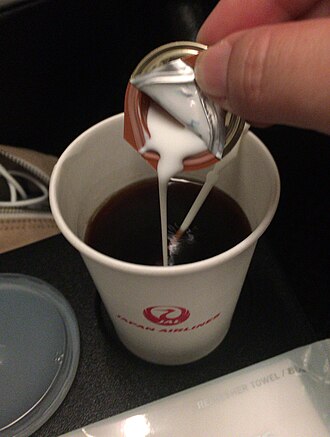
Photo: Wikipedia
A smooth, pourable liquid designed to lighten and sweeten coffee, it's a rich, creamy emulsion that replaces milk or cream. Its primary nutrition is from added fats and sugars, providing a quick energy boost but little else. The texture is silky, and its flavor is typically a mild, sweet, and slightly milky vanilla.
Calorie split: 3% protein · 33% carbs · 64% fat
↓ Full nutrition💚 Why it's loved
People love it for its ability to instantly transform a bitter coffee into a smooth, sweet, and creamy treat. Its convenience and consistent flavor make it a staple in offices and homes for a quick, comforting pick-me-up.
⚠️ Watch-outs & how to enjoy it better
It is often high in added sugars and saturated fats, which can contribute to blood sugar spikes and empty calories. To mitigate this, use it sparingly as a flavor accent, or pair your coffee with a protein-rich breakfast (like eggs or yogurt) to slow sugar absorption. Those watching their saturated fat intake should be mindful of portion size.
Key benefits
- Provides a quick source of energy from carbohydrates and fats.
- Offers a non-dairy alternative for those avoiding lactose.
- Enhances the flavor and texture of coffee and tea.
- Has a long shelf life and is convenient for storage.
- Allows for customizable sweetness and creaminess in beverages.
🍽️ Popular dishes
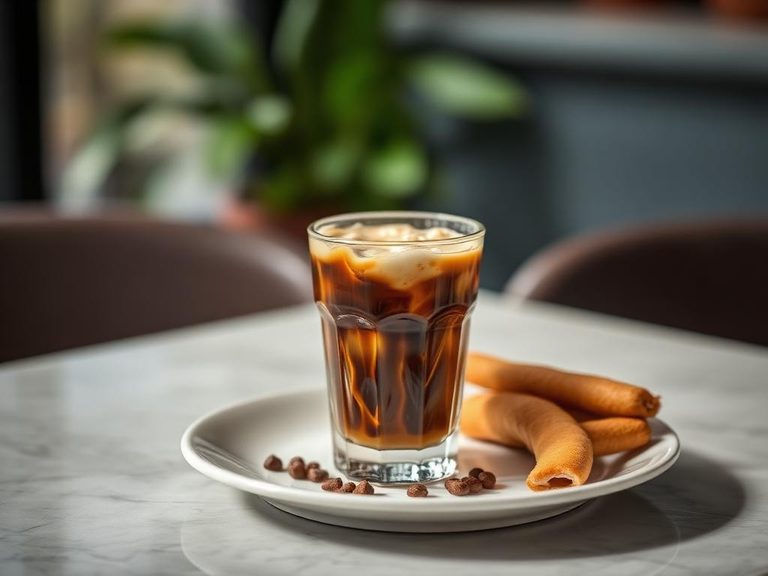
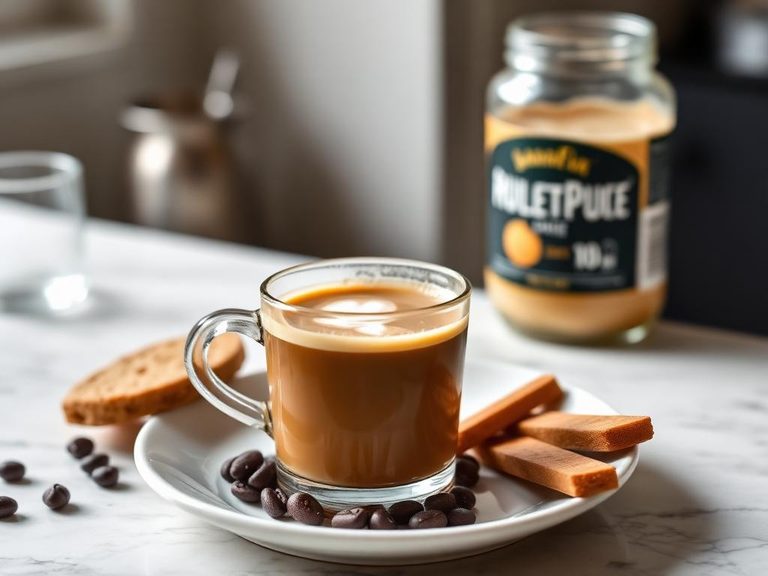


🌍 Where it's eaten
💡 Did you know?
The first non-dairy liquid creamer was invented in the 1950s by a chemist looking for a stable, shelf-stable alternative to milk for coffee, using a blend of vegetable oil, corn syrup, and emulsifiers.
Full nutrition (USDA data · scales with serving)
| Water | 77.3 g |
| Energy | 136 kcal |
| Protein | 1.0 g |
| Total lipid (fat) | 10.0 g |
| Carbohydrate, by difference | 11.4 g |
| Fiber, total dietary | 0.00 g |
| Total Sugars | 11.4 g |
| Calcium, Ca | 9.0 mg |
| Iron, Fe | 0.03 mg |
| Magnesium, Mg | 0.00 mg |
| Phosphorus, P | 64.0 mg |
| Potassium, K | 191 mg |
| Sodium, Na | 67.0 mg |
| Zinc, Zn | 0.02 mg |
| Copper, Cu | 0.00 mg |
| Selenium, Se | 1.1 ug |
| Vitamin C, total ascorbic acid | 0.00 mg |
| Thiamin | 0.00 mg |
| Riboflavin | 0.00 mg |
| Niacin | 0.00 mg |
| Vitamin B-6 | 0.00 mg |
| Folate, total | 0.00 ug |
| Folic acid | 0.00 ug |
| Folate, food | 0.00 ug |
| Folate, DFE | 0.00 ug |
| Choline, total | 0.00 mg |
| Vitamin B-12 | 0.00 ug |
| Vitamin B-12, added | 0.00 ug |
| Vitamin A, RAE | 1.0 ug |
| Retinol | 0.00 ug |
| Carotene, beta | 9.0 ug |
| Carotene, alpha | 0.00 ug |
| Cryptoxanthin, beta | 0.00 ug |
| Lycopene | 0.00 ug |
| Lutein + zeaxanthin | 0.00 ug |
| Vitamin E (alpha-tocopherol) | 0.81 mg |
| Vitamin E, added | 0.00 mg |
| Vitamin D (D2 + D3) | 0.00 ug |
| Vitamin K (phylloquinone) | 2.5 ug |
| Alcohol, ethyl | 0.00 g |
| Caffeine | 0.00 mg |
| Theobromine | 0.00 mg |
Fat & fatty acid profile (per 100g)
| Fatty acids, total saturated | 1.9 g |
| SFA 4:0 | 0.00 g |
| SFA 6:0 | 0.00 g |
| SFA 8:0 | 0.01 g |
| SFA 10:0 | 0.01 g |
| SFA 12:0 | 0.06 g |
| SFA 14:0 | 0.02 g |
| SFA 16:0 | 0.88 g |
| SFA 18:0 | 0.98 g |
| Fatty acids, total monounsaturated | 7.6 g |
| MUFA 16:1 | 0.00 g |
| MUFA 18:1 | 7.6 g |
| MUFA 20:1 | 0.00 g |
| MUFA 22:1 | 0.00 g |
| Fatty acids, total polyunsaturated | 0.03 g |
| PUFA 18:2 | 0.02 g |
| PUFA 18:3 | 0.00 g |
| PUFA 18:4 | 0.00 g |
| PUFA 20:4 | 0.00 g |
| PUFA 20:5 n-3 (EPA) | 0.00 g |
| PUFA 22:5 n-3 (DPA) | 0.00 g |
| PUFA 22:6 n-3 (DHA) | 0.00 g |
| Cholesterol | 0.00 mg |
FAQ
Is liquid coffee creamer the same as evaporated milk?
No. Evaporated milk is made from real milk with water removed, while liquid creamer is typically a non-dairy product made from vegetable oil, corn syrup, and thickeners.
Why does my liquid creamer sometimes curdle in hot coffee?
This can happen due to the acidity of the coffee or the temperature. Using a creamer with stabilizers or adding it to a slightly cooled cup can help prevent separation.
Are there sugar-free versions of liquid coffee creamer?
Yes, many brands offer sugar-free varieties sweetened with artificial sweeteners like sucralose or sugar alcohols, which significantly reduce the calorie and carbohydrate content.
Nutrient density (calculated · NRF9.3)
Nutrient Rich Foods index: beneficial nutrients (protein, fiber, vitamins, minerals) minus saturated fat, added sugar & sodium, per 100 kcal.
NRF9.3 index — Fulgoni, Keast & Drewnowski, 2009. Computed from USDA nutrients.
Weight-loss friendliness (composite index)
Energy density 1.36 kcal/g · 3% calories from protein · 0.0 g fiber · 11.4 g sugar per 100 g.
Composite of energy density (Rolls et al., 1999), protein & fiber satiety, minus sugar. A calculated heuristic — ranks satiety-per-calorie, not a clinical measure.
Dietary load (calculated from USDA values)
Potential renal acid load. Positive = acid-forming, negative = alkaline-forming.
Sodium-to-potassium ratio: 0.35 (lower is better — aim for ≤ 1)
Sodium:potassium per WHO potassium guidance. Computed from USDA nutrients.