

Chiliburger, with or without cheese, on bun
Common food

Photo: Wikipedia
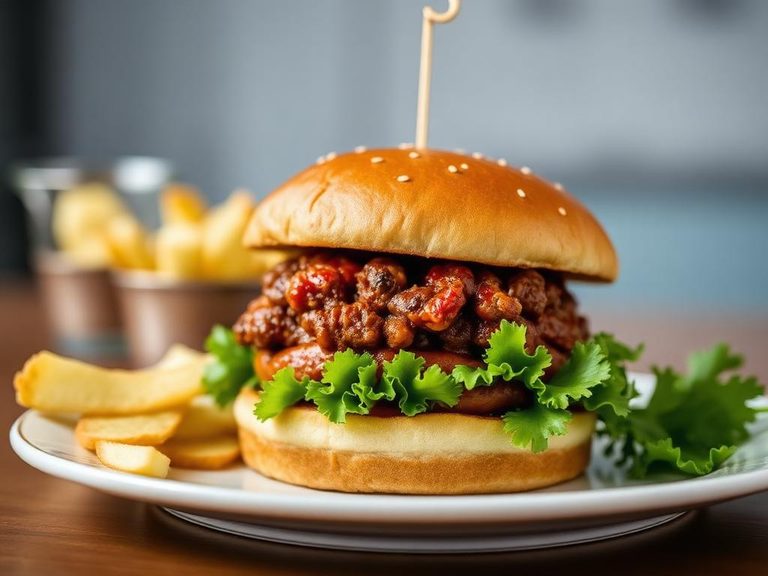
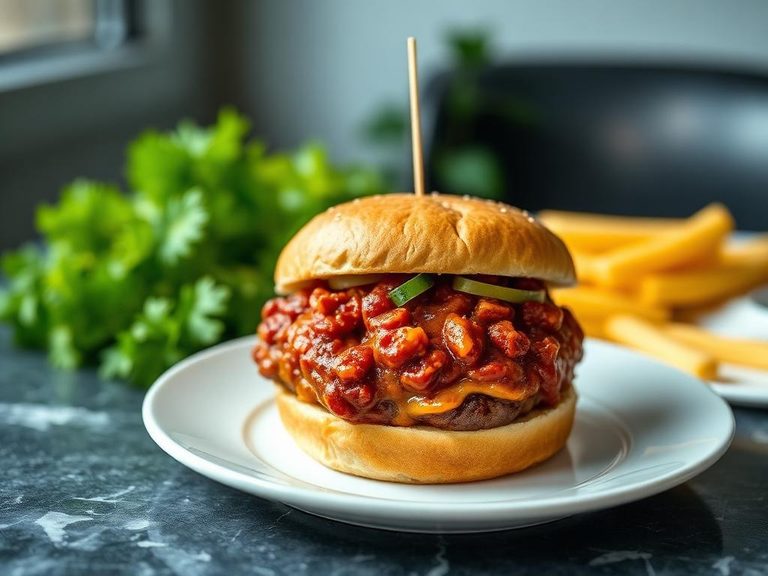
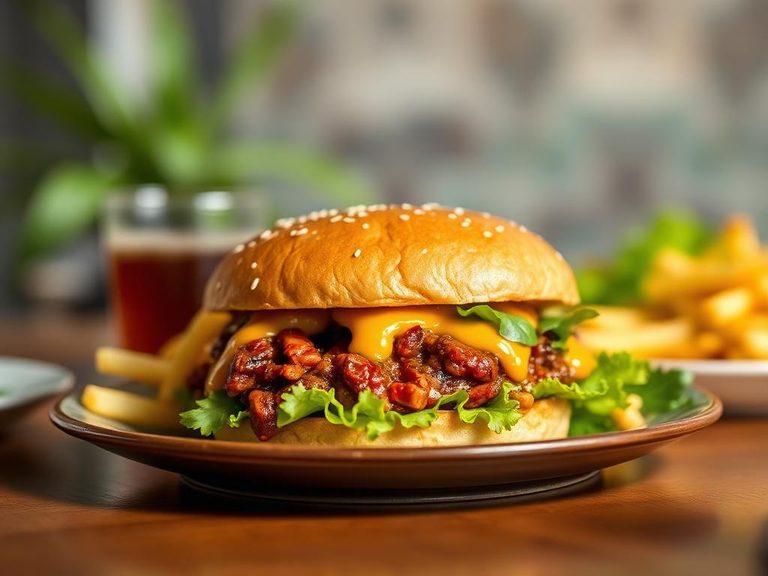
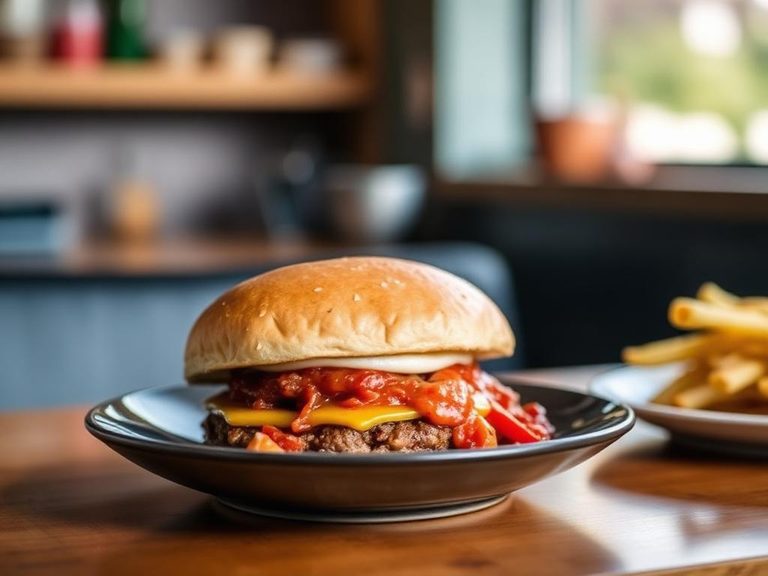
A chiliburger is a hearty, open-faced sandwich featuring a seasoned beef patty smothered in a thick, savory chili con carne, often topped with melted cheese and served on a soft bun. The experience is a rich, messy blend of textures: the tender patty, the hearty, slightly coarse chili, and the soft, absorbent bread. Nutritionally, it's a dense source of protein and calories, with the chili adding fiber and complex carbs.
Calorie split: 26% protein · 31% carbs · 43% fat
↓ Full nutrition💚 Why it's loved
People love the chiliburger for its ultimate comfort-food status—a satisfying, all-in-one meal that combines the classic appeal of a burger with the deep, complex flavors of slow-cooked chili. It's a versatile staple of American diners and backyard cookouts, easily customized with toppings like onions, jalapeños, or sour cream.
⚠️ Watch-outs & how to enjoy it better
The dish can be high in sodium, saturated fat, and refined carbohydrates, which may concern those monitoring heart health or blood sugar. To counteract this, opt for a leaner beef or turkey patty, use low-sodium canned beans and tomatoes in the chili, and choose a whole-grain bun to increase fiber. Pairing with a side of leafy greens or a vinegar-based slaw can add volume and nutrients without excess calories.
Key benefits
- High-quality protein for muscle maintenance from the beef patty.
- Provides iron and B vitamins, particularly B12, from red meat.
- The chili component adds dietary fiber and plant-based protein from beans.
- A calorie-dense meal suitable for high-energy needs.
- Can be a source of zinc and selenium from the beef.
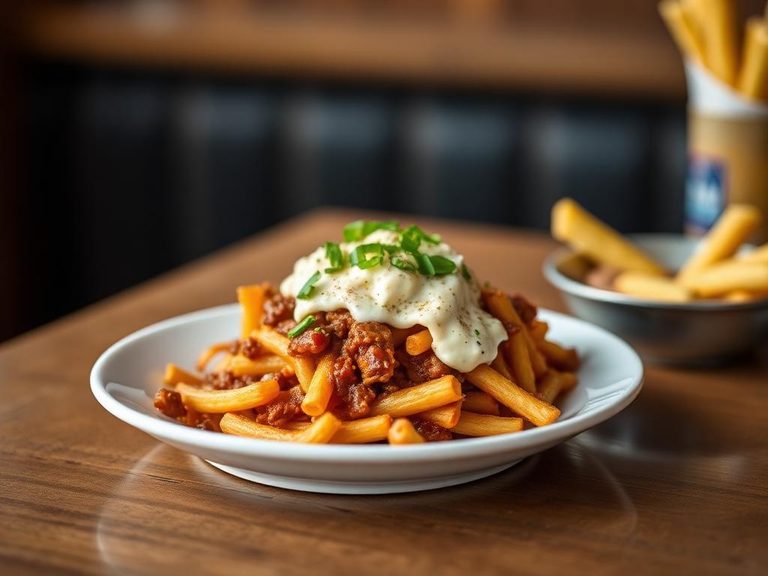
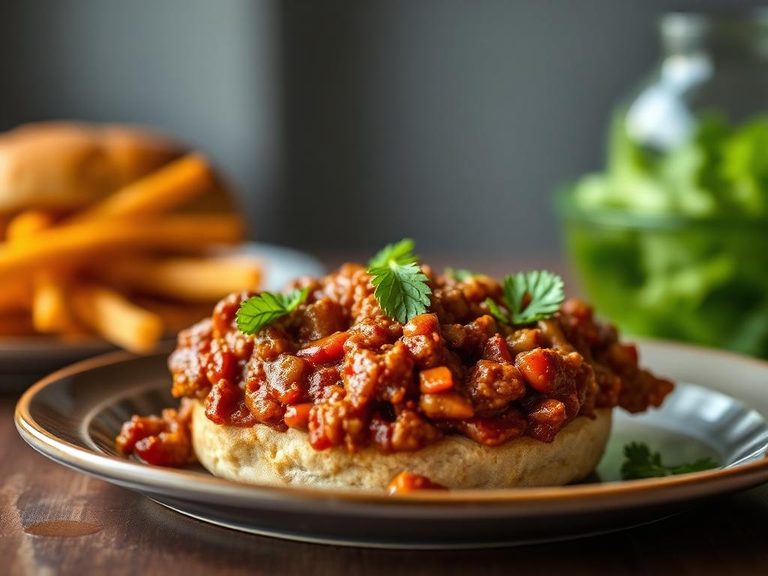
🍽️ Popular dishes
🌍 Where it's eaten
💡 Did you know?
The chiliburger is a documented menu item at the original McDonald's in the 1940s, before the chain pivoted to focus solely on hamburgers, fries, and shakes.
Full nutrition (USDA data · scales with serving)
| Water | 54.9 g |
| Energy | 232 kcal |
| Protein | 14.8 g |
| Total lipid (fat) | 11.0 g |
| Carbohydrate, by difference | 17.7 g |
| Fiber, total dietary | 1.5 g |
| Total Sugars | 2.5 g |
| Calcium, Ca | 52.0 mg |
| Iron, Fe | 2.5 mg |
| Magnesium, Mg | 22.0 mg |
| Phosphorus, P | 130 mg |
| Potassium, K | 243 mg |
| Sodium, Na | 356 mg |
| Zinc, Zn | 2.7 mg |
| Copper, Cu | 0.11 mg |
| Selenium, Se | 18.1 ug |
| Vitamin C, total ascorbic acid | 2.2 mg |
| Thiamin | 0.19 mg |
| Riboflavin | 0.18 mg |
| Niacin | 3.8 mg |
| Vitamin B-6 | 0.24 mg |
| Folate, total | 52.0 ug |
| Folic acid | 15.0 ug |
| Folate, food | 37.0 ug |
| Folate, DFE | 62.0 ug |
| Choline, total | 43.7 mg |
| Vitamin B-12 | 1.3 ug |
| Vitamin B-12, added | 0.00 ug |
| Vitamin A, RAE | 3.0 ug |
| Retinol | 0.00 ug |
| Carotene, beta | 33.0 ug |
| Carotene, alpha | 3.0 ug |
| Cryptoxanthin, beta | 5.0 ug |
| Lycopene | 622 ug |
| Lutein + zeaxanthin | 7.0 ug |
| Vitamin E (alpha-tocopherol) | 0.21 mg |
| Vitamin E, added | 0.00 mg |
| Vitamin D (D2 + D3) | 0.10 ug |
| Vitamin K (phylloquinone) | 3.7 ug |
| Alcohol, ethyl | 0.00 g |
| Caffeine | 0.00 mg |
| Theobromine | 0.00 mg |
Fat & fatty acid profile (per 100g)
| Fatty acids, total saturated | 4.2 g |
| SFA 4:0 | 0.00 g |
| SFA 6:0 | 0.00 g |
| SFA 8:0 | 0.00 g |
| SFA 10:0 | 0.00 g |
| SFA 12:0 | 0.00 g |
| SFA 14:0 | 0.31 g |
| SFA 16:0 | 2.4 g |
| SFA 18:0 | 1.3 g |
| Fatty acids, total monounsaturated | 4.4 g |
| MUFA 16:1 | 0.32 g |
| MUFA 18:1 | 4.0 g |
| MUFA 20:1 | 0.02 g |
| MUFA 22:1 | 0.00 g |
| Fatty acids, total polyunsaturated | 0.85 g |
| PUFA 18:2 | 0.75 g |
| PUFA 18:3 | 0.10 g |
| PUFA 18:4 | 0.00 g |
| PUFA 20:4 | 0.00 g |
| PUFA 20:5 n-3 (EPA) | 0.00 g |
| PUFA 22:5 n-3 (DPA) | 0.01 g |
| PUFA 22:6 n-3 (DHA) | 0.00 g |
| Cholesterol | 39.0 mg |
FAQ
What's the difference between a chiliburger and a sloppy joe?
A chiliburger uses a whole, formed ground beef patty topped with chili, while a sloppy joe features loose, seasoned ground meat (often with a sweeter, tomato-based sauce) served on a bun.
Can I make a chiliburger with turkey or a plant-based patty?
Absolutely. Ground turkey, chicken, or a plant-based burger substitute work well. The chili topping is very adaptable and will complement these alternatives.
Is the chili served on top typically bean-based?
It varies by region and recipe. Traditional Texas-style chili con carne has no beans, but many diner and home-style chiliburgers use a hearty bean-and-meat chili for added texture and fiber.
Nutrient density (calculated · NRF9.3)
Nutrient Rich Foods index: beneficial nutrients (protein, fiber, vitamins, minerals) minus saturated fat, added sugar & sodium, per 100 kcal.
NRF9.3 index — Fulgoni, Keast & Drewnowski, 2009. Computed from USDA nutrients.
Weight-loss friendliness (composite index)
Energy density 2.32 kcal/g · 25% calories from protein · 1.5 g fiber · 2.5 g sugar per 100 g.
Composite of energy density (Rolls et al., 1999), protein & fiber satiety, minus sugar. A calculated heuristic — ranks satiety-per-calorie, not a clinical measure.
Dietary load (calculated from USDA values)
Potential renal acid load. Positive = acid-forming, negative = alkaline-forming.
Sodium-to-potassium ratio: 1.47 (lower is better — aim for ≤ 1)
Sodium:potassium per WHO potassium guidance. Computed from USDA nutrients.