

Bread, white, commercially prepared, toasted, low sodium no salt
Whole food · Baked Products

Photo: Wikipedia
This is the classic, ultra-lean canvas of the sandwich world: a slice of commercially prepared white bread, toasted to a light golden crisp. Its texture is a study in contrasts—crisp and dry on the surface, yet soft and yielding within. Nutritionally, it's a concentrated source of quick energy from carbohydrates, with a modest protein boost and virtually no fat or fiber.
Calorie split: 12% protein · 75% carbs · 12% fat
↓ Full nutrition💚 Why it's loved
People love it for its dependable, neutral flavor and satisfying crunch when toasted, making it the ultimate versatile foundation. It's a nostalgic, comforting staple that acts as a reliable vehicle for everything from jam to avocado.
⚠️ Watch-outs & how to enjoy it better
Its low fiber and high glycemic index can lead to rapid blood-sugar spikes, making it less ideal for sustained energy or those managing blood sugar. To counteract this, always pair it with protein (like eggs or nut butter) or healthy fats (like avocado or cheese) to slow digestion and blunt the glucose response.
Key benefits
- Excellent quick-energy source for pre- or post-workout fuel.
- Very low in sodium, suitable for low-sodium diets.
- Provides a blank, mild flavor base for both sweet and savory toppings.
- Lightly toasted, it's easier to digest for some than untoasted bread.
🍽️ Popular dishes
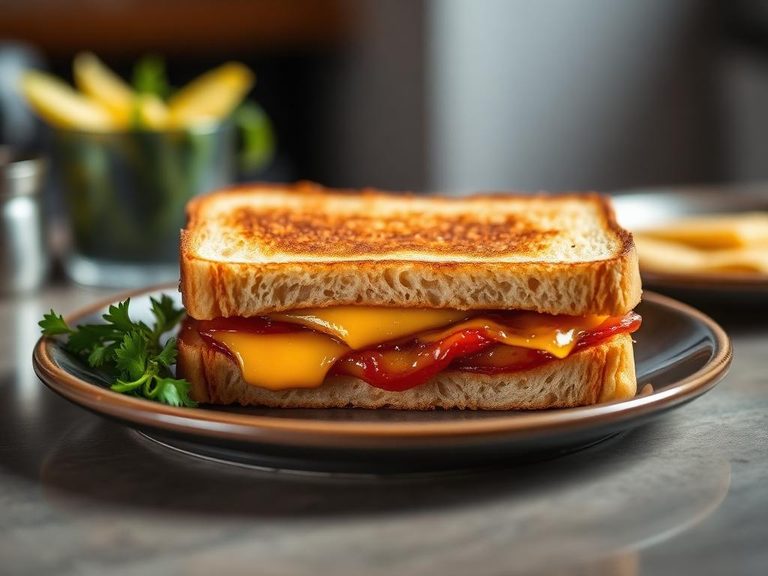
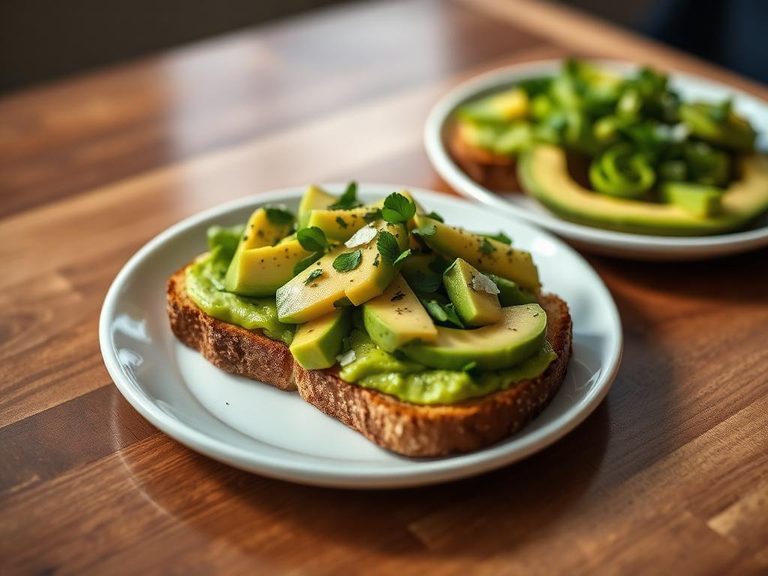

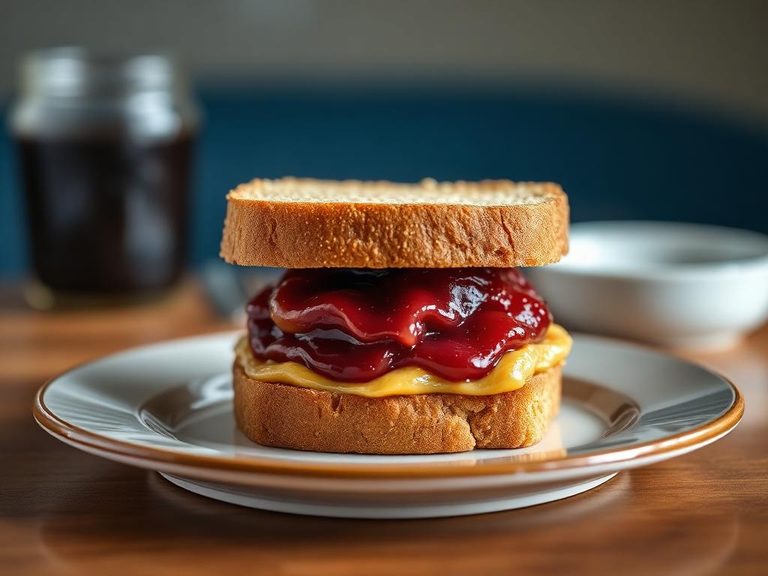

🌍 Where it's eaten
💡 Did you know?
The invention of pre-sliced, packaged bread in 1928 by Otto Frederick Rohwedder was so revolutionary it fundamentally changed sandwich culture and gave rise to the term 'the best thing since sliced bread.'
Full nutrition (USDA data · scales with serving)
| Water | 30.4 g |
| Energy | 293 kcal |
| Energy | 1226 kj |
| Protein | 9.0 g |
| Total lipid (fat) | 4.0 g |
| Ash | 2.1 g |
| Carbohydrate, by difference | 54.4 g |
| Calcium, Ca | 119 mg |
| Iron, Fe | 3.3 mg |
| Magnesium, Mg | 26.0 mg |
| Phosphorus, P | 103 mg |
| Potassium, K | 131 mg |
| Sodium, Na | 376 mg |
| Zinc, Zn | 0.68 mg |
| Copper, Cu | 0.14 mg |
| Manganese, Mn | 0.42 mg |
| Vitamin C, total ascorbic acid | 0.00 mg |
| Thiamin | 0.41 mg |
| Riboflavin | 0.34 mg |
| Niacin | 3.9 mg |
| Pantothenic acid | 0.28 mg |
| Vitamin B-6 | 0.06 mg |
| Folate, total | 95.0 ug |
| Folic acid | 69.0 ug |
| Folate, food | 26.0 ug |
| Folate, DFE | 143 ug |
| Vitamin B-12 | 0.02 ug |
| Retinol | 0.00 ug |
| Vitamin A, IU | 0.00 iu |
Fat & fatty acid profile (per 100g)
| Fatty acids, total saturated | 0.89 g |
| SFA 4:0 | 0.00 g |
| SFA 6:0 | 0.00 g |
| SFA 8:0 | 0.00 g |
| SFA 10:0 | 0.00 g |
| SFA 12:0 | 0.00 g |
| SFA 14:0 | 0.02 g |
| SFA 16:0 | 0.52 g |
| SFA 18:0 | 0.36 g |
| Fatty acids, total monounsaturated | 1.8 g |
| MUFA 16:1 | 0.01 g |
| MUFA 18:1 | 1.8 g |
| Fatty acids, total polyunsaturated | 0.82 g |
| PUFA 18:2 | 0.78 g |
| PUFA 18:3 | 0.04 g |
| Cholesterol | 1.0 mg |
Amino acid profile (per 100g)
| Tryptophan | 0.11 g |
| Threonine | 0.27 g |
| Isoleucine | 0.35 g |
| Leucine | 0.64 g |
| Lysine | 0.24 g |
| Methionine | 0.16 g |
| Cystine | 0.19 g |
| Phenylalanine | 0.44 g |
| Tyrosine | 0.26 g |
| Valine | 0.40 g |
| Arginine | 0.35 g |
| Histidine | 0.20 g |
| Alanine | 0.31 g |
| Aspartic acid | 0.45 g |
| Glutamic acid | 2.9 g |
| Glycine | 0.32 g |
| Proline | 0.97 g |
| Serine | 0.44 g |
FAQ
What's the difference between this and regular white toast?
The key difference is the dramatically reduced sodium content. Regular commercially prepared bread often contains 150-200mg of sodium per slice, while this low-sodium version has negligible amounts, making it a specific product for dietary needs.
Is it nutritious?
It's primarily a source of refined carbohydrates for quick energy, with a small amount of protein. It lacks significant fiber, vitamins, or minerals unless fortified. Its nutritional value is best enhanced by topping it with nutrient-dense foods.
Why is it toasted in the description?
Toasting changes the texture and flavor, creating a crisp exterior that holds wet toppings better without becoming soggy. It also lowers the moisture content, which can make it feel lighter and easier to eat for some.
Nutrient density (calculated · NRF9.3)
Nutrient Rich Foods index: beneficial nutrients (protein, fiber, vitamins, minerals) minus saturated fat, added sugar & sodium, per 100 kcal.
NRF9.3 index — Fulgoni, Keast & Drewnowski, 2009. Computed from USDA nutrients.
Weight-loss friendliness (composite index)
Energy density 2.93 kcal/g · 12% calories from protein · 0.0 g fiber · 0.0 g sugar per 100 g.
Composite of energy density (Rolls et al., 1999), protein & fiber satiety, minus sugar. A calculated heuristic — ranks satiety-per-calorie, not a clinical measure.
Dietary load (calculated from USDA values)
Potential renal acid load. Positive = acid-forming, negative = alkaline-forming.
Sodium-to-potassium ratio: 2.87 (lower is better — aim for ≤ 1)
Sodium:potassium per WHO potassium guidance. Computed from USDA nutrients.