

Blackeyed peas, from canned
Common food

Photo: Wikipedia
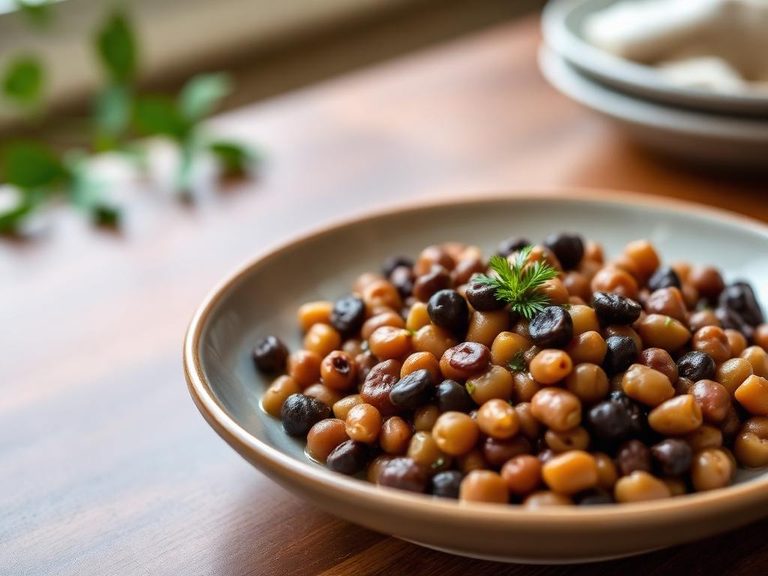
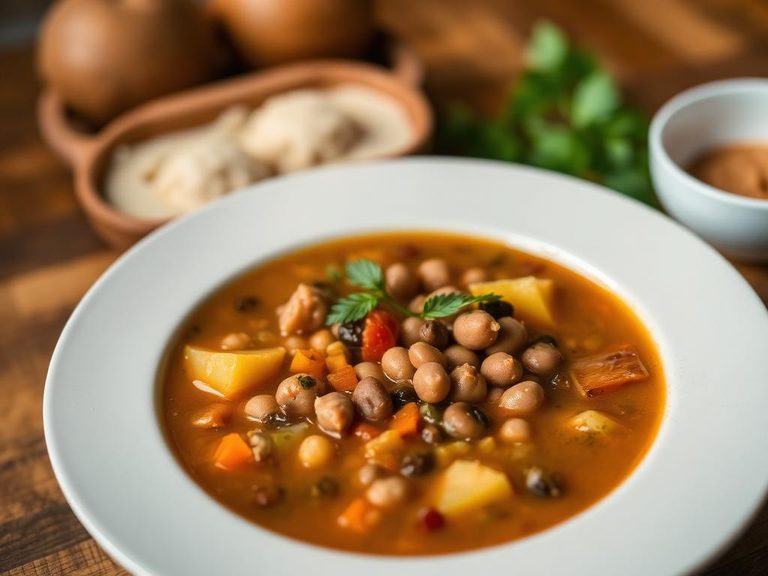
These are the humble, cream-colored beans with the distinctive black 'eye' at the hilum, canned for convenience. They have a soft, slightly mealy texture and a mild, earthy, nutty flavor that readily absorbs surrounding seasonings. Nutritionally, they are a standout source of plant-based protein and dietary fiber for a very modest calorie count.
Calorie split: 21% protein · 60% carbs · 19% fat
↓ Full nutrition💚 Why it's loved
People cherish black-eyed peas for their comforting, mild flavor that acts as a perfect canvas for bold spices, smoked meats, or tangy vinaigrettes. They are a cornerstone of soul food and Southern US cuisine, symbolizing good luck and prosperity when eaten on New Year's Day.
⚠️ Watch-outs & how to enjoy it better
Canned versions can be high in sodium, which may concern those monitoring blood pressure. To counteract this, rinse the beans thoroughly under cold water to remove up to 40% of the added salt. As a legume, they can cause digestive gas; starting with smaller portions and gradually increasing intake allows your system to adjust.
Key benefits
- Excellent source of plant-based protein for muscle maintenance.
- High in dietary fiber to support digestive health and satiety.
- Provides folate, manganese, and thiamine for cellular energy.
- Low in fat and contains no cholesterol.
- Quick-cooking and shelf-stable for easy meal prep.
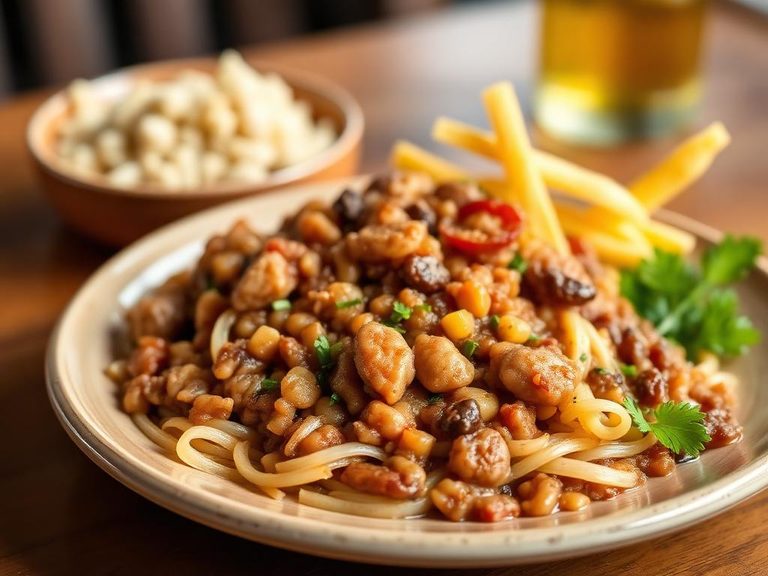
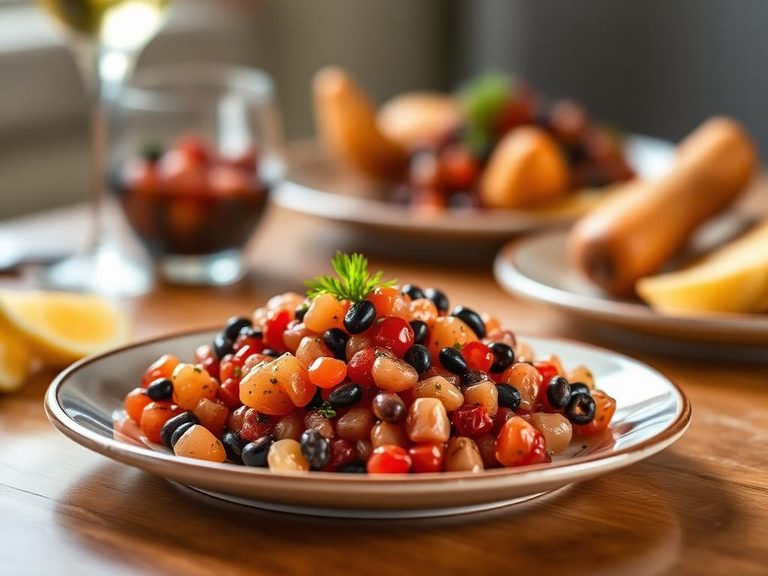
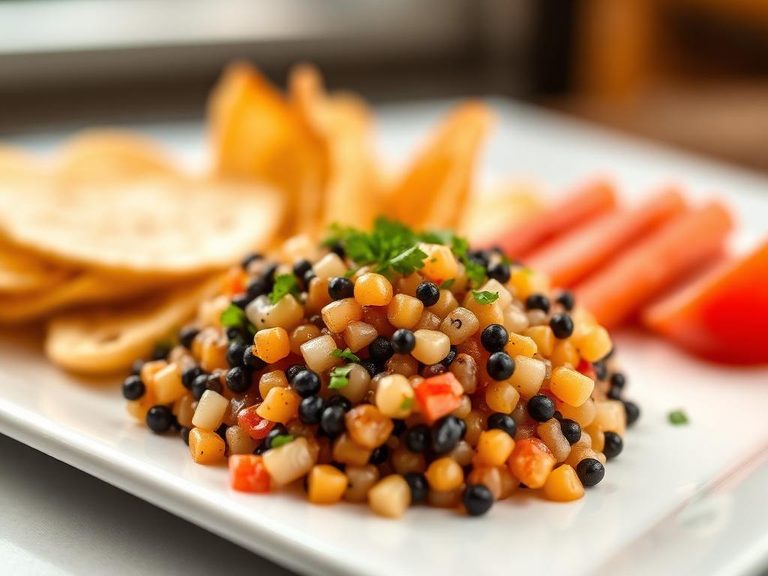
🍽️ Popular dishes
🌍 Where it's eaten
💡 Did you know?
The black spot on the bean is said to resemble an eye, and in some folklore traditions, it was believed to ward off the 'evil eye' and bring good fortune.
Full nutrition (USDA data · scales with serving)
| Water | 64.0 g |
| Energy | 150 kcal |
| Protein | 8.2 g |
| Total lipid (fat) | 3.2 g |
| Carbohydrate, by difference | 22.9 g |
| Fiber, total dietary | 6.2 g |
| Total Sugars | 4.3 g |
| Calcium, Ca | 23.0 mg |
| Iron, Fe | 2.0 mg |
| Magnesium, Mg | 48.0 mg |
| Phosphorus, P | 118 mg |
| Potassium, K | 362 mg |
| Sodium, Na | 312 mg |
| Zinc, Zn | 1.4 mg |
| Copper, Cu | 0.18 mg |
| Selenium, Se | 3.3 ug |
| Vitamin C, total ascorbic acid | 2.5 mg |
| Thiamin | 0.25 mg |
| Riboflavin | 0.06 mg |
| Niacin | 0.70 mg |
| Vitamin B-6 | 0.11 mg |
| Folate, total | 136 ug |
| Folic acid | 0.00 ug |
| Folate, food | 136 ug |
| Folate, DFE | 136 ug |
| Choline, total | 44.2 mg |
| Vitamin B-12 | 0.00 ug |
| Vitamin B-12, added | 0.00 ug |
| Vitamin A, RAE | 15.0 ug |
| Retinol | 11.0 ug |
| Carotene, beta | 48.0 ug |
| Carotene, alpha | 0.00 ug |
| Cryptoxanthin, beta | 0.00 ug |
| Lycopene | 0.00 ug |
| Lutein + zeaxanthin | 0.00 ug |
| Vitamin E (alpha-tocopherol) | 0.67 mg |
| Vitamin E, added | 0.00 mg |
| Vitamin D (D2 + D3) | 0.00 ug |
| Vitamin K (phylloquinone) | 37.5 ug |
| Alcohol, ethyl | 0.00 g |
| Caffeine | 0.00 mg |
| Theobromine | 0.00 mg |
Fat & fatty acid profile (per 100g)
| Fatty acids, total saturated | 0.83 g |
| SFA 4:0 | 0.02 g |
| SFA 6:0 | 0.01 g |
| SFA 8:0 | 0.01 g |
| SFA 10:0 | 0.02 g |
| SFA 12:0 | 0.02 g |
| SFA 14:0 | 0.07 g |
| SFA 16:0 | 0.50 g |
| SFA 18:0 | 0.16 g |
| Fatty acids, total monounsaturated | 0.96 g |
| MUFA 16:1 | 0.02 g |
| MUFA 18:1 | 0.90 g |
| MUFA 20:1 | 0.01 g |
| MUFA 22:1 | 0.02 g |
| Fatty acids, total polyunsaturated | 1.00 g |
| PUFA 18:2 | 0.80 g |
| PUFA 18:3 | 0.19 g |
| PUFA 18:4 | 0.00 g |
| PUFA 20:4 | 0.00 g |
| PUFA 20:5 n-3 (EPA) | 0.00 g |
| PUFA 22:5 n-3 (DPA) | 0.00 g |
| PUFA 22:6 n-3 (DHA) | 0.00 g |
| Cholesterol | 2.0 mg |
FAQ
Do I need to cook canned black-eyed peas?
No, they are fully cooked and ready to eat. However, heating them in a dish or simmering them in a sauce for 10-15 minutes greatly improves their flavor and texture.
What's the difference between black-eyed peas and regular beans?
They are a type of cowpea (Vigna unguiculata), not a true bean. They have a distinct, slightly nutty flavor and a softer, less starchy texture than beans like pinto or black beans.
How can I reduce the 'beany' flavor?
Rinsing them well helps. Cooking them with aromatics like onion, garlic, and bay leaf, or with smoked meats like ham hocks, effectively balances and deepens their natural taste.
Nutrient density (calculated · NRF9.3)
Nutrient Rich Foods index: beneficial nutrients (protein, fiber, vitamins, minerals) minus saturated fat, added sugar & sodium, per 100 kcal.
NRF9.3 index — Fulgoni, Keast & Drewnowski, 2009. Computed from USDA nutrients.
Weight-loss friendliness (composite index)
Energy density 1.50 kcal/g · 22% calories from protein · 6.2 g fiber · 4.3 g sugar per 100 g.
Composite of energy density (Rolls et al., 1999), protein & fiber satiety, minus sugar. A calculated heuristic — ranks satiety-per-calorie, not a clinical measure.
Dietary load (calculated from USDA values)
Potential renal acid load. Positive = acid-forming, negative = alkaline-forming.
Sodium-to-potassium ratio: 0.86 (lower is better — aim for ≤ 1)
Sodium:potassium per WHO potassium guidance. Computed from USDA nutrients.