

Beverages, fruit punch juice drink, frozen concentrate
Whole food · Beverages

Photo: Wikipedia
This is a frozen concentrate of fruit punch, a vibrant, sweet-tart beverage base made from a blend of fruit juices and flavorings. When diluted with water, it transforms into a refreshing, brightly colored drink with a smooth, non-carbonated texture. Nutritionally, it's a significant source of quick energy from carbohydrates, with virtually no fat or protein.
Calorie split: 1% protein · 96% carbs · 4% fat
↓ Full nutrition💚 Why it's loved
People love fruit punch concentrate for its nostalgic, sweet-tart flavor that evokes childhood parties and picnics. Its versatility is key—you can adjust the dilution to your taste or use it as a base for creative mocktails and cocktails.
⚠️ Watch-outs & how to enjoy it better
The primary downside is the very high carbohydrate content, which can lead to blood sugar spikes, especially for those monitoring their intake. To counteract this, consider diluting it more than instructed, pairing it with a source of protein or healthy fat (like nuts or cheese), or using it as an occasional treat rather than a daily beverage.
Key benefits
- Provides quick energy from concentrated carbohydrates
- Convenient and shelf-stable for long-term storage
- Easily customizable for sweetness and strength
- A fun, nostalgic base for homemade punches and cocktails
- No fat or cholesterol
🍽️ Popular dishes
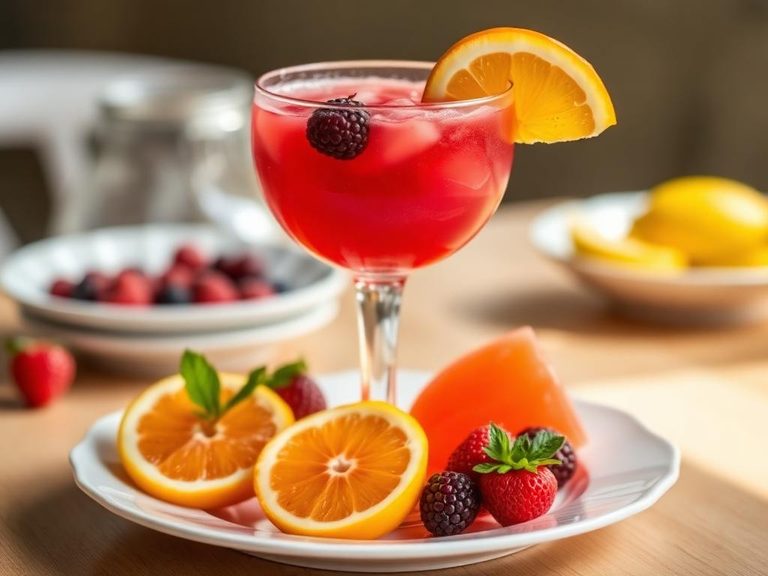
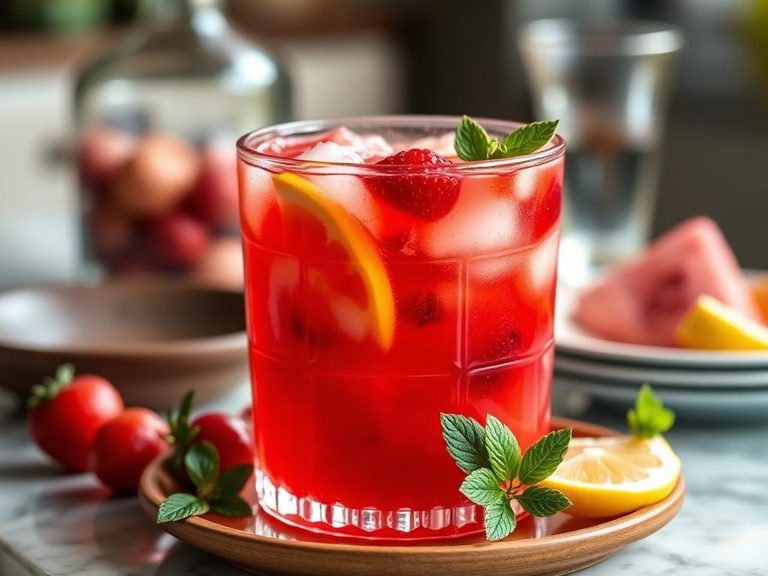
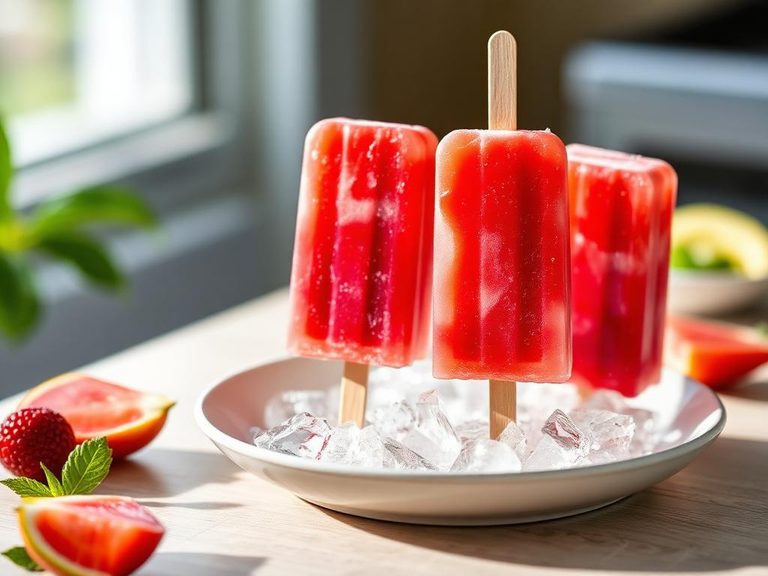
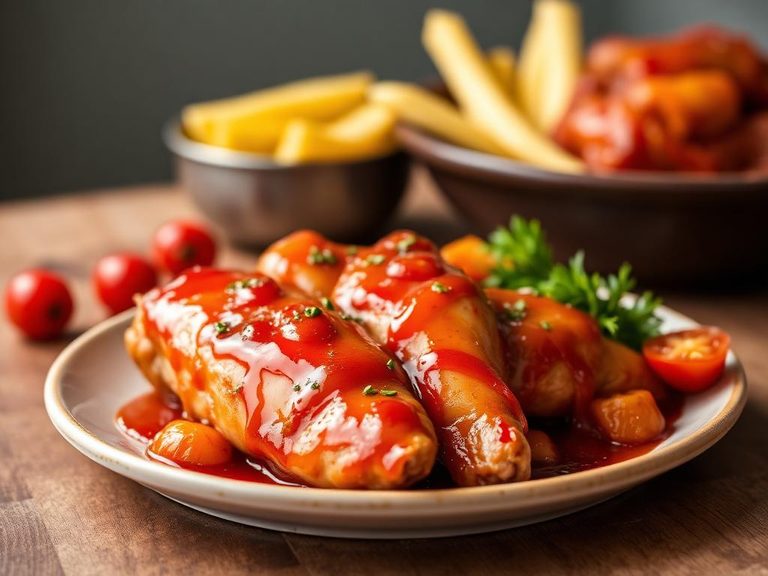
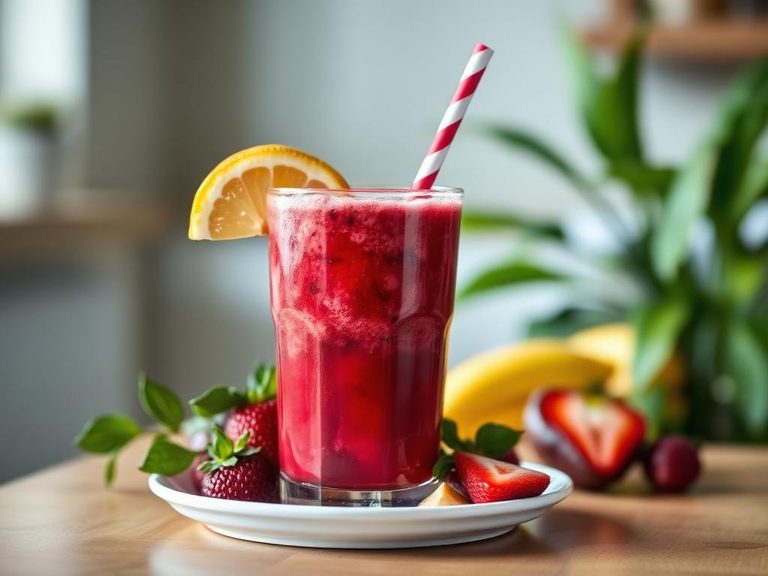
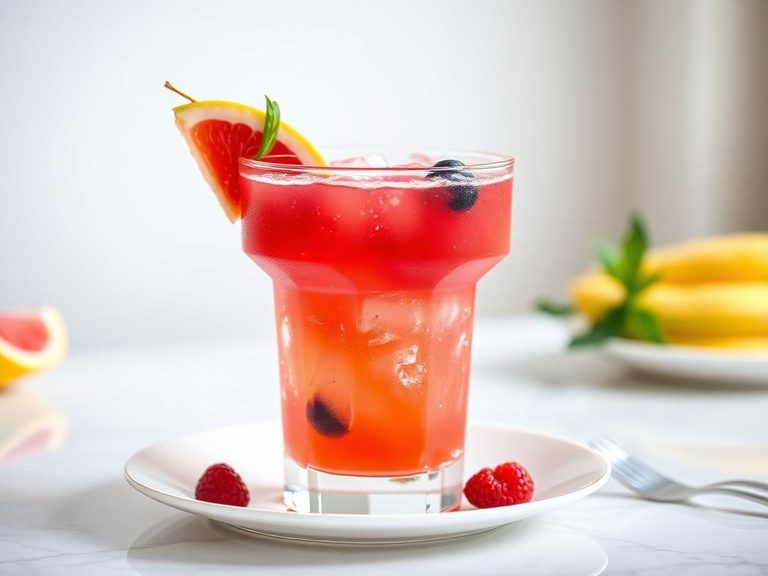
🌍 Where it's eaten
💡 Did you know?
The term 'fruit punch' originally referred to an Indian beverage made with five ingredients (panch), and it was brought to England by East India Company employees before evolving into the sweet, non-alcoholic version we know today.
Full nutrition (USDA data · scales with serving)
| Water | 55.5 g |
| Energy | 175 kcal |
| Energy | 732 kj |
| Protein | 0.30 g |
| Total lipid (fat) | 0.70 g |
| Ash | 0.50 g |
| Carbohydrate, by difference | 43.1 g |
| Fiber, total dietary | 0.20 g |
| Calcium, Ca | 20.0 mg |
| Iron, Fe | 0.80 mg |
| Magnesium, Mg | 11.0 mg |
| Phosphorus, P | 12.0 mg |
| Potassium, K | 270 mg |
| Sodium, Na | 10.0 mg |
| Zinc, Zn | 0.70 mg |
| Copper, Cu | 0.07 mg |
| Manganese, Mn | 0.21 mg |
| Selenium, Se | 0.00 ug |
| Vitamin C, total ascorbic acid | 19.7 mg |
| Thiamin | 0.00 mg |
| Riboflavin | 0.23 mg |
| Niacin | 0.21 mg |
| Pantothenic acid | 0.10 mg |
| Vitamin B-6 | 0.04 mg |
| Folate, total | 7.0 ug |
| Folic acid | 0.00 ug |
| Folate, food | 7.0 ug |
| Folate, DFE | 7.0 ug |
| Vitamin B-12 | 0.00 ug |
| Vitamin B-12, added | 0.00 ug |
| Vitamin A, RAE | 1.0 ug |
| Retinol | 0.00 ug |
| Vitamin A, IU | 21.0 iu |
Fat & fatty acid profile (per 100g)
| Fatty acids, total saturated | 0.09 g |
| SFA 14:0 | 0.00 g |
| SFA 16:0 | 0.08 g |
| SFA 18:0 | 0.00 g |
| Fatty acids, total monounsaturated | 0.09 g |
| MUFA 16:1 | 0.01 g |
| MUFA 18:1 | 0.05 g |
| Fatty acids, total polyunsaturated | 0.17 g |
| PUFA 18:2 | 0.13 g |
| PUFA 18:3 | 0.05 g |
| Fatty acids, total trans | 0.00 g |
| Cholesterol | 0.00 mg |
Amino acid profile (per 100g)
Estimated from Beverages, carbonated, tonic water — USDA does not publish this profile for Beverages.
| Tryptophan | 0.00 g |
| Threonine | 0.00 g |
| Isoleucine | 0.00 g |
| Leucine | 0.00 g |
| Lysine | 0.00 g |
| Methionine | 0.00 g |
| Cystine | 0.00 g |
| Phenylalanine | 0.00 g |
| Tyrosine | 0.00 g |
| Valine | 0.00 g |
| Arginine | 0.00 g |
| Histidine | 0.00 g |
| Alanine | 0.00 g |
| Aspartic acid | 0.00 g |
| Glutamic acid | 0.00 g |
| Glycine | 0.00 g |
| Proline | 0.00 g |
| Serine | 0.00 g |
FAQ
Is fruit punch concentrate the same as fruit juice?
No. It's a concentrated blend, often containing added sugars, flavorings, and preservatives, meant to be diluted. Fruit juice is typically the direct, undiluted juice of fruit.
Can I use it in cooking or baking?
Yes! It can be reduced to a glaze for meats like chicken or ham, used to flavor cake batters or frostings, or as a base for sorbets and popsicles.
How long does opened concentrate last?
Once opened, it should be transferred to an airtight container and refrigerated. It will typically last for 5-7 days. Frozen concentrate is best used by the date on the can.
Nutrient density (calculated · NRF9.3)
Nutrient Rich Foods index: beneficial nutrients (protein, fiber, vitamins, minerals) minus saturated fat, added sugar & sodium, per 100 kcal.
NRF9.3 index — Fulgoni, Keast & Drewnowski, 2009. Computed from USDA nutrients.
Weight-loss friendliness (composite index)
Energy density 1.75 kcal/g · 1% calories from protein · 0.2 g fiber · 0.0 g sugar per 100 g.
Composite of energy density (Rolls et al., 1999), protein & fiber satiety, minus sugar. A calculated heuristic — ranks satiety-per-calorie, not a clinical measure.
Dietary load (calculated from USDA values)
Potential renal acid load. Positive = acid-forming, negative = alkaline-forming.
Sodium-to-potassium ratio: 0.04 (lower is better — aim for ≤ 1)
Sodium:potassium per WHO potassium guidance. Computed from USDA nutrients.