

Beets, harvard, canned, solids and liquids
Whole food · Vegetables and Vegetable Products

Photo: Wikipedia
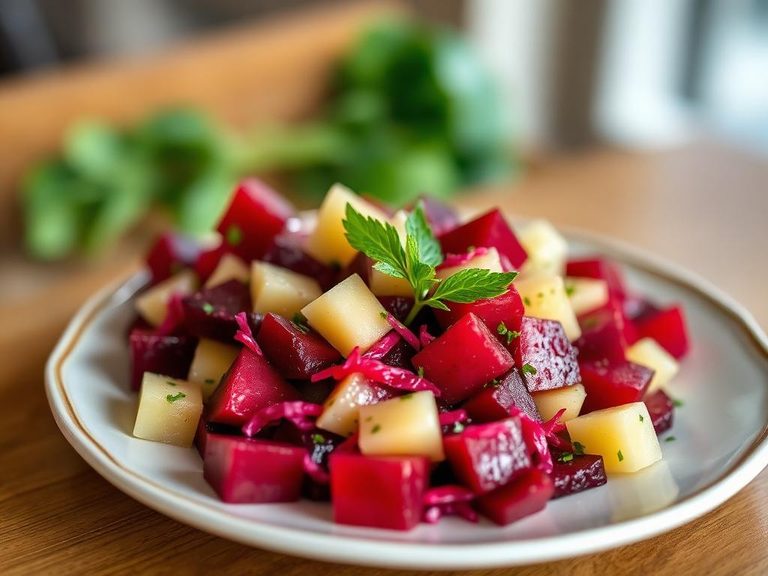
Harvard beets are a classic canned preparation of sliced beets simmered in a sweet-and-sour syrup, resulting in a tender, ruby-red bite with a glossy sheen. Their flavor balances earthy sweetness with a tangy vinegar kick, making them a staple of American comfort food. Nutritionally, they are a low-calorie source of fiber and carbs, with virtually no fat.
Calorie split: 4% protein · 95% carbs · 1% fat
↓ Full nutrition💚 Why it's loved
People love Harvard beets for their unique sweet-tart flavor profile that cuts through rich, savory dishes. They are a beloved, ready-to-eat convenience food that adds vibrant color and a nostalgic taste to many home-cooked meals.
⚠️ Watch-outs & how to enjoy it better
The sweet syrup can cause blood sugar spikes, and the canning process often adds sodium. To counteract this, pair them with a protein or healthy fat (like in a salad with goat cheese or alongside roasted chicken) and opt for low-sodium versions when available. Those prone to kidney stones should be mindful of oxalate content.
Key benefits
- Low in calories (73 kcal per 100g)
- Good source of dietary fiber (2.5g per 100g)
- Provides a quick energy boost from natural carbs
- Contains no fat and is cholesterol-free
- Rich in plant compounds like betalains
🍽️ Popular dishes
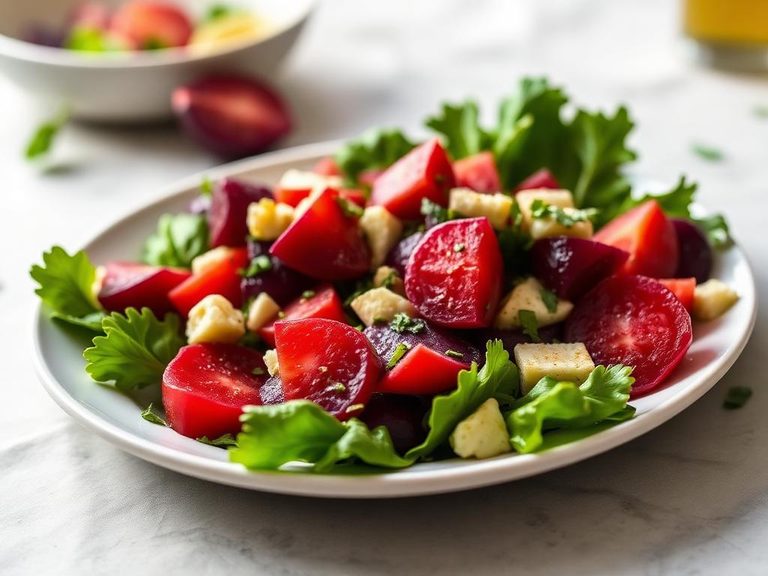
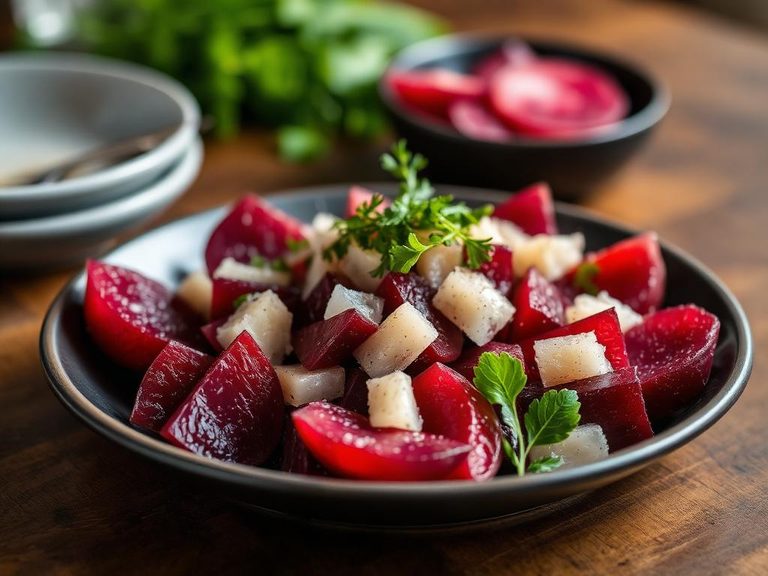
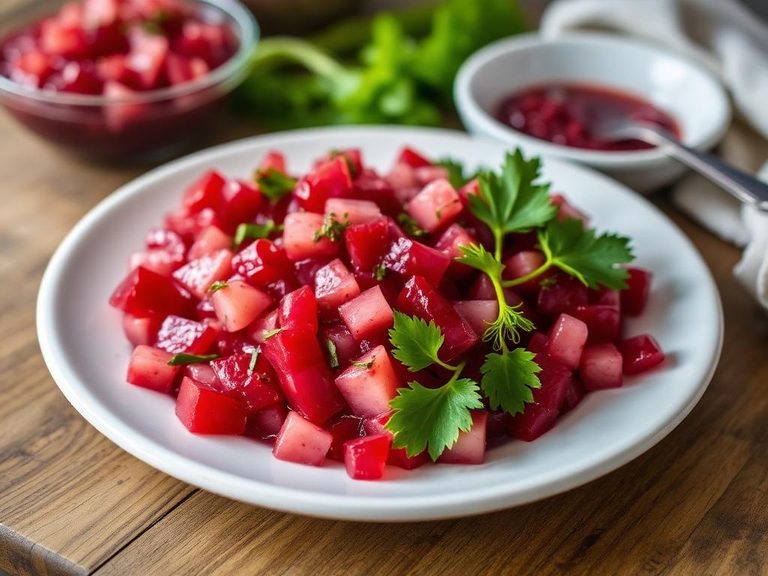
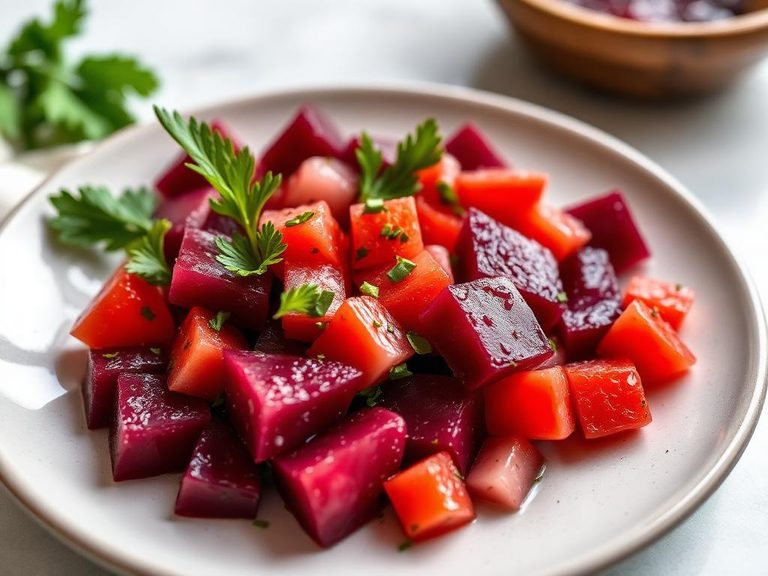
🌍 Where it's eaten
💡 Did you know?
The 'Harvard' in the name doesn't refer to the university, but is thought to derive from the Old English word 'hærfeast' meaning 'autumn harvest,' a nod to when beets were traditionally preserved.
Full nutrition (USDA data · scales with serving)
| Water | 80.2 g |
| Energy | 73.0 kcal |
| Energy | 305 kj |
| Protein | 0.84 g |
| Total lipid (fat) | 0.06 g |
| Ash | 0.76 g |
| Carbohydrate, by difference | 18.2 g |
| Fiber, total dietary | 2.5 g |
| Calcium, Ca | 11.0 mg |
| Iron, Fe | 0.36 mg |
| Magnesium, Mg | 19.0 mg |
| Phosphorus, P | 17.0 mg |
| Potassium, K | 164 mg |
| Sodium, Na | 162 mg |
| Zinc, Zn | 0.23 mg |
| Copper, Cu | 0.10 mg |
| Manganese, Mn | 0.24 mg |
| Selenium, Se | 1.1 ug |
| Vitamin C, total ascorbic acid | 2.4 mg |
| Thiamin | 0.01 mg |
| Riboflavin | 0.05 mg |
| Niacin | 0.08 mg |
| Pantothenic acid | 0.15 mg |
| Vitamin B-6 | 0.06 mg |
| Folate, total | 29.0 ug |
| Folic acid | 0.00 ug |
| Folate, food | 29.0 ug |
| Folate, DFE | 29.0 ug |
| Vitamin B-12 | 0.00 ug |
| Vitamin A, RAE | 1.0 ug |
| Retinol | 0.00 ug |
| Vitamin A, IU | 11.0 iu |
| Vitamin D (D2 + D3), International Units | 0.00 iu |
| Vitamin D (D2 + D3) | 0.00 ug |
Fat & fatty acid profile (per 100g)
| Fatty acids, total saturated | 0.01 g |
| SFA 16:0 | 0.01 g |
| SFA 18:0 | 0.00 g |
| Fatty acids, total monounsaturated | 0.01 g |
| MUFA 18:1 | 0.01 g |
| Fatty acids, total polyunsaturated | 0.02 g |
| PUFA 18:2 | 0.02 g |
| PUFA 18:3 | 0.00 g |
| Fatty acids, total trans | 0.00 g |
| Cholesterol | 0.00 mg |
Amino acid profile (per 100g)
| Tryptophan | 0.01 g |
| Threonine | 0.03 g |
| Isoleucine | 0.03 g |
| Leucine | 0.04 g |
| Lysine | 0.03 g |
| Methionine | 0.01 g |
| Cystine | 0.01 g |
| Phenylalanine | 0.02 g |
| Tyrosine | 0.02 g |
| Valine | 0.03 g |
| Arginine | 0.02 g |
| Histidine | 0.01 g |
| Alanine | 0.03 g |
| Aspartic acid | 0.06 g |
| Glutamic acid | 0.22 g |
| Glycine | 0.02 g |
| Proline | 0.02 g |
| Serine | 0.03 g |
FAQ
Are Harvard beets the same as regular canned beets?
Not exactly. Harvard beets are specifically canned in a sweet-and-sour syrup, giving them a distinct tangy flavor. Regular canned beets are typically packed in water or a light brine without the added sugar and vinegar.
Can I use Harvard beets in savory cooking?
Absolutely! Their sweet-tart profile makes them excellent in salads, as a glaze for meats like pork or ham, or even blended into a vinaigrette. They add a complex flavor note that plain beets don't provide.
Why are my Harvard beets so bright red?
The intense color comes from betalain pigments, which are stable in the acidic environment of the canning syrup. These pigments are also powerful antioxidants.
Nutrient density (calculated · NRF9.3)
Nutrient Rich Foods index: beneficial nutrients (protein, fiber, vitamins, minerals) minus saturated fat, added sugar & sodium, per 100 kcal.
NRF9.3 index — Fulgoni, Keast & Drewnowski, 2009. Computed from USDA nutrients.
Weight-loss friendliness (composite index)
Energy density 0.73 kcal/g · 5% calories from protein · 2.5 g fiber · 0.0 g sugar per 100 g.
Composite of energy density (Rolls et al., 1999), protein & fiber satiety, minus sugar. A calculated heuristic — ranks satiety-per-calorie, not a clinical measure.
Dietary load (calculated from USDA values)
Potential renal acid load. Positive = acid-forming, negative = alkaline-forming.
Sodium-to-potassium ratio: 0.99 (lower is better — aim for ≤ 1)
Sodium:potassium per WHO potassium guidance. Computed from USDA nutrients.