

Beef chow mein or chop suey with noodles
Common food

Photo: Wikipedia
Beef chow mein or chop suey with noodles is a savory, stir-fried dish featuring tender strips of beef and a medley of vegetables like bean sprouts, celery, and onions, all coated in a glossy, umami-rich sauce and served over soft, chewy wheat noodles. The texture is a delightful contrast between the crisp-tender vegetables, the succulent beef, and the slippery noodles. Nutritionally, it offers a solid protein punch from the beef, making it a more substantial meal option than many vegetable-only stir-fries.
Calorie split: 33% protein · 34% carbs · 33% fat
↓ Full nutrition💚 Why it's loved
People love it for the deeply satisfying combination of savory, slightly sweet, and salty flavors, and the comforting, hearty texture of the noodles soaking up the sauce. It's a beloved staple of Chinese-American takeout, celebrated for its versatility and ability to be a complete, filling meal.
⚠️ Watch-outs & how to enjoy it better
This dish can be high in sodium from soy sauce and other seasonings, which may be a concern for those monitoring blood pressure. The refined wheat noodles can cause a quicker blood sugar rise compared to whole grains. To counteract, opt for a smaller noodle portion and bulk up the plate with extra steamed vegetables on the side. Choosing a dish with less sauce or asking for sauce on the side can help control sodium intake.
Key benefits
- Good source of complete protein from beef for muscle maintenance.
- Contains iron and B vitamins, particularly B12, from the beef.
- Provides some dietary fiber from the vegetable components.
- Quick-cooking method helps retain some vegetable nutrients.
- Offers a balanced mix of macronutrients in a single dish.
🍽️ Popular dishes


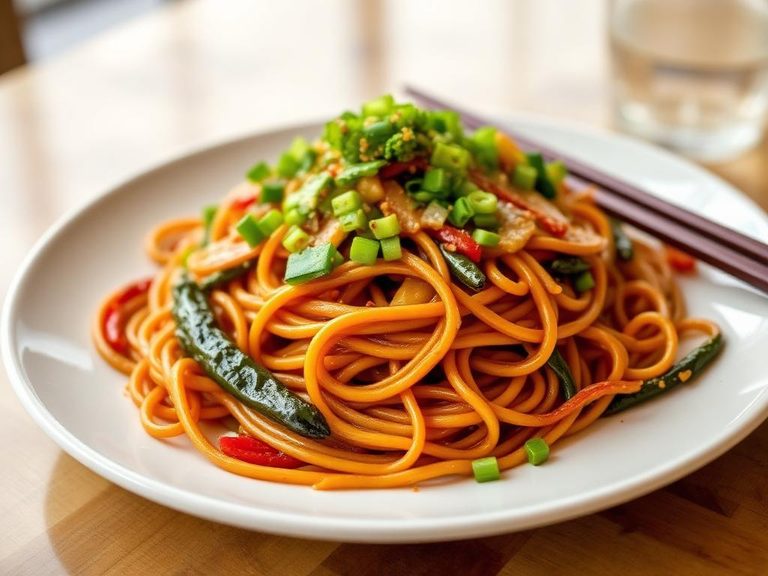
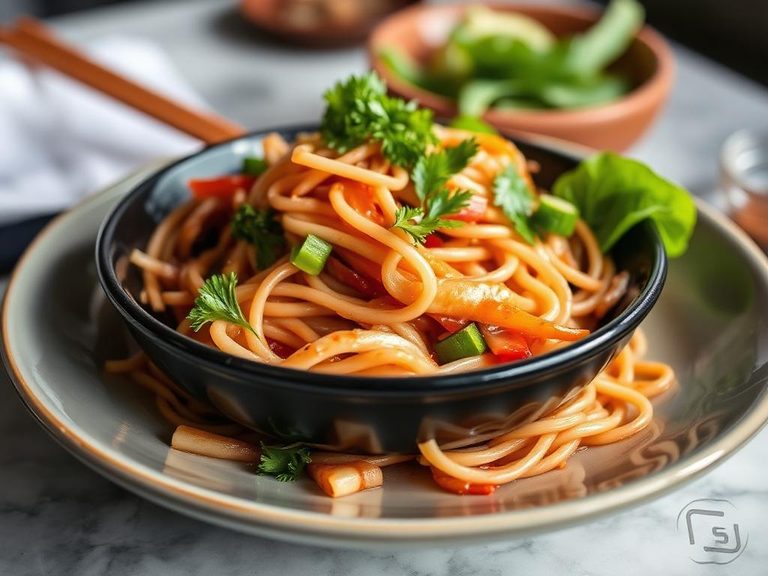
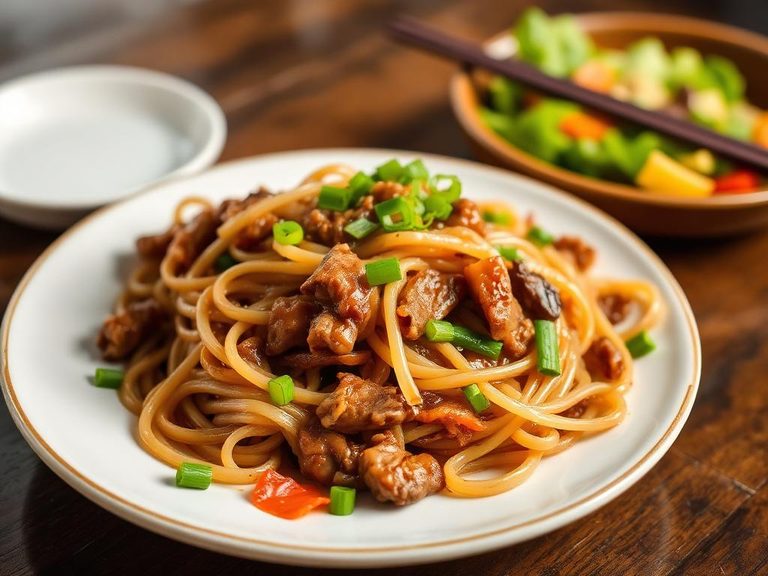
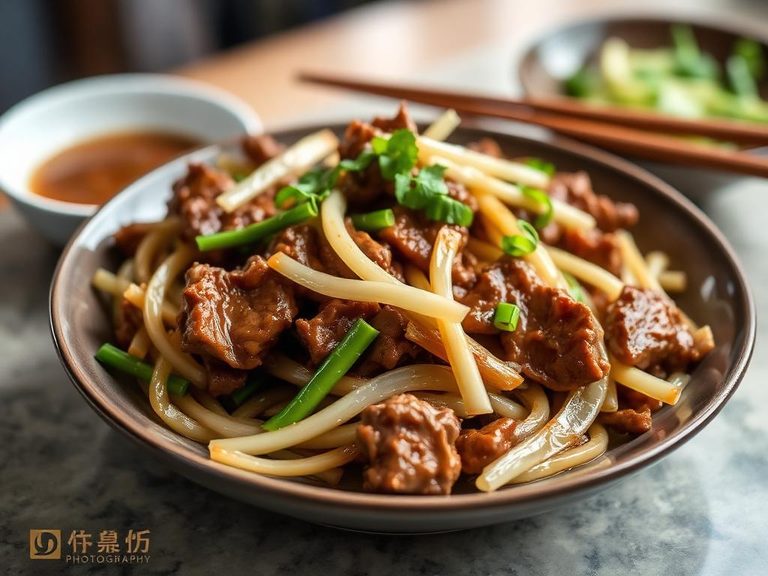
🌍 Where it's eaten
💡 Did you know?
The term 'chop suey' is widely believed to be an Americanization of the Cantonese 'tsap seui' (杂碎), which translates to 'miscellaneous leftovers,' reflecting its origin as a humble dish made from whatever vegetables and bits of meat were available.
Full nutrition (USDA data · scales with serving)
| Water | 71.8 g |
| Energy | 129 kcal |
| Protein | 10.8 g |
| Total lipid (fat) | 4.9 g |
| Carbohydrate, by difference | 11.2 g |
| Fiber, total dietary | 1.5 g |
| Total Sugars | 1.6 g |
| Calcium, Ca | 19.0 mg |
| Iron, Fe | 1.9 mg |
| Magnesium, Mg | 12.0 mg |
| Phosphorus, P | 108 mg |
| Potassium, K | 204 mg |
| Sodium, Na | 328 mg |
| Zinc, Zn | 1.5 mg |
| Copper, Cu | 0.05 mg |
| Selenium, Se | 11.6 ug |
| Vitamin C, total ascorbic acid | 4.2 mg |
| Thiamin | 0.10 mg |
| Riboflavin | 0.19 mg |
| Niacin | 3.2 mg |
| Vitamin B-6 | 0.28 mg |
| Folate, total | 40.0 ug |
| Folic acid | 11.0 ug |
| Folate, food | 29.0 ug |
| Folate, DFE | 48.0 ug |
| Choline, total | 33.5 mg |
| Vitamin B-12 | 0.58 ug |
| Vitamin B-12, added | 0.00 ug |
| Vitamin A, RAE | 9.0 ug |
| Retinol | 1.0 ug |
| Carotene, beta | 87.0 ug |
| Carotene, alpha | 16.0 ug |
| Cryptoxanthin, beta | 0.00 ug |
| Lycopene | 0.00 ug |
| Lutein + zeaxanthin | 106 ug |
| Vitamin E (alpha-tocopherol) | 0.48 mg |
| Vitamin E, added | 0.00 mg |
| Vitamin D (D2 + D3) | 0.00 ug |
| Vitamin K (phylloquinone) | 12.3 ug |
| Alcohol, ethyl | 0.00 g |
| Caffeine | 0.00 mg |
| Theobromine | 0.00 mg |
Fat & fatty acid profile (per 100g)
| Fatty acids, total saturated | 1.5 g |
| SFA 4:0 | 0.00 g |
| SFA 6:0 | 0.00 g |
| SFA 8:0 | 0.00 g |
| SFA 10:0 | 0.00 g |
| SFA 12:0 | 0.47 g |
| SFA 14:0 | 0.20 g |
| SFA 16:0 | 0.47 g |
| SFA 18:0 | 0.23 g |
| Fatty acids, total monounsaturated | 1.9 g |
| MUFA 16:1 | 0.05 g |
| MUFA 18:1 | 1.8 g |
| MUFA 20:1 | 0.01 g |
| MUFA 22:1 | 0.00 g |
| Fatty acids, total polyunsaturated | 1.1 g |
| PUFA 18:2 | 0.95 g |
| PUFA 18:3 | 0.09 g |
| PUFA 18:4 | 0.00 g |
| PUFA 20:4 | 0.01 g |
| PUFA 20:5 n-3 (EPA) | 0.00 g |
| PUFA 22:5 n-3 (DPA) | 0.00 g |
| PUFA 22:6 n-3 (DHA) | 0.00 g |
| Cholesterol | 22.0 mg |
FAQ
What's the difference between chow mein and chop suey?
Traditionally, chow mein ('fried noodles') features noodles that are stir-fried until crispy or soft, making them the star. Chop suey ('miscellaneous bits') is a saucy stir-fry of meat and vegetables, often served over a bed of plain steamed rice or soft noodles, with the sauce being more prominent.
Is beef chow mein a healthy choice?
It can be part of a balanced diet. The beef provides protein and iron. To make it healthier, look for versions with plenty of vegetables, request less sauce (to reduce sodium and sugar), and consider pairing it with a side of steamed greens instead of extra noodles.
Can I make this dish gluten-free?
The traditional recipe uses wheat-based noodles and soy sauce (which contains wheat). To make it gluten-free, substitute the noodles with rice noodles or gluten-free pasta, and use tamari or a gluten-free soy sauce alternative.
Nutrient density (calculated · NRF9.3)
Nutrient Rich Foods index: beneficial nutrients (protein, fiber, vitamins, minerals) minus saturated fat, added sugar & sodium, per 100 kcal.
NRF9.3 index — Fulgoni, Keast & Drewnowski, 2009. Computed from USDA nutrients.
Weight-loss friendliness (composite index)
Energy density 1.29 kcal/g · 33% calories from protein · 1.5 g fiber · 1.6 g sugar per 100 g.
Composite of energy density (Rolls et al., 1999), protein & fiber satiety, minus sugar. A calculated heuristic — ranks satiety-per-calorie, not a clinical measure.
Dietary load (calculated from USDA values)
Potential renal acid load. Positive = acid-forming, negative = alkaline-forming.
Sodium-to-potassium ratio: 1.61 (lower is better — aim for ≤ 1)
Sodium:potassium per WHO potassium guidance. Computed from USDA nutrients.