

Beef chow mein or chop suey, no noodles
Common food

Photo: Wikipedia
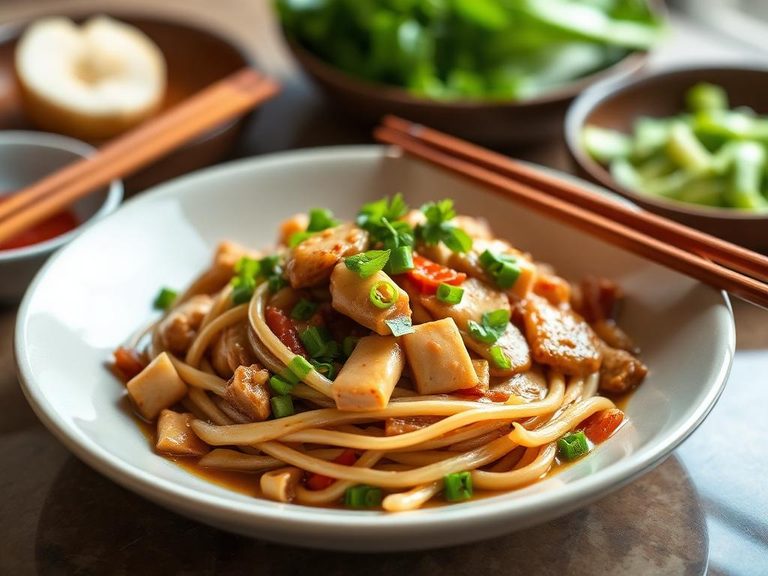
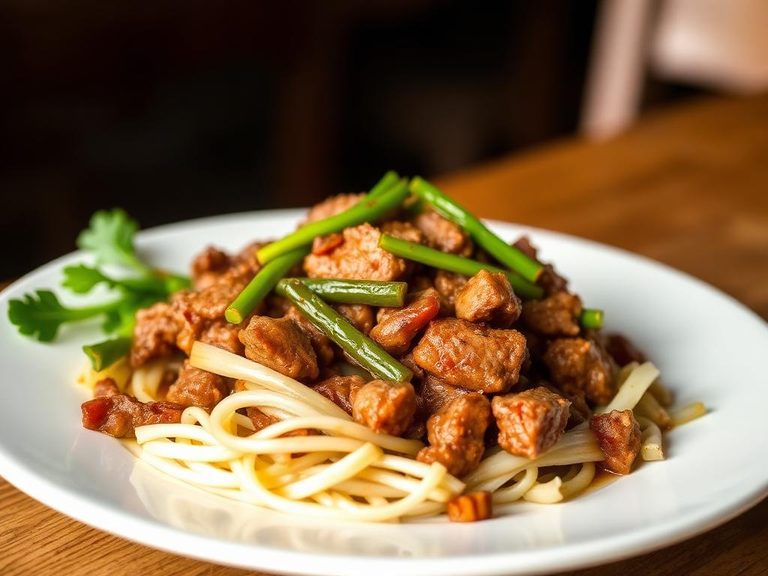
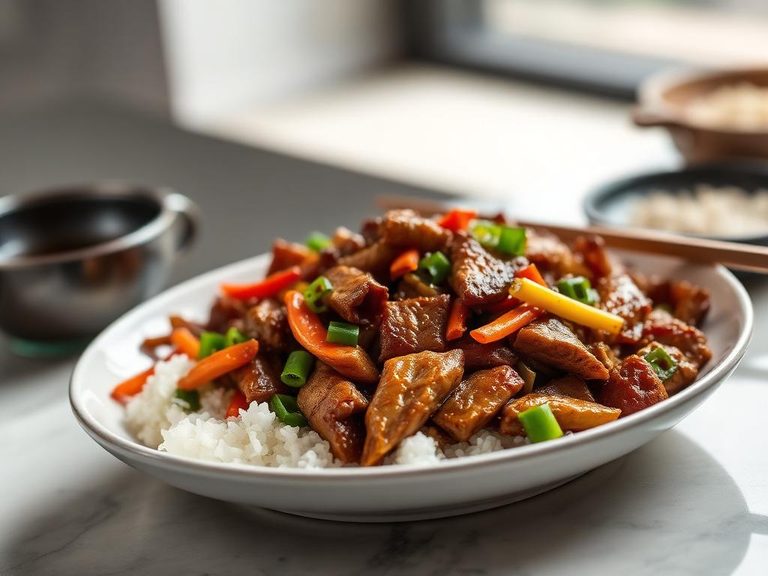
This is a deconstructed version of a classic Chinese-American stir-fry, featuring tender strips of beef and a crisp medley of vegetables like bean sprouts, celery, and cabbage, all coated in a savory, umami-rich sauce without the traditional wheat noodles. The texture is a satisfying contrast between the juicy beef and the crunchy vegetables, with a flavor profile that's salty, slightly sweet, and deeply savory. Nutritionally, it's a remarkably lean and protein-packed dish, delivering over 10 grams of protein per 100 grams with minimal carbohydrates and fat.
Calorie split: 53% protein · 19% carbs · 29% fat
↓ Full nutrition💚 Why it's loved
People adore it for delivering the full, comforting flavor of a takeout favorite in a lighter, more protein-focused format. It's incredibly versatile, easily customizable with different vegetables or sauces, and satisfies a craving for savory, hearty food without the heaviness of noodles or rice.
⚠️ Watch-outs & how to enjoy it better
The primary concern is often high sodium content from soy sauce, oyster sauce, and other seasonings, which can be problematic for those managing blood pressure. Additionally, some pre-made sauces may contain added sugars. To counteract this, opt for low-sodium soy sauce, make your own sauce, and be mindful of portion sizes. Pairing it with a fiber-rich side can also help moderate any blood sugar impact.
Key benefits
- High in protein for muscle maintenance and satiety.
- Very low in carbohydrates, suitable for low-carb or ketogenic diets.
- Good source of dietary fiber from mixed vegetables.
- Low in fat, especially saturated fat.
- Provides a range of vitamins and minerals from the vegetable mix.
🍽️ Popular dishes


🌍 Where it's eaten
💡 Did you know?
The term 'chop suey' is widely believed to be an Americanization of the Cantonese phrase 'tsap seui' (杂碎), which translates to 'miscellaneous leftovers,' hinting at its humble, adaptable origins as a way to use up odds and ends.
Full nutrition (USDA data · scales with serving)
| Water | 81.7 g |
| Energy | 82.0 kcal |
| Protein | 10.8 g |
| Total lipid (fat) | 2.6 g |
| Carbohydrate, by difference | 3.9 g |
| Fiber, total dietary | 0.80 g |
| Total Sugars | 1.8 g |
| Calcium, Ca | 22.0 mg |
| Iron, Fe | 1.2 mg |
| Magnesium, Mg | 11.0 mg |
| Phosphorus, P | 109 mg |
| Potassium, K | 218 mg |
| Sodium, Na | 253 mg |
| Zinc, Zn | 1.6 mg |
| Copper, Cu | 0.04 mg |
| Selenium, Se | 9.2 ug |
| Vitamin C, total ascorbic acid | 4.8 mg |
| Thiamin | 0.04 mg |
| Riboflavin | 0.16 mg |
| Niacin | 3.0 mg |
| Vitamin B-6 | 0.32 mg |
| Folate, total | 28.0 ug |
| Folic acid | 0.00 ug |
| Folate, food | 28.0 ug |
| Folate, DFE | 28.0 ug |
| Choline, total | 36.9 mg |
| Vitamin B-12 | 0.67 ug |
| Vitamin B-12, added | 0.00 ug |
| Vitamin A, RAE | 10.0 ug |
| Retinol | 1.0 ug |
| Carotene, beta | 99.0 ug |
| Carotene, alpha | 19.0 ug |
| Cryptoxanthin, beta | 0.00 ug |
| Lycopene | 0.00 ug |
| Lutein + zeaxanthin | 119 ug |
| Vitamin E (alpha-tocopherol) | 0.43 mg |
| Vitamin E, added | 0.00 mg |
| Vitamin D (D2 + D3) | 0.00 ug |
| Vitamin K (phylloquinone) | 13.3 ug |
| Alcohol, ethyl | 0.00 g |
| Caffeine | 0.00 mg |
| Theobromine | 0.00 mg |
Fat & fatty acid profile (per 100g)
| Fatty acids, total saturated | 0.75 g |
| SFA 4:0 | 0.00 g |
| SFA 6:0 | 0.00 g |
| SFA 8:0 | 0.00 g |
| SFA 10:0 | 0.00 g |
| SFA 12:0 | 0.00 g |
| SFA 14:0 | 0.04 g |
| SFA 16:0 | 0.44 g |
| SFA 18:0 | 0.23 g |
| Fatty acids, total monounsaturated | 0.91 g |
| MUFA 16:1 | 0.05 g |
| MUFA 18:1 | 0.83 g |
| MUFA 20:1 | 0.01 g |
| MUFA 22:1 | 0.00 g |
| Fatty acids, total polyunsaturated | 0.72 g |
| PUFA 18:2 | 0.60 g |
| PUFA 18:3 | 0.09 g |
| PUFA 18:4 | 0.00 g |
| PUFA 20:4 | 0.01 g |
| PUFA 20:5 n-3 (EPA) | 0.00 g |
| PUFA 22:5 n-3 (DPA) | 0.00 g |
| PUFA 22:6 n-3 (DHA) | 0.00 g |
| Cholesterol | 25.0 mg |
FAQ
Is beef chow mein without noodles the same as chop suey?
They are very similar and often used interchangeably, especially in American Chinese cuisine. Chop suey is typically a more vegetable-heavy dish with a thicker, starch-thickened sauce, while a 'no noodle' chow mein focuses on the stir-fried beef and vegetables, sometimes with a lighter sauce. The core components are the same.
What vegetables are traditionally used?
Classic choices include bean sprouts, celery, onions, cabbage, and carrots. However, it's a highly adaptable dish, so you'll often find water chestnuts, bamboo shoots, mushrooms, and bell peppers as well.
How can I make it healthier at home?
Control the sodium by using low-sodium soy sauce or tamari and adding flavor with garlic, ginger, and a touch of sesame oil. Load up on your favorite non-starchy vegetables to increase volume and fiber, and ensure your beef is a lean cut like sirloin or flank steak.
Nutrient density (calculated · NRF9.3)
Nutrient Rich Foods index: beneficial nutrients (protein, fiber, vitamins, minerals) minus saturated fat, added sugar & sodium, per 100 kcal.
NRF9.3 index — Fulgoni, Keast & Drewnowski, 2009. Computed from USDA nutrients.
Weight-loss friendliness (composite index)
Energy density 0.82 kcal/g · 52% calories from protein · 0.8 g fiber · 1.8 g sugar per 100 g.
Composite of energy density (Rolls et al., 1999), protein & fiber satiety, minus sugar. A calculated heuristic — ranks satiety-per-calorie, not a clinical measure.
Dietary load (calculated from USDA values)
Potential renal acid load. Positive = acid-forming, negative = alkaline-forming.
Sodium-to-potassium ratio: 1.16 (lower is better — aim for ≤ 1)
Sodium:potassium per WHO potassium guidance. Computed from USDA nutrients.