

Beef burgundy
Common food

Photo: Wikipedia
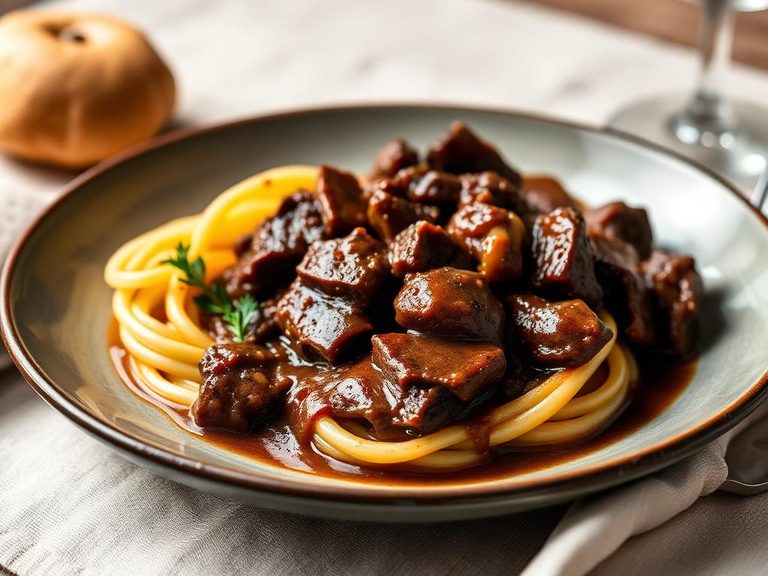
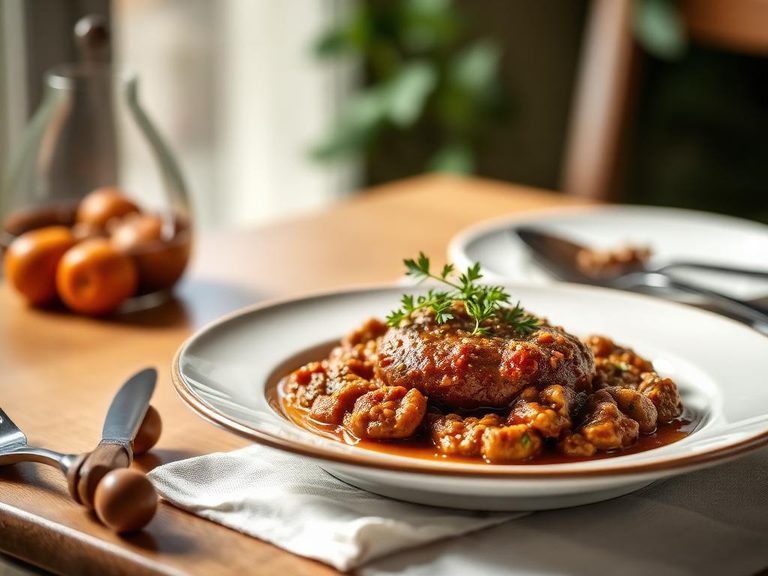
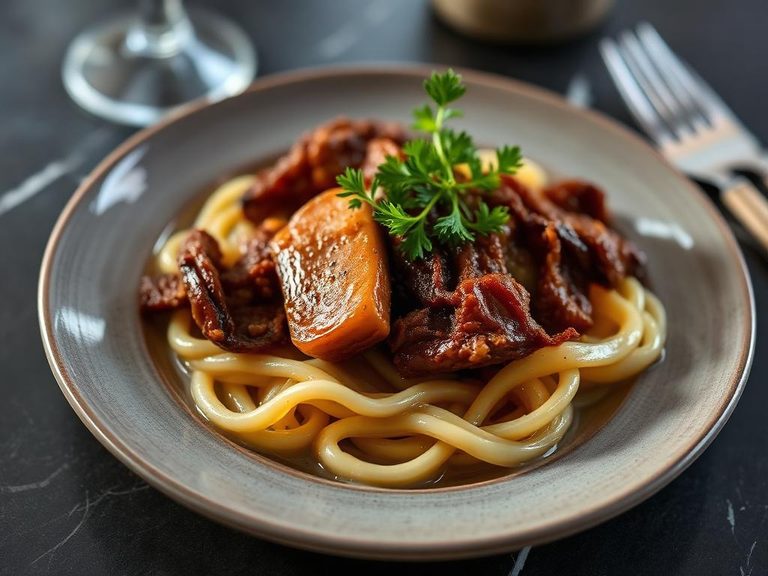
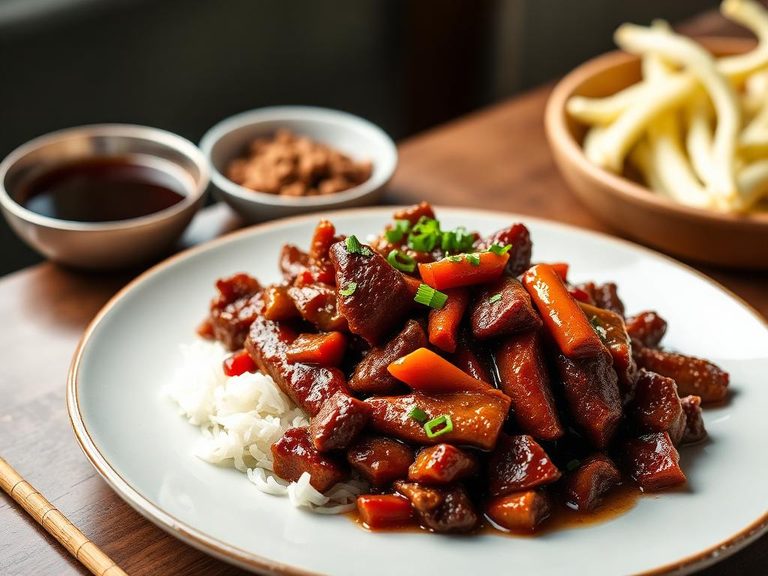
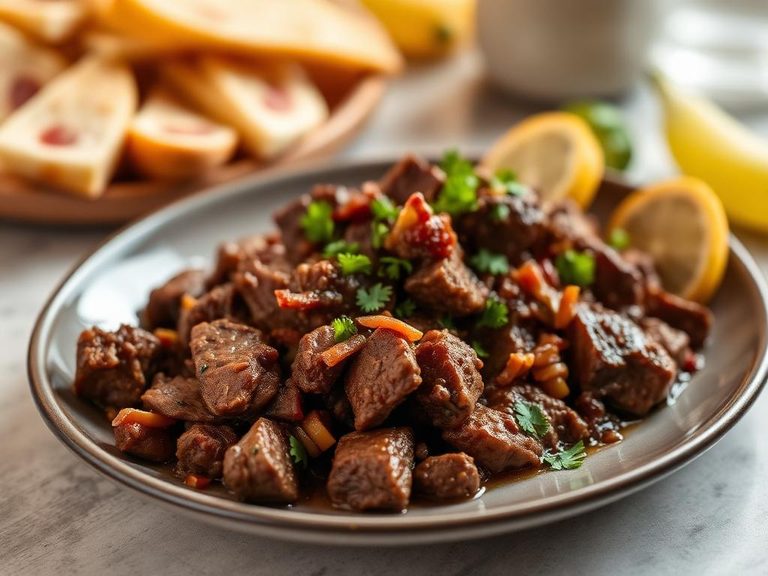
Beef Burgundy is a classic French braised beef dish, slow-cooked in red wine (traditionally Burgundy), broth, and aromatics until the meat is fork-tender and infused with deep, savory, and slightly earthy flavors. The sauce is rich, velvety, and complex, often featuring mushrooms and pearl onions. Nutritionally, it's a protein-rich, low-carb dish with a moderate calorie count per serving, making it a hearty and satisfying main course.
Calorie split: 51% protein · 12% carbs · 37% fat
↓ Full nutrition💚 Why it's loved
People love it for its profound, comforting depth of flavor—a perfect harmony of tender beef, wine, and umami. It's a celebrated centerpiece of French bistro cuisine, often associated with special occasions and rustic elegance.
⚠️ Watch-outs & how to enjoy it better
The dish can be high in sodium from broth and added salt, and the alcohol content, while mostly cooked off, may concern some. For those monitoring saturated fat, the cut of beef used (like chuck) can be a consideration. To mitigate, choose leaner cuts, control added salt by using low-sodium broth, and pair with a large side of steamed or roasted vegetables to balance the meal.
Key benefits
- High-quality protein source for muscle maintenance
- Rich in iron and B vitamins from beef
- Contains antioxidants from red wine and vegetables
- Low in carbohydrates and sugar
- Provides minerals like zinc and selenium
🍽️ Popular dishes
🌍 Where it's eaten
💡 Did you know?
The traditional wine used is a full-bodied red from Burgundy, like Pinot Noir, but the dish's name 'Bourguignon' specifically refers to the region, not just any red wine braise.
Full nutrition (USDA data · scales with serving)
| Water | 69.9 g |
| Energy | 148 kcal |
| Protein | 18.5 g |
| Total lipid (fat) | 6.0 g |
| Carbohydrate, by difference | 4.2 g |
| Fiber, total dietary | 0.80 g |
| Total Sugars | 1.4 g |
| Calcium, Ca | 20.0 mg |
| Iron, Fe | 1.8 mg |
| Magnesium, Mg | 23.0 mg |
| Phosphorus, P | 184 mg |
| Potassium, K | 368 mg |
| Sodium, Na | 369 mg |
| Zinc, Zn | 4.5 mg |
| Copper, Cu | 0.14 mg |
| Selenium, Se | 22.8 ug |
| Vitamin C, total ascorbic acid | 2.0 mg |
| Thiamin | 0.07 mg |
| Riboflavin | 0.21 mg |
| Niacin | 4.5 mg |
| Vitamin B-6 | 0.24 mg |
| Folate, total | 17.0 ug |
| Folic acid | 1.0 ug |
| Folate, food | 16.0 ug |
| Folate, DFE | 18.0 ug |
| Choline, total | 70.6 mg |
| Vitamin B-12 | 1.3 ug |
| Vitamin B-12, added | 0.00 ug |
| Vitamin A, RAE | 1.0 ug |
| Retinol | 0.00 ug |
| Carotene, beta | 15.0 ug |
| Carotene, alpha | 0.00 ug |
| Cryptoxanthin, beta | 0.00 ug |
| Lycopene | 193 ug |
| Lutein + zeaxanthin | 11.0 ug |
| Vitamin E (alpha-tocopherol) | 0.62 mg |
| Vitamin E, added | 0.00 mg |
| Vitamin D (D2 + D3) | 0.10 ug |
| Vitamin K (phylloquinone) | 6.1 ug |
| Alcohol, ethyl | 0.00 g |
| Caffeine | 0.00 mg |
| Theobromine | 0.00 mg |
Fat & fatty acid profile (per 100g)
| Fatty acids, total saturated | 1.8 g |
| SFA 4:0 | 0.00 g |
| SFA 6:0 | 0.00 g |
| SFA 8:0 | 0.00 g |
| SFA 10:0 | 0.00 g |
| SFA 12:0 | 0.00 g |
| SFA 14:0 | 0.11 g |
| SFA 16:0 | 1.1 g |
| SFA 18:0 | 0.55 g |
| Fatty acids, total monounsaturated | 2.5 g |
| MUFA 16:1 | 0.15 g |
| MUFA 18:1 | 2.3 g |
| MUFA 20:1 | 0.02 g |
| MUFA 22:1 | 0.00 g |
| Fatty acids, total polyunsaturated | 0.93 g |
| PUFA 18:2 | 0.81 g |
| PUFA 18:3 | 0.10 g |
| PUFA 18:4 | 0.00 g |
| PUFA 20:4 | 0.02 g |
| PUFA 20:5 n-3 (EPA) | 0.00 g |
| PUFA 22:5 n-3 (DPA) | 0.01 g |
| PUFA 22:6 n-3 (DHA) | 0.00 g |
| Cholesterol | 52.0 mg |
FAQ
What cut of beef is best for Beef Burgundy?
Traditionally, tougher, well-marbled cuts like chuck, bottom round, or brisket are used. They break down during slow braising to become incredibly tender and flavorful.
Can I make it without alcohol?
Yes, you can substitute the wine with a rich beef broth mixed with a tablespoon of red wine vinegar or grape juice to mimic the acidity and depth, though the flavor profile will be different.
How long does it need to cook?
True Beef Burgundy requires slow cooking, either simmering on the stovetop or in the oven, for 2 to 3 hours until the beef is fork-tender. It often tastes even better the next day.
Nutrient density (calculated · NRF9.3)
Nutrient Rich Foods index: beneficial nutrients (protein, fiber, vitamins, minerals) minus saturated fat, added sugar & sodium, per 100 kcal.
NRF9.3 index — Fulgoni, Keast & Drewnowski, 2009. Computed from USDA nutrients.
Weight-loss friendliness (composite index)
Energy density 1.48 kcal/g · 50% calories from protein · 0.8 g fiber · 1.4 g sugar per 100 g.
Composite of energy density (Rolls et al., 1999), protein & fiber satiety, minus sugar. A calculated heuristic — ranks satiety-per-calorie, not a clinical measure.
Dietary load (calculated from USDA values)
Potential renal acid load. Positive = acid-forming, negative = alkaline-forming.
Sodium-to-potassium ratio: 1.00 (lower is better — aim for ≤ 1)
Sodium:potassium per WHO potassium guidance. Computed from USDA nutrients.