

Beans, pinto, mature seeds, sprouted, cooked, boiled, drained, with salt
Whole food · Vegetables and Vegetable Products

Photo: Wikipedia
Sprouted pinto beans, boiled and lightly salted, offer a tender, nutty bite with a subtle earthy sweetness. Their mild flavor and soft texture make them a versatile addition to soups, salads, and side dishes. Nutritionally, they are a low-calorie, plant-based protein source with a modest carbohydrate profile.
Calorie split: 31% protein · 58% carbs · 12% fat
↓ Full nutrition💚 Why it's loved
People love them for their mild, nutty flavor and tender texture that easily absorbs seasonings. They are a staple in many cuisines for their versatility in both hot and cold dishes.
⚠️ Watch-outs & how to enjoy it better
The added salt can be a concern for those monitoring sodium intake. To counteract this, rinse them thoroughly after boiling or choose unsalted versions. Additionally, while low in fiber, they can still cause digestive discomfort in some individuals; gradual introduction and pairing with other fiber-rich foods can help.
Key benefits
- Low-calorie source of plant-based protein
- Provides essential minerals like iron and folate
- Sprouting can increase nutrient bioavailability
- Contains no fat or sugar
- Suitable for a variety of dietary plans
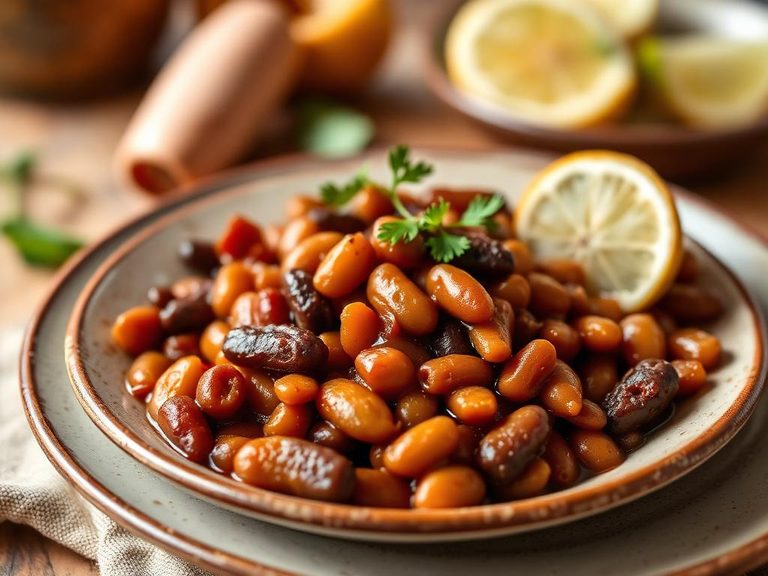
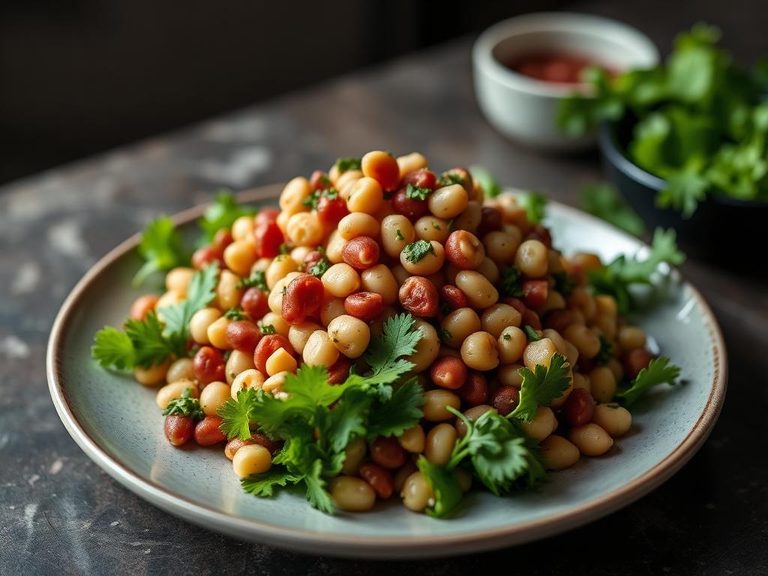
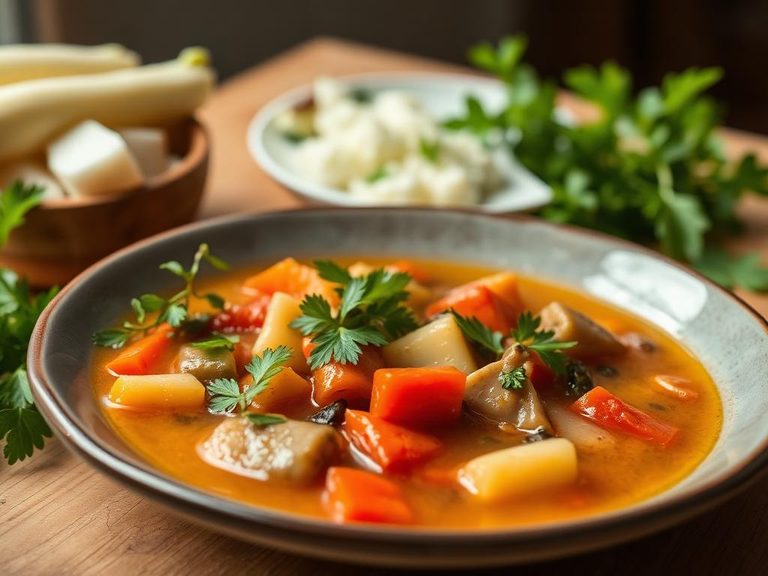
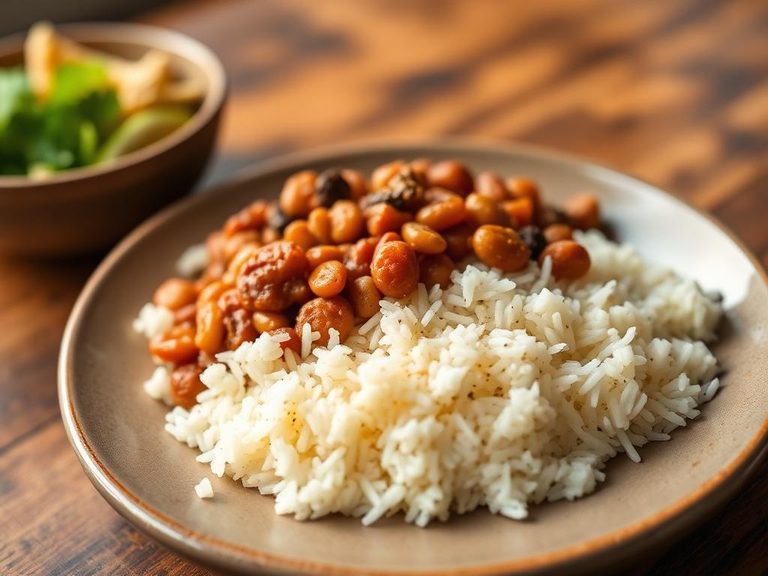
🍽️ Popular dishes
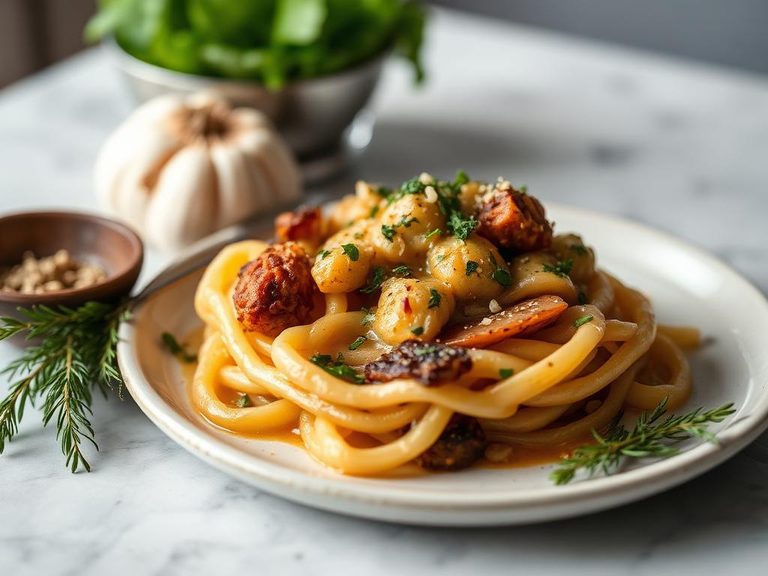
🌍 Where it's eaten
💡 Did you know?
Sprouting pinto beans can reduce their cooking time by up to 50% compared to unsprouted beans.
Full nutrition (USDA data · scales with serving)
| Water | 93.4 g |
| Energy | 20.0 kcal |
| Energy | 82.0 kj |
| Protein | 1.9 g |
| Total lipid (fat) | 0.32 g |
| Ash | 0.93 g |
| Carbohydrate, by difference | 3.5 g |
| Calcium, Ca | 15.0 mg |
| Iron, Fe | 0.66 mg |
| Magnesium, Mg | 18.0 mg |
| Phosphorus, P | 30.0 mg |
| Potassium, K | 98.0 mg |
| Sodium, Na | 287 mg |
| Zinc, Zn | 0.17 mg |
| Copper, Cu | 0.11 mg |
| Manganese, Mn | 0.12 mg |
| Selenium, Se | 0.60 ug |
| Vitamin C, total ascorbic acid | 6.1 mg |
| Thiamin | 0.07 mg |
| Riboflavin | 0.06 mg |
| Niacin | 0.72 mg |
| Pantothenic acid | 0.23 mg |
| Vitamin B-6 | 0.05 mg |
| Folate, total | 29.0 ug |
| Folic acid | 0.00 ug |
| Folate, food | 29.0 ug |
| Folate, DFE | 29.0 ug |
| Vitamin B-12 | 0.00 ug |
| Vitamin A, RAE | 0.00 ug |
| Retinol | 0.00 ug |
| Vitamin A, IU | 0.00 iu |
| Vitamin D (D2 + D3), International Units | 0.00 iu |
| Vitamin D (D2 + D3) | 0.00 ug |
Fat & fatty acid profile (per 100g)
| Fatty acids, total saturated | 0.04 g |
| SFA 16:0 | 0.03 g |
| SFA 18:0 | 0.00 g |
| Fatty acids, total monounsaturated | 0.02 g |
| MUFA 18:1 | 0.02 g |
| Fatty acids, total polyunsaturated | 0.18 g |
| PUFA 18:2 | 0.07 g |
| PUFA 18:3 | 0.12 g |
| Fatty acids, total trans | 0.00 g |
| Cholesterol | 0.00 mg |
Amino acid profile (per 100g)
| Tryptophan | 0.02 g |
| Threonine | 0.08 g |
| Isoleucine | 0.08 g |
| Leucine | 0.13 g |
| Lysine | 0.11 g |
| Methionine | 0.02 g |
| Cystine | 0.02 g |
| Phenylalanine | 0.09 g |
| Tyrosine | 0.06 g |
| Valine | 0.10 g |
| Arginine | 0.10 g |
| Histidine | 0.05 g |
| Alanine | 0.08 g |
| Aspartic acid | 0.24 g |
| Glutamic acid | 0.23 g |
| Glycine | 0.06 g |
| Proline | 0.07 g |
| Serine | 0.10 g |
FAQ
What is the difference between sprouted and regular pinto beans?
Sprouted pinto beans have been allowed to germinate before cooking, which can enhance nutrient availability and reduce cooking time. They tend to have a milder flavor and softer texture.
Are sprouted pinto beans suitable for a low-sodium diet?
The version described includes salt, which adds sodium. For a low-sodium diet, opt for unsalted or rinse thoroughly after boiling to reduce sodium content.
Can sprouted pinto beans be eaten raw?
While sprouting is a step toward raw consumption, it's recommended to cook them to ensure safety and digestibility, especially for those with sensitive digestive systems.
Nutrient density (calculated · NRF9.3)
Nutrient Rich Foods index: beneficial nutrients (protein, fiber, vitamins, minerals) minus saturated fat, added sugar & sodium, per 100 kcal.
NRF9.3 index — Fulgoni, Keast & Drewnowski, 2009. Computed from USDA nutrients.
Weight-loss friendliness (composite index)
Energy density 0.20 kcal/g · 37% calories from protein · 0.0 g fiber · 0.0 g sugar per 100 g.
Composite of energy density (Rolls et al., 1999), protein & fiber satiety, minus sugar. A calculated heuristic — ranks satiety-per-calorie, not a clinical measure.
Dietary load (calculated from USDA values)
Potential renal acid load. Positive = acid-forming, negative = alkaline-forming.
Sodium-to-potassium ratio: 2.93 (lower is better — aim for ≤ 1)
Sodium:potassium per WHO potassium guidance. Computed from USDA nutrients.