

Babyfood, cereal, mixed, with honey, prepared with whole milk
Whole food · Baby Foods

Photo: Wikipedia
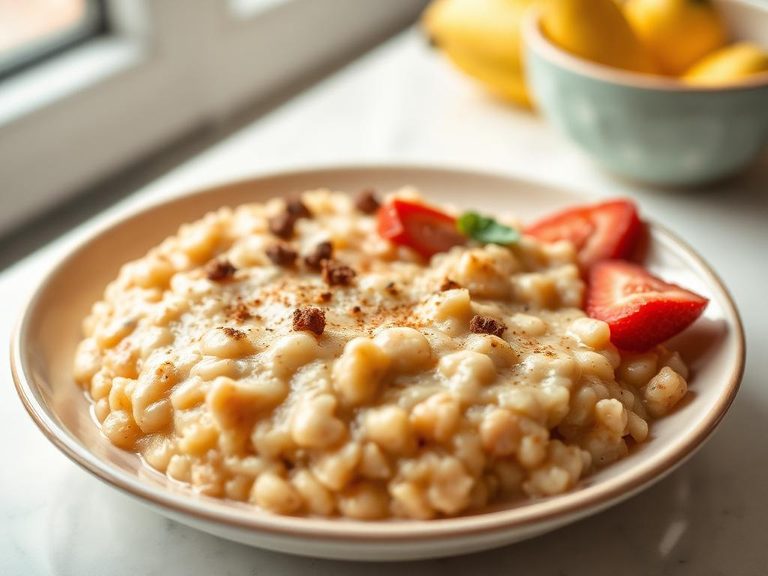
This is a warm, comforting baby cereal porridge, typically made from a blend of wheat, oat, and rice flours, sweetened with honey and prepared with whole milk for a creamy, smooth texture. It offers a mild, naturally sweet flavor with a subtle honey note and a thick, spoonable consistency ideal for early eaters. Nutritionally, it provides a balanced mix of carbohydrates for energy and protein from the milk for growth.
Calorie split: 17% protein · 55% carbs · 28% fat
↓ Full nutrition💚 Why it's loved
Parents appreciate it as a gentle, familiar first food that babies often accept readily due to its mild sweetness and smooth texture. It's a cultural staple in many Western households for its simplicity and the comforting association of a warm cereal bowl.
⚠️ Watch-outs & how to enjoy it better
The added honey and refined cereal flours can cause a rapid blood-sugar spike, making it less ideal for sustained energy. Honey is also a potential botulism risk for infants under one year. To counteract this, serve it in moderate portions alongside a source of protein or fat (like a side of yogurt or mashed avocado) to slow glucose absorption, and never offer honey-based foods to babies under 12 months.
Key benefits
- Provides quick, digestible energy from carbohydrates
- Contains protein from whole milk for muscle development
- Offers calcium and vitamin D from milk for bone health
- Easy to digest and suitable for transitioning to solid foods
- Convenient, quick-to-prepare meal or snack
🍽️ Popular dishes
🌍 Where it's eaten
💡 Did you know?
Commercial baby cereals were first introduced in the 1930s, and this specific blend with honey became a popular post-war convenience food, marketed as a 'scientific' and complete meal for infants.
Full nutrition (USDA data · scales with serving)
| Water | 74.2 g |
| Energy | 115 kcal |
| Energy | 481 kj |
| Protein | 5.0 g |
| Total lipid (fat) | 3.6 g |
| Ash | 1.2 g |
| Carbohydrate, by difference | 15.9 g |
| Calcium, Ca | 294 mg |
| Iron, Fe | 11.3 mg |
| Magnesium, Mg | 28.0 mg |
| Phosphorus, P | 184 mg |
| Potassium, K | 171 mg |
| Sodium, Na | 48.0 mg |
| Zinc, Zn | 0.72 mg |
| Copper, Cu | 0.06 mg |
| Thiamin | 0.45 mg |
| Riboflavin | 0.58 mg |
| Niacin | 6.3 mg |
| Pantothenic acid | 0.44 mg |
| Vitamin B-6 | 0.07 mg |
| Folate, total | 11.0 ug |
| Folic acid | 0.00 ug |
| Folate, food | 11.0 ug |
| Folate, DFE | 11.0 ug |
| Vitamin B-12 | 0.30 ug |
Fat & fatty acid profile (per 100g)
Estimated from Babyfood, grape juice, no sugar, canned — USDA does not publish this profile for Babyfood.
| Fatty acids, total saturated | 0.00 g |
| SFA 4:0 | 0.00 g |
| SFA 6:0 | 0.00 g |
| SFA 8:0 | 0.00 g |
| SFA 10:0 | 0.00 g |
| SFA 12:0 | 0.00 g |
| SFA 14:0 | 0.00 g |
| SFA 16:0 | 0.00 g |
| SFA 18:0 | 0.00 g |
| Fatty acids, total monounsaturated | 0.00 g |
| MUFA 16:1 | 0.00 g |
| MUFA 18:1 | 0.00 g |
| MUFA 20:1 | 0.00 g |
| MUFA 22:1 | 0.00 g |
| Fatty acids, total polyunsaturated | 0.00 g |
| PUFA 18:2 | 0.00 g |
| PUFA 18:3 | 0.00 g |
| PUFA 18:4 | 0.00 g |
| PUFA 20:4 | 0.00 g |
| PUFA 20:5 n-3 (EPA) | 0.00 g |
| PUFA 22:5 n-3 (DPA) | 0.00 g |
| PUFA 22:6 n-3 (DHA) | 0.00 g |
| Cholesterol | 0.00 mg |
Amino acid profile (per 100g)
Estimated from Babyfood, grape juice, no sugar, canned — USDA does not publish this profile for Babyfood.
| Threonine | 0.02 g |
| Isoleucine | 0.01 g |
| Leucine | 0.02 g |
| Lysine | 0.02 g |
| Methionine | 0.03 g |
| Cystine | 0.01 g |
| Phenylalanine | 0.02 g |
| Tyrosine | 0.02 g |
| Valine | 0.02 g |
| Arginine | 0.06 g |
| Histidine | 0.03 g |
| Alanine | 0.04 g |
| Aspartic acid | 0.10 g |
| Glutamic acid | 0.18 g |
| Glycine | 0.03 g |
| Proline | 0.03 g |
| Serine | 0.04 g |
FAQ
Is the honey in this cereal safe for my baby?
No. Honey should never be given to infants under 12 months of age due to the risk of infant botulism. This product is intended for older babies who have already started solid foods.
Can I use water instead of whole milk to prepare it?
Yes, you can prepare it with water, breast milk, or formula. Using whole milk adds calories, fat, and nutrients like calcium, but water is a safe alternative, especially if there are dairy concerns.
How does this compare to plain oatmeal?
This is typically more finely processed and pre-cooked for easier digestion, with added honey for sweetness. Plain oatmeal has more fiber and a lower glycemic index, making it a more sustained energy source for older children and adults.
Nutrient density (calculated · NRF9.3)
Nutrient Rich Foods index: beneficial nutrients (protein, fiber, vitamins, minerals) minus saturated fat, added sugar & sodium, per 100 kcal.
NRF9.3 index — Fulgoni, Keast & Drewnowski, 2009. Computed from USDA nutrients.
Weight-loss friendliness (composite index)
Energy density 1.15 kcal/g · 17% calories from protein · 0.0 g fiber · 0.0 g sugar per 100 g.
Composite of energy density (Rolls et al., 1999), protein & fiber satiety, minus sugar. A calculated heuristic — ranks satiety-per-calorie, not a clinical measure.
Dietary load (calculated from USDA values)
Potential renal acid load. Positive = acid-forming, negative = alkaline-forming.
Sodium-to-potassium ratio: 0.28 (lower is better — aim for ≤ 1)
Sodium:potassium per WHO potassium guidance. Computed from USDA nutrients.