

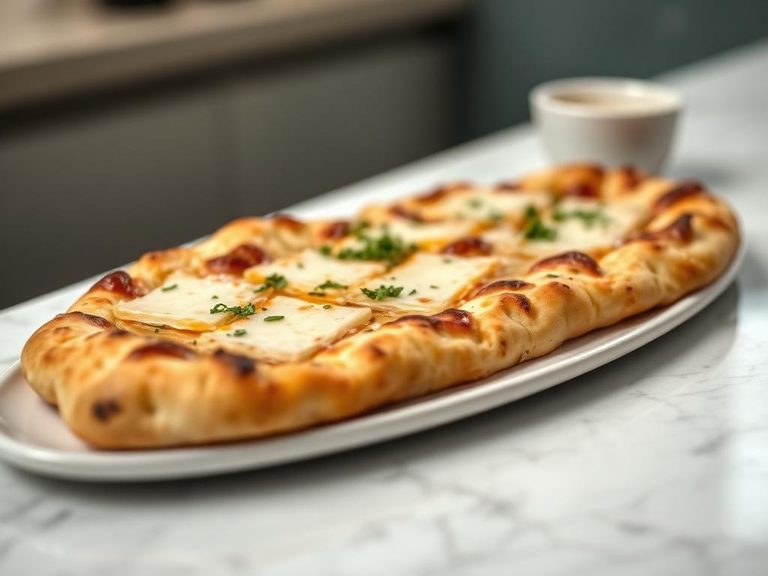
White pizza, cheese, thin crust
Common food
A minimalist Italian classic, white pizza (pizza bianca) forgoes tomato sauce for a rich, creamy base of melted cheese—often mozzarella, ricotta, or a blend—on a thin, crisp crust. The first bite delivers a satisfying crunch followed by the savory, salty pull of cheese and a subtle, buttery richness from the olive oil or garlic often used. Nutritionally, it's a surprisingly balanced slice, offering a solid protein punch (12.4g per 100g) with moderate carbs and fats.
Calorie split: 18% protein · 39% carbs · 43% fat
↓ Full nutrition💚 Why it's loved
People adore its pure, unadulterated cheese flavor and the textural contrast between the shatteringly crisp crust and the molten, stretchy cheese topping. It's a versatile canvas that lets high-quality ingredients like garlic, herbs, and premium cheeses shine without competition from sauce.
⚠️ Watch-outs & how to enjoy it better
The high sodium content from cheese and dough can contribute to water retention, and the refined carbs in the crust may cause blood-sugar spikes. To counteract this, pair a slice with a large, leafy green salad dressed in olive oil and vinegar to add fiber and slow digestion, and practice portion control by enjoying one or two slices as part of a balanced meal.
Key benefits
- Good source of protein for muscle maintenance.
- Thin crust reduces overall carbohydrate load vs. deep-dish.
- Provides calcium from cheese for bone health.
- Simple ingredient list allows for easy customization.
🍽️ Popular dishes
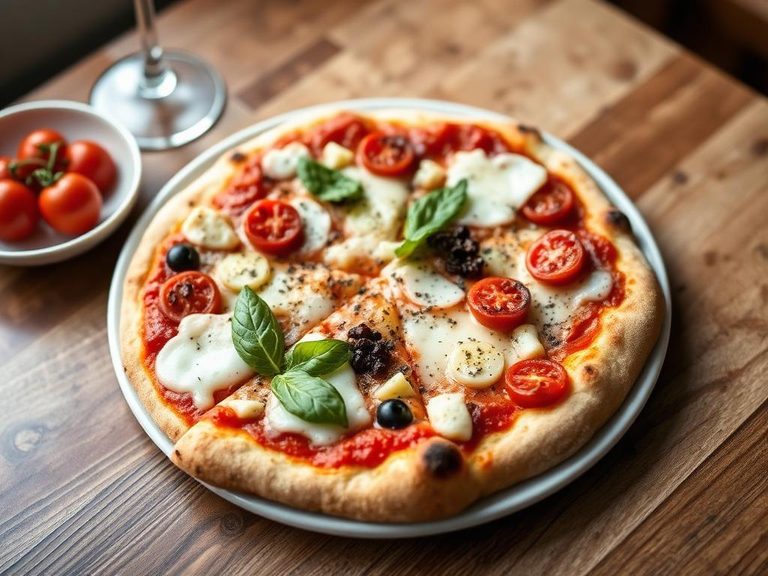
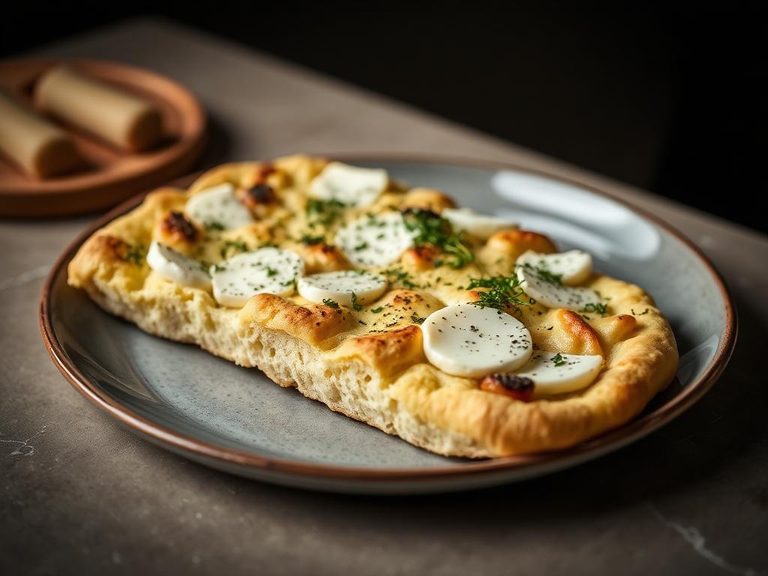
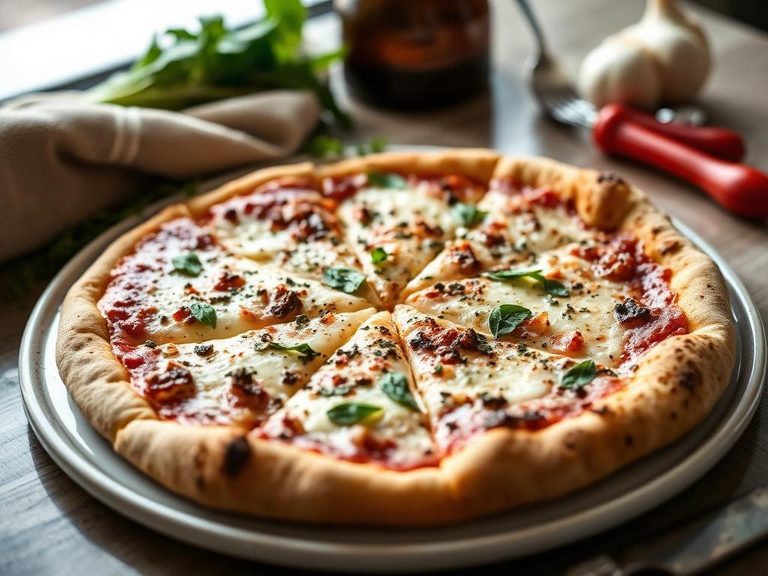
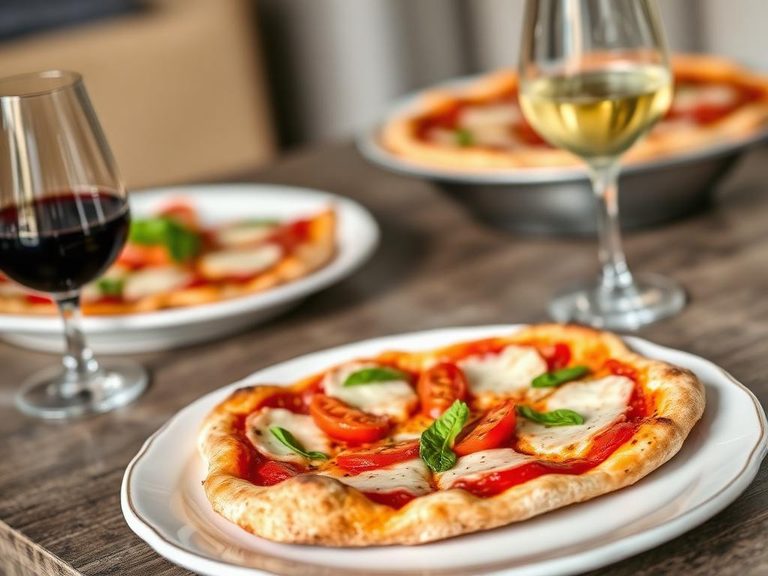
🌍 Where it's eaten
💡 Did you know?
The classic Roman 'pizza bianca' is often sold by weight at bakeries, not by the slice, and is traditionally eaten as a street food sandwich, sometimes filled with prosciutto or other ingredients.
Full nutrition (USDA data · scales with serving)
| Water | 44.0 g |
| Energy | 285 kcal |
| Protein | 12.4 g |
| Total lipid (fat) | 13.7 g |
| Carbohydrate, by difference | 27.6 g |
| Fiber, total dietary | 1.1 g |
| Total Sugars | 3.0 g |
| Calcium, Ca | 272 mg |
| Iron, Fe | 1.9 mg |
| Magnesium, Mg | 24.0 mg |
| Phosphorus, P | 215 mg |
| Potassium, K | 135 mg |
| Sodium, Na | 521 mg |
| Zinc, Zn | 1.4 mg |
| Copper, Cu | 0.07 mg |
| Selenium, Se | 16.9 ug |
| Vitamin C, total ascorbic acid | 0.10 mg |
| Thiamin | 0.25 mg |
| Riboflavin | 0.31 mg |
| Niacin | 2.4 mg |
| Vitamin B-6 | 0.10 mg |
| Folate, total | 53.0 ug |
| Folic acid | 34.0 ug |
| Folate, food | 51.0 ug |
| Folate, DFE | 77.0 ug |
| Choline, total | 12.5 mg |
| Vitamin B-12 | 0.30 ug |
| Vitamin B-12, added | 0.00 ug |
| Vitamin A, RAE | 73.0 ug |
| Retinol | 73.0 ug |
| Carotene, beta | 0.00 ug |
| Carotene, alpha | 0.00 ug |
| Cryptoxanthin, beta | 0.00 ug |
| Lycopene | 0.00 ug |
| Lutein + zeaxanthin | 24.0 ug |
| Vitamin E (alpha-tocopherol) | 1.4 mg |
| Vitamin E, added | 0.00 mg |
| Vitamin D (D2 + D3) | 0.10 ug |
| Vitamin K (phylloquinone) | 3.4 ug |
| Alcohol, ethyl | 0.00 g |
| Caffeine | 0.00 mg |
| Theobromine | 0.00 mg |
Fat & fatty acid profile (per 100g)
| Fatty acids, total saturated | 5.2 g |
| SFA 4:0 | 0.15 g |
| SFA 6:0 | 0.12 g |
| SFA 8:0 | 0.07 g |
| SFA 10:0 | 0.18 g |
| SFA 12:0 | 0.21 g |
| SFA 14:0 | 0.68 g |
| SFA 16:0 | 2.7 g |
| SFA 18:0 | 0.91 g |
| Fatty acids, total monounsaturated | 5.4 g |
| MUFA 16:1 | 0.18 g |
| MUFA 18:1 | 5.3 g |
| MUFA 20:1 | 0.03 g |
| MUFA 22:1 | 0.00 g |
| Fatty acids, total polyunsaturated | 1.4 g |
| PUFA 18:2 | 1.3 g |
| PUFA 18:3 | 0.13 g |
| PUFA 18:4 | 0.00 g |
| PUFA 20:4 | 0.01 g |
| PUFA 20:5 n-3 (EPA) | 0.00 g |
| PUFA 22:5 n-3 (DPA) | 0.00 g |
| PUFA 22:6 n-3 (DHA) | 0.00 g |
| Cholesterol | 24.0 mg |
FAQ
What makes a pizza 'white'?
A white pizza (pizza bianca) is defined by the absence of tomato sauce. The base is typically olive oil, garlic, and/or a creamy layer like ricotta or béchamel, topped primarily with cheese.
Is white pizza healthier than red sauce pizza?
It can be, as it avoids the added sugars and sodium sometimes found in commercial tomato sauces. However, it often has a higher fat and calorie content from the generous cheese and oil. The overall healthiness depends on portion size and specific ingredients.
What cheeses are best for a white pizza?
A blend is ideal: low-moisture mozzarella for melt and stretch, fresh mozzarella or ricotta for creaminess, and a hard, salty cheese like Parmigiano-Reggiano or Pecorino Romano for depth of flavor.
Nutrient density (calculated · NRF9.3)
Nutrient Rich Foods index: beneficial nutrients (protein, fiber, vitamins, minerals) minus saturated fat, added sugar & sodium, per 100 kcal.
NRF9.3 index — Fulgoni, Keast & Drewnowski, 2009. Computed from USDA nutrients.
Weight-loss friendliness (composite index)
Energy density 2.85 kcal/g · 17% calories from protein · 1.1 g fiber · 3.0 g sugar per 100 g.
Composite of energy density (Rolls et al., 1999), protein & fiber satiety, minus sugar. A calculated heuristic — ranks satiety-per-calorie, not a clinical measure.
Dietary load (calculated from USDA values)
Potential renal acid load. Positive = acid-forming, negative = alkaline-forming.
Sodium-to-potassium ratio: 3.86 (lower is better — aim for ≤ 1)
Sodium:potassium per WHO potassium guidance. Computed from USDA nutrients.