

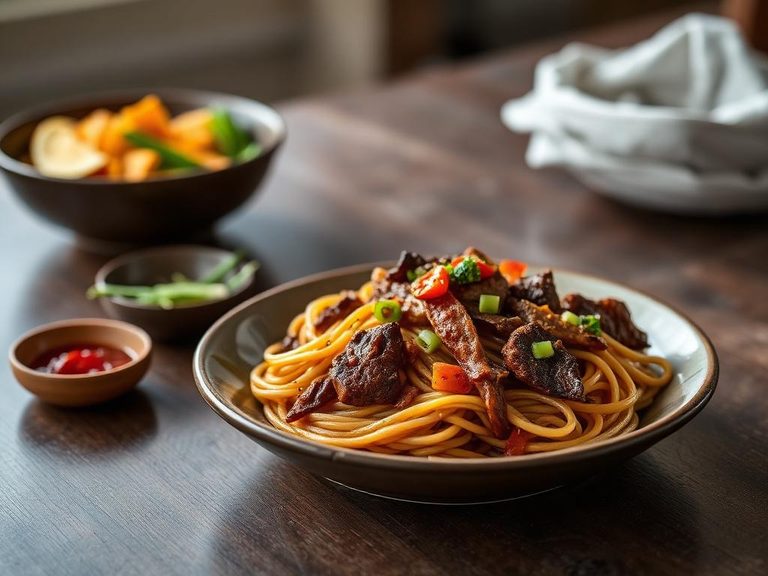
Venison or deer, noodles, and vegetables including carrots, broccoli, and/or dark-green leafy; tomato-based sauce
Common food

Photo: Wikipedia
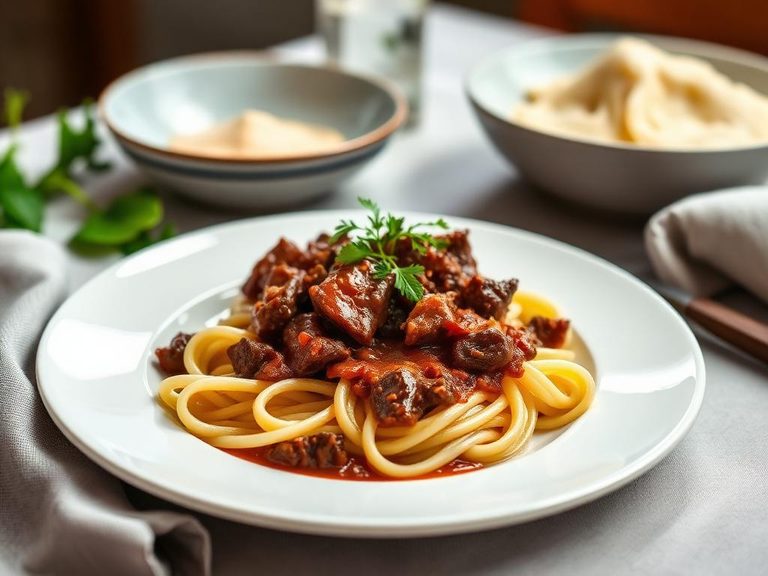
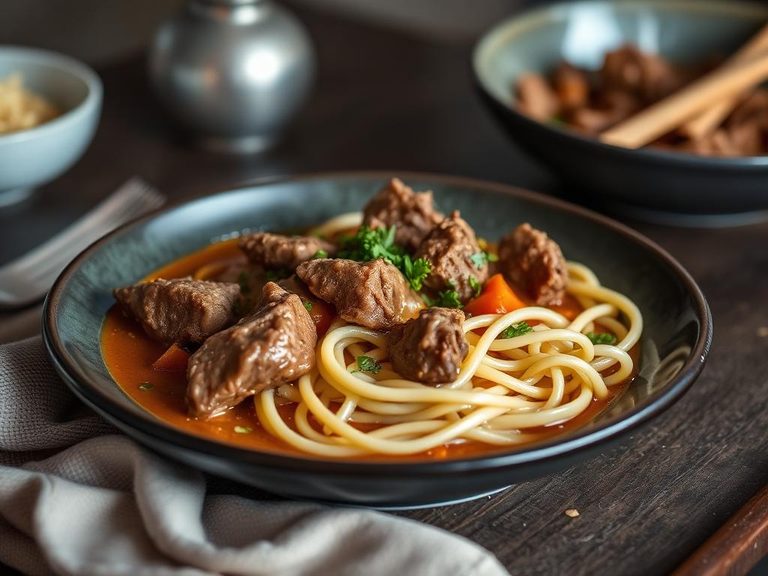
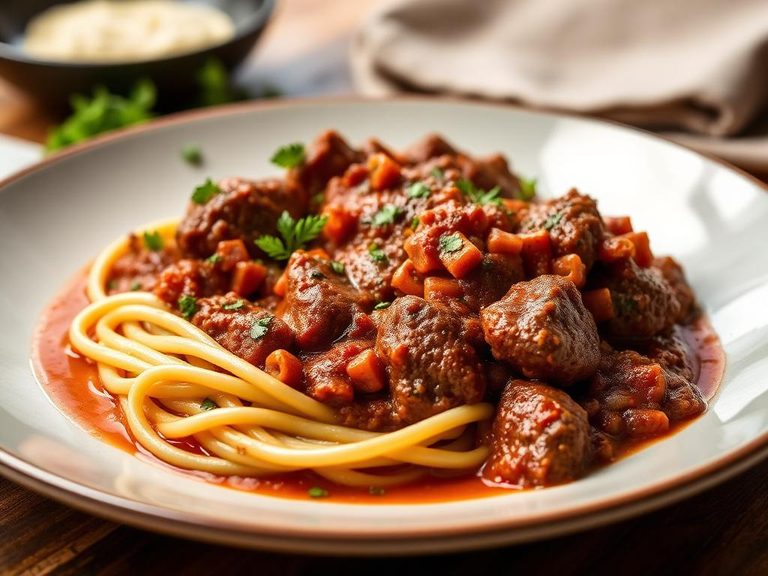
This is a hearty, savory noodle dish featuring tender venison, al dente noodles, and a vibrant mix of carrots, broccoli, and dark greens in a rich tomato-based sauce. The lean game meat offers a deeper, earthier flavor than beef, while the vegetables provide a fresh, crisp contrast to the soft noodles. Nutritionally, it's a balanced meal with a strong protein punch from the venison and complex carbs from the noodles and vegetables.
Calorie split: 23% protein · 42% carbs · 35% fat
↓ Full nutrition💚 Why it's loved
People love it for the deep, savory umami of the venison paired with the sweet acidity of the tomato sauce, creating a comforting yet sophisticated flavor profile. It's a versatile one-pot meal that feels both rustic and nourishing, often associated with hearty home cooking and hunting traditions.
⚠️ Watch-outs & how to enjoy it better
The dish can be high in sodium depending on the sauce and seasoning, and the tomato base may trigger heartburn in some individuals. To counteract this, use low-sodium broth and balance the acidity by adding a pinch of sugar or a dollop of dairy (like yogurt) on the side. Venison is also a common game allergen for some; ensure it's sourced and prepared properly.
Key benefits
- High-quality protein from lean venison for muscle maintenance
- Rich in iron and B vitamins from dark meat and leafy greens
- Good source of fiber and micronutrients from diverse vegetables
- Lower in saturated fat than many red meat dishes
- Provides sustained energy from complex carbohydrates
🍽️ Popular dishes
🌍 Where it's eaten
💡 Did you know?
Venison has about half the fat of beef of the same cut, making it one of the leanest red meats available, which is why it cooks quickly and can become tough if overdone.
Full nutrition (USDA data · scales with serving)
| Water | 72.5 g |
| Energy | 130 kcal |
| Protein | 7.4 g |
| Total lipid (fat) | 5.1 g |
| Carbohydrate, by difference | 13.6 g |
| Fiber, total dietary | 1.5 g |
| Total Sugars | 1.6 g |
| Calcium, Ca | 16.0 mg |
| Iron, Fe | 1.7 mg |
| Magnesium, Mg | 19.0 mg |
| Phosphorus, P | 82.0 mg |
| Potassium, K | 166 mg |
| Sodium, Na | 311 mg |
| Zinc, Zn | 1.5 mg |
| Copper, Cu | 0.12 mg |
| Selenium, Se | 13.1 ug |
| Vitamin C, total ascorbic acid | 5.6 mg |
| Thiamin | 0.16 mg |
| Riboflavin | 0.17 mg |
| Niacin | 2.2 mg |
| Vitamin B-6 | 0.13 mg |
| Folate, total | 47.0 ug |
| Folic acid | 34.0 ug |
| Folate, food | 13.0 ug |
| Folate, DFE | 71.0 ug |
| Choline, total | 33.8 mg |
| Vitamin B-12 | 0.44 ug |
| Vitamin B-12, added | 0.00 ug |
| Vitamin A, RAE | 87.0 ug |
| Retinol | 3.0 ug |
| Carotene, beta | 844 ug |
| Carotene, alpha | 329 ug |
| Cryptoxanthin, beta | 1.0 ug |
| Lycopene | 3672 ug |
| Lutein + zeaxanthin | 179 ug |
| Vitamin E (alpha-tocopherol) | 1.4 mg |
| Vitamin E, added | 0.00 mg |
| Vitamin D (D2 + D3) | 0.00 ug |
| Vitamin K (phylloquinone) | 13.4 ug |
| Alcohol, ethyl | 0.00 g |
| Caffeine | 0.00 mg |
| Theobromine | 0.00 mg |
Fat & fatty acid profile (per 100g)
| Fatty acids, total saturated | 0.97 g |
| SFA 4:0 | 0.00 g |
| SFA 6:0 | 0.00 g |
| SFA 8:0 | 0.00 g |
| SFA 10:0 | 0.00 g |
| SFA 12:0 | 0.00 g |
| SFA 14:0 | 0.02 g |
| SFA 16:0 | 0.62 g |
| SFA 18:0 | 0.28 g |
| Fatty acids, total monounsaturated | 1.9 g |
| MUFA 16:1 | 0.04 g |
| MUFA 18:1 | 1.8 g |
| MUFA 20:1 | 0.02 g |
| MUFA 22:1 | 0.00 g |
| Fatty acids, total polyunsaturated | 1.7 g |
| PUFA 18:2 | 1.5 g |
| PUFA 18:3 | 0.18 g |
| PUFA 18:4 | 0.00 g |
| PUFA 20:4 | 0.01 g |
| PUFA 20:5 n-3 (EPA) | 0.00 g |
| PUFA 22:5 n-3 (DPA) | 0.00 g |
| PUFA 22:6 n-3 (DHA) | 0.00 g |
| Cholesterol | 28.0 mg |
FAQ
What does venison taste like compared to beef?
Venison has a richer, earthier, and slightly sweeter flavor than beef, with a gamey note that's less pronounced in farm-raised deer. It's leaner, so the texture can be finer and more tender if cooked properly.
Can I substitute beef for venison in this dish?
Yes, you can use lean beef like sirloin or chuck, but you'll lose the distinctive gamey flavor. Adjust cooking time as beef may need longer to become tender.
How do I prevent the venison from becoming tough?
Cook it quickly over high heat for steaks or braise it slowly in the sauce for stews. Marinating in acidic ingredients like wine or vinegar can also help tenderize the meat.
Nutrient density (calculated · NRF9.3)
Nutrient Rich Foods index: beneficial nutrients (protein, fiber, vitamins, minerals) minus saturated fat, added sugar & sodium, per 100 kcal.
NRF9.3 index — Fulgoni, Keast & Drewnowski, 2009. Computed from USDA nutrients.
Weight-loss friendliness (composite index)
Energy density 1.30 kcal/g · 23% calories from protein · 1.5 g fiber · 1.6 g sugar per 100 g.
Composite of energy density (Rolls et al., 1999), protein & fiber satiety, minus sugar. A calculated heuristic — ranks satiety-per-calorie, not a clinical measure.
Dietary load (calculated from USDA values)
Potential renal acid load. Positive = acid-forming, negative = alkaline-forming.
Sodium-to-potassium ratio: 1.87 (lower is better — aim for ≤ 1)
Sodium:potassium per WHO potassium guidance. Computed from USDA nutrients.