

Veal Marsala
Common food
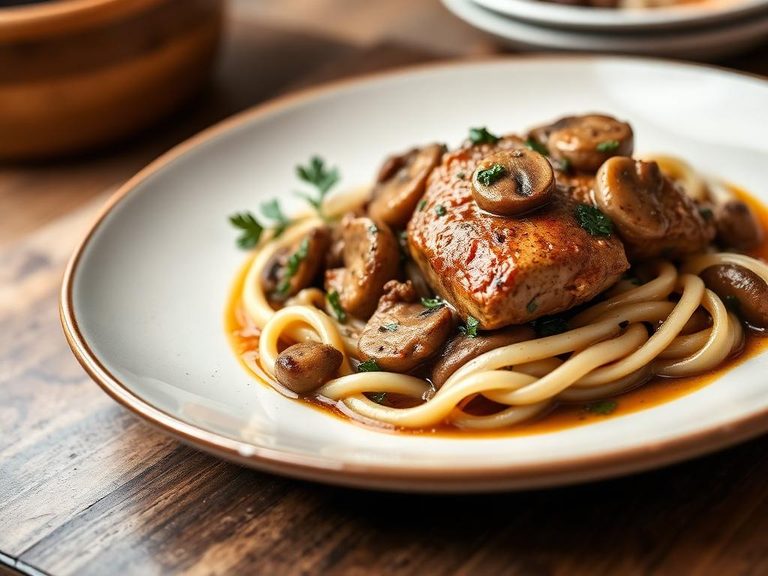
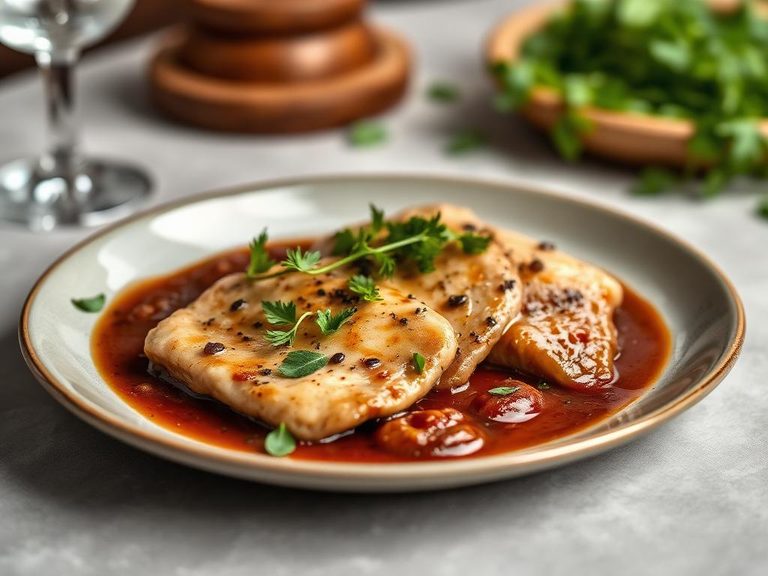
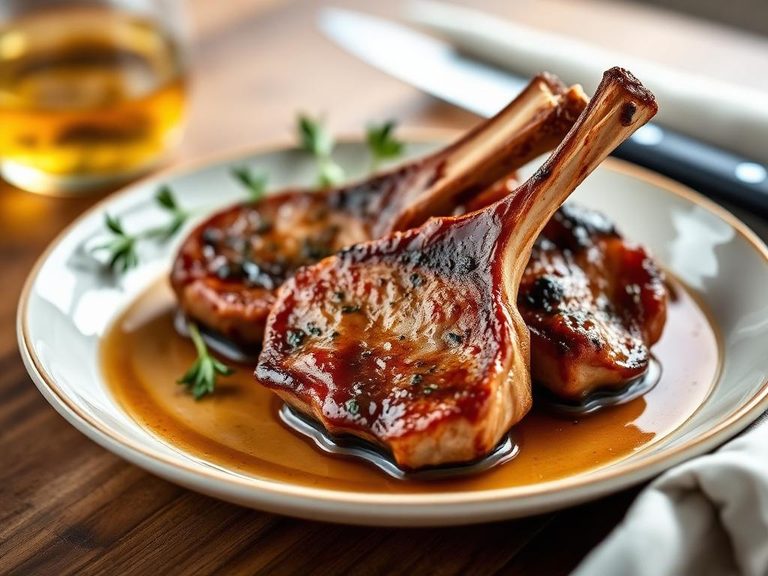
Veal Marsala is a classic Italian-American dish featuring tender, pounded veal cutlets pan-seared and simmered in a rich, savory sauce made from Marsala wine, mushrooms, and often butter or cream. The meat is delicate and velvety, while the sauce offers a deep, slightly sweet, and earthy flavor with a glossy finish. Nutritionally, it's a high-protein, moderate-fat entrée with a relatively low carbohydrate count, making it a satisfying yet balanced option.
Calorie split: 41% protein · 15% carbs · 44% fat
↓ Full nutrition💚 Why it's loved
People adore Veal Marsala for its elegant simplicity and the way the robust, wine-infused sauce complements the mild, tender veal without overpowering it. It's a beloved comfort food that feels both rustic and refined, often served in Italian restaurants and homes as a celebratory or cozy dinner.
⚠️ Watch-outs & how to enjoy it better
The dish can be high in sodium due to the sauce and cooking methods, and the butter or cream adds saturated fat. Those monitoring blood sugar should note the Marsala wine contributes some sugar, though the overall carb count remains low. To counteract, use low-sodium broth, limit added butter, and pair with non-starchy vegetables like steamed broccoli or a green salad to add fiber and balance the meal.
Key benefits
- Excellent source of high-quality protein for muscle maintenance.
- Low in carbohydrates, suitable for many low-carb dietary patterns.
- Contains B vitamins like B12 and niacin from the veal.
- Mushrooms in the sauce add minerals and antioxidants.
- Can be a good source of iron and zinc.
🍽️ Popular dishes
🌍 Where it's eaten
💡 Did you know?
The dish is named after Marsala, a fortified wine from the region of Sicily, Italy, which was first exported to England in the 18th century and became a key ingredient in this recipe.
Full nutrition (USDA data · scales with serving)
| Water | 65.9 g |
| Energy | 175 kcal |
| Protein | 17.8 g |
| Total lipid (fat) | 8.5 g |
| Carbohydrate, by difference | 6.7 g |
| Fiber, total dietary | 0.50 g |
| Total Sugars | 0.51 g |
| Calcium, Ca | 14.0 mg |
| Iron, Fe | 1.1 mg |
| Magnesium, Mg | 24.0 mg |
| Phosphorus, P | 142 mg |
| Potassium, K | 211 mg |
| Sodium, Na | 147 mg |
| Zinc, Zn | 1.2 mg |
| Copper, Cu | 0.13 mg |
| Selenium, Se | 17.9 ug |
| Vitamin C, total ascorbic acid | 1.4 mg |
| Thiamin | 0.10 mg |
| Riboflavin | 0.27 mg |
| Niacin | 5.3 mg |
| Vitamin B-6 | 0.40 mg |
| Folate, total | 17.0 ug |
| Folic acid | 7.0 ug |
| Folate, food | 10.0 ug |
| Folate, DFE | 22.0 ug |
| Choline, total | 87.9 mg |
| Vitamin B-12 | 1.6 ug |
| Vitamin B-12, added | 0.00 ug |
| Vitamin A, RAE | 43.0 ug |
| Retinol | 38.0 ug |
| Carotene, beta | 55.0 ug |
| Carotene, alpha | 0.00 ug |
| Cryptoxanthin, beta | 0.00 ug |
| Lycopene | 0.00 ug |
| Lutein + zeaxanthin | 52.0 ug |
| Vitamin E (alpha-tocopherol) | 0.58 mg |
| Vitamin E, added | 0.00 mg |
| Vitamin D (D2 + D3) | 0.50 ug |
| Vitamin K (phylloquinone) | 16.7 ug |
| Alcohol, ethyl | 0.00 g |
| Caffeine | 0.00 mg |
| Theobromine | 0.00 mg |
Fat & fatty acid profile (per 100g)
| Fatty acids, total saturated | 3.6 g |
| SFA 4:0 | 0.10 g |
| SFA 6:0 | 0.07 g |
| SFA 8:0 | 0.04 g |
| SFA 10:0 | 0.10 g |
| SFA 12:0 | 0.12 g |
| SFA 14:0 | 0.43 g |
| SFA 16:0 | 1.9 g |
| SFA 18:0 | 0.76 g |
| Fatty acids, total monounsaturated | 3.2 g |
| MUFA 16:1 | 0.15 g |
| MUFA 18:1 | 3.0 g |
| MUFA 20:1 | 0.01 g |
| MUFA 22:1 | 0.00 g |
| Fatty acids, total polyunsaturated | 0.48 g |
| PUFA 18:2 | 0.43 g |
| PUFA 18:3 | 0.03 g |
| PUFA 18:4 | 0.00 g |
| PUFA 20:4 | 0.03 g |
| PUFA 20:5 n-3 (EPA) | 0.00 g |
| PUFA 22:5 n-3 (DPA) | 0.00 g |
| PUFA 22:6 n-3 (DHA) | 0.00 g |
| Cholesterol | 55.0 mg |
FAQ
Is Veal Marsala gluten-free?
Not inherently. The veal is often dredged in flour before pan-frying, and some sauces may use flour as a thickener. To make it gluten-free, use a gluten-free flour blend or cornstarch for dredging and thickening.
Can I use chicken instead of veal?
Yes, Chicken Marsala is a very popular and widely accepted variation. The cooking method and sauce remain similar, though chicken breast may require slightly less cooking time than veal cutlets.
What can I substitute for Marsala wine?
For a non-alcoholic version, you can use a mix of chicken broth with a splash of balsamic vinegar or grape juice to mimic the depth. Dry sherry or a mix of white wine and brandy are common alcoholic substitutes.
Nutrient density (calculated · NRF9.3)
Nutrient Rich Foods index: beneficial nutrients (protein, fiber, vitamins, minerals) minus saturated fat, added sugar & sodium, per 100 kcal.
NRF9.3 index — Fulgoni, Keast & Drewnowski, 2009. Computed from USDA nutrients.
Weight-loss friendliness (composite index)
Energy density 1.75 kcal/g · 41% calories from protein · 0.5 g fiber · 0.5 g sugar per 100 g.
Composite of energy density (Rolls et al., 1999), protein & fiber satiety, minus sugar. A calculated heuristic — ranks satiety-per-calorie, not a clinical measure.
Dietary load (calculated from USDA values)
Potential renal acid load. Positive = acid-forming, negative = alkaline-forming.
Sodium-to-potassium ratio: 0.70 (lower is better — aim for ≤ 1)
Sodium:potassium per WHO potassium guidance. Computed from USDA nutrients.