

Tom Collins
Common food

Photo: Wikipedia
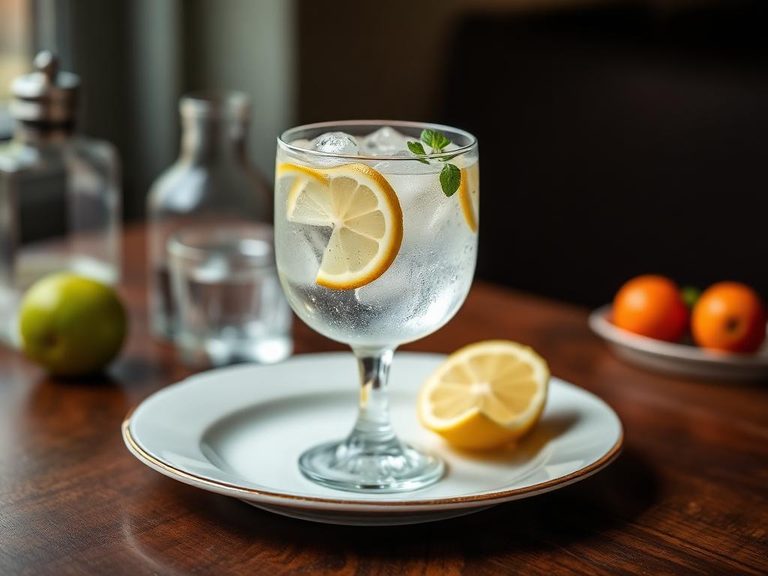
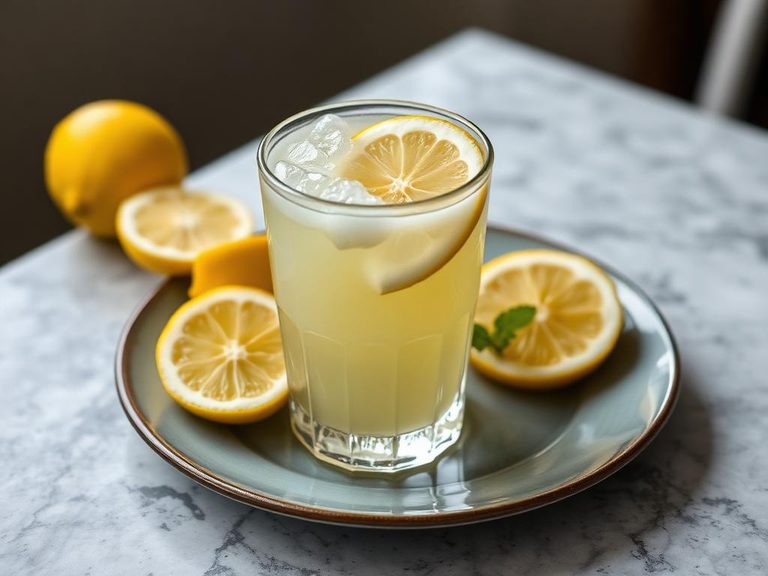
The Tom Collins is a classic, refreshing highball cocktail made with gin, lemon juice, sugar, and carbonated water, served over ice. It delivers a crisp, tart, and effervescent experience with a clean, botanical backbone from the gin. Nutritionally, it's a low-protein, low-fat drink whose calories come almost entirely from carbohydrates in the form of added sugar.
Calorie split: 0% protein · 98% carbs · 1% fat
↓ Full nutrition💚 Why it's loved
People love the Tom Collins for its perfect balance of sweet and sour, its bubbly refreshment, and its timeless, easy-drinking appeal that makes it a staple at bars and summer gatherings.
⚠️ Watch-outs & how to enjoy it better
Its high sugar content can lead to blood-sugar spikes and subsequent crashes, and the empty calories offer little nutritional value. To mitigate this, consider using a sugar-free syrup or reducing the sugar, and always consume it with food, particularly protein or fat, to slow sugar absorption.
Key benefits
- Provides quick energy from simple sugars
- Low in fat and protein
- Can be a social lubricant in moderation
- Refreshing and hydrating due to high water content
- Simple, classic recipe with few ingredients
🍽️ Popular dishes

🌍 Where it's eaten
💡 Did you know?
The drink is named after a fictional 19th-century prank called the 'Tom Collins Hoax,' where people would be told that a man named Tom Collins was at a nearby bar talking about them, prompting them to rush to confront him.
Full nutrition (USDA data · scales with serving)
| Water | 75.3 g |
| Energy | 123 kcal |
| Protein | 0.08 g |
| Total lipid (fat) | 0.08 g |
| Carbohydrate, by difference | 16.1 g |
| Fiber, total dietary | 0.00 g |
| Total Sugars | 16.1 g |
| Calcium, Ca | 2.0 mg |
| Iron, Fe | 0.09 mg |
| Magnesium, Mg | 1.0 mg |
| Phosphorus, P | 6.0 mg |
| Potassium, K | 22.0 mg |
| Sodium, Na | 77.0 mg |
| Zinc, Zn | 0.06 mg |
| Copper, Cu | 0.01 mg |
| Selenium, Se | 0.30 ug |
| Vitamin C, total ascorbic acid | 2.0 mg |
| Thiamin | 0.01 mg |
| Riboflavin | 0.01 mg |
| Niacin | 0.00 mg |
| Vitamin B-6 | 0.00 mg |
| Folate, total | 0.00 ug |
| Folic acid | 0.00 ug |
| Folate, food | 0.00 ug |
| Folate, DFE | 0.00 ug |
| Choline, total | 0.70 mg |
| Vitamin B-12 | 0.00 ug |
| Vitamin B-12, added | 0.00 ug |
| Vitamin A, RAE | 0.00 ug |
| Retinol | 0.00 ug |
| Carotene, beta | 0.00 ug |
| Carotene, alpha | 0.00 ug |
| Cryptoxanthin, beta | 0.00 ug |
| Lycopene | 0.00 ug |
| Lutein + zeaxanthin | 0.00 ug |
| Vitamin E (alpha-tocopherol) | 0.00 mg |
| Vitamin E, added | 0.00 mg |
| Vitamin D (D2 + D3) | 0.00 ug |
| Vitamin K (phylloquinone) | 0.00 ug |
| Alcohol, ethyl | 8.3 g |
| Caffeine | 0.00 mg |
| Theobromine | 0.00 mg |
Fat & fatty acid profile (per 100g)
| Fatty acids, total saturated | 0.01 g |
| SFA 4:0 | 0.00 g |
| SFA 6:0 | 0.00 g |
| SFA 8:0 | 0.00 g |
| SFA 10:0 | 0.00 g |
| SFA 12:0 | 0.00 g |
| SFA 14:0 | 0.00 g |
| SFA 16:0 | 0.01 g |
| SFA 18:0 | 0.00 g |
| Fatty acids, total monounsaturated | 0.00 g |
| MUFA 16:1 | 0.00 g |
| MUFA 18:1 | 0.00 g |
| MUFA 20:1 | 0.00 g |
| MUFA 22:1 | 0.00 g |
| Fatty acids, total polyunsaturated | 0.01 g |
| PUFA 18:2 | 0.01 g |
| PUFA 18:3 | 0.00 g |
| PUFA 18:4 | 0.00 g |
| PUFA 20:4 | 0.00 g |
| PUFA 20:5 n-3 (EPA) | 0.00 g |
| PUFA 22:5 n-3 (DPA) | 0.00 g |
| PUFA 22:6 n-3 (DHA) | 0.00 g |
| Cholesterol | 0.00 mg |
FAQ
What's the difference between a Tom Collins and a Gin Fizz?
The primary difference is texture: a Tom Collins is built over ice in a tall glass, while a Gin Fizz is shaken vigorously with ice and strained, often resulting in a frothy top from the egg white in a 'Silver Fizz' variation.
Can I make a Tom Collins without a shaker?
Yes. You can build it directly in a Collins glass by adding gin, lemon juice, and syrup, stirring with ice, then topping with soda water.
What is the best gin for a Tom Collins?
A classic London Dry Gin is traditional and provides a crisp, juniper-forward backbone. However, a lighter, citrus-forward gin can also work well to enhance the drink's refreshing qualities.
Nutrient density (calculated · NRF9.3)
Nutrient Rich Foods index: beneficial nutrients (protein, fiber, vitamins, minerals) minus saturated fat, added sugar & sodium, per 100 kcal.
NRF9.3 index — Fulgoni, Keast & Drewnowski, 2009. Computed from USDA nutrients.
Weight-loss friendliness (composite index)
Energy density 1.23 kcal/g · 0% calories from protein · 0.0 g fiber · 16.1 g sugar per 100 g.
Composite of energy density (Rolls et al., 1999), protein & fiber satiety, minus sugar. A calculated heuristic — ranks satiety-per-calorie, not a clinical measure.
Dietary load (calculated from USDA values)
Potential renal acid load. Positive = acid-forming, negative = alkaline-forming.
Sodium-to-potassium ratio: 3.50 (lower is better — aim for ≤ 1)
Sodium:potassium per WHO potassium guidance. Computed from USDA nutrients.