

Toddler meal, NFS
Common food
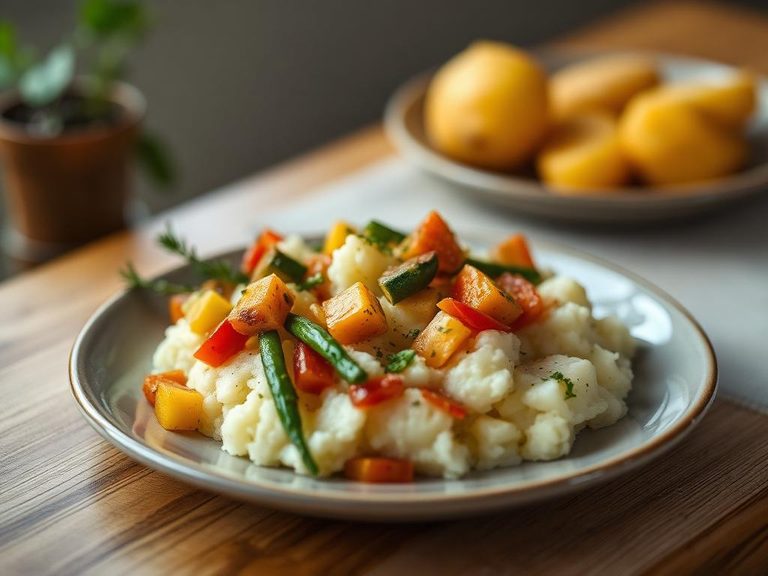
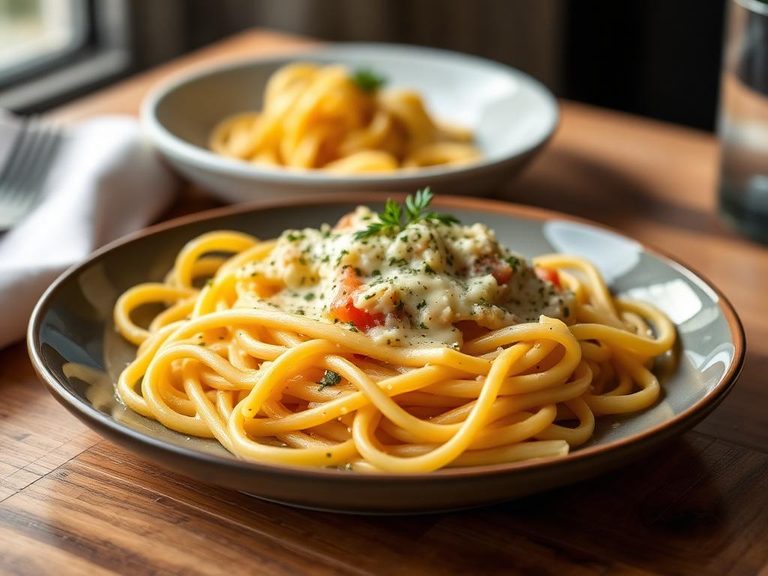
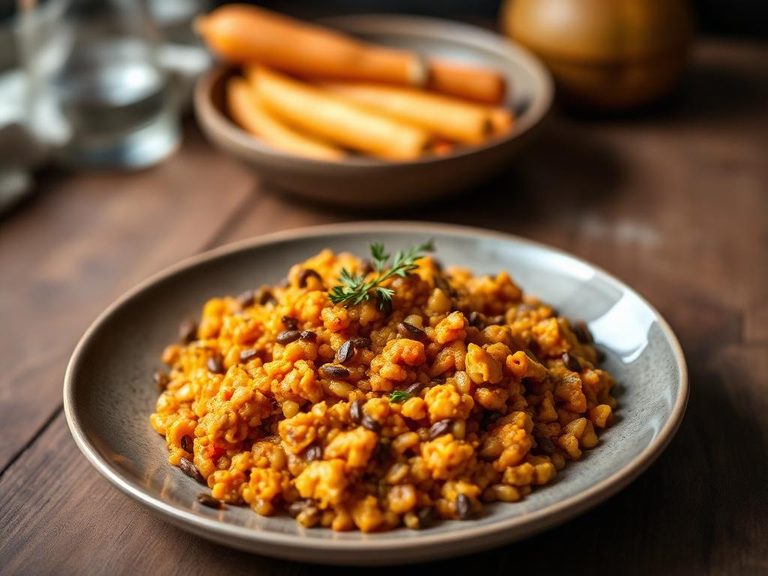
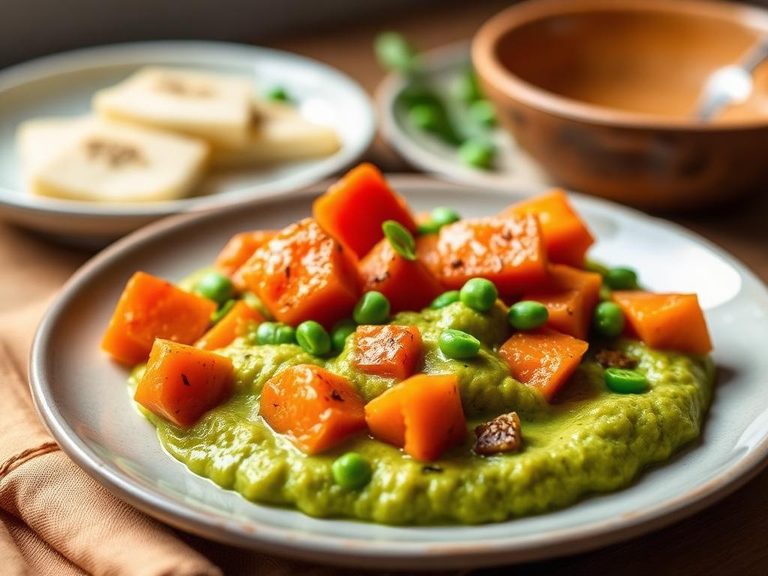
This is a generic, nutritionally balanced meal designed for toddlers, typically featuring soft, mashed, or finely chopped ingredients like pasta, rice, or potatoes mixed with mild vegetables and a small amount of protein. The texture is soft and easy to chew, with a mild, slightly sweet or savory flavor profile. Nutritionally, it provides a moderate calorie boost with a good balance of carbohydrates for energy and protein for growth, while keeping fat and sugar low.
Calorie split: 17% protein · 61% carbs · 22% fat
↓ Full nutrition💚 Why it's loved
Parents love it for its simplicity and versatility, as it can be customized with various vegetables, grains, and proteins to suit a toddler's preferences and dietary needs. It is a staple in many cultures, often served as a comforting, familiar meal that encourages healthy eating habits from a young age.
⚠️ Watch-outs & how to enjoy it better
The low fiber and sugar content may not provide enough satiety for some toddlers, leading to frequent hunger or energy crashes. To counteract this, pair it with a small serving of fruit or a healthy fat like avocado to enhance fullness and nutrient absorption. Additionally, be mindful of portion sizes to avoid overfeeding, as toddlers have smaller stomachs and may not recognize when they are full.
Key benefits
- Provides balanced energy from carbohydrates for active toddlers
- Supports growth with a moderate protein content
- Low in fat and sugar, reducing the risk of unhealthy weight gain
- Soft texture is ideal for developing chewing skills
- Easy to prepare and serve as a quick, nutritious meal
🍽️ Popular dishes

🌍 Where it's eaten
💡 Did you know?
A single serving of toddler meal can provide up to 10% of a toddler's daily caloric needs, making it a crucial component of their diet.
Full nutrition (USDA data · scales with serving)
| Water | 80.6 g |
| Energy | 85.0 kcal |
| Protein | 3.6 g |
| Total lipid (fat) | 2.1 g |
| Carbohydrate, by difference | 12.8 g |
| Fiber, total dietary | 1.0 g |
| Total Sugars | 1.4 g |
| Calcium, Ca | 45.0 mg |
| Iron, Fe | 0.69 mg |
| Magnesium, Mg | 13.0 mg |
| Phosphorus, P | 55.0 mg |
| Potassium, K | 99.0 mg |
| Sodium, Na | 167 mg |
| Zinc, Zn | 0.48 mg |
| Copper, Cu | 0.06 mg |
| Selenium, Se | 6.4 ug |
| Vitamin C, total ascorbic acid | 3.0 mg |
| Thiamin | 0.07 mg |
| Riboflavin | 0.07 mg |
| Niacin | 1.0 mg |
| Vitamin B-6 | 0.07 mg |
| Folate, total | 26.0 ug |
| Folic acid | 17.0 ug |
| Folate, food | 9.0 ug |
| Folate, DFE | 38.0 ug |
| Choline, total | 11.8 mg |
| Vitamin B-12 | 0.09 ug |
| Vitamin B-12, added | 0.00 ug |
| Vitamin A, RAE | 87.0 ug |
| Retinol | 6.0 ug |
| Carotene, beta | 870 ug |
| Carotene, alpha | 189 ug |
| Cryptoxanthin, beta | 0.00 ug |
| Lycopene | 0.00 ug |
| Lutein + zeaxanthin | 297 ug |
| Vitamin E (alpha-tocopherol) | 0.26 mg |
| Vitamin E, added | 0.00 mg |
| Vitamin D (D2 + D3) | 0.00 ug |
| Vitamin K (phylloquinone) | 6.2 ug |
| Alcohol, ethyl | 0.00 g |
| Caffeine | 0.00 mg |
| Theobromine | 0.00 mg |
Fat & fatty acid profile (per 100g)
| Fatty acids, total saturated | 0.71 g |
| SFA 4:0 | 0.02 g |
| SFA 6:0 | 0.01 g |
| SFA 8:0 | 0.01 g |
| SFA 10:0 | 0.01 g |
| SFA 12:0 | 0.01 g |
| SFA 14:0 | 0.08 g |
| SFA 16:0 | 0.38 g |
| SFA 18:0 | 0.14 g |
| Fatty acids, total monounsaturated | 0.81 g |
| MUFA 16:1 | 0.04 g |
| MUFA 18:1 | 0.73 g |
| MUFA 20:1 | 0.01 g |
| MUFA 22:1 | 0.00 g |
| Fatty acids, total polyunsaturated | 0.38 g |
| PUFA 18:2 | 0.30 g |
| PUFA 18:3 | 0.06 g |
| PUFA 18:4 | 0.00 g |
| PUFA 20:4 | 0.00 g |
| PUFA 20:5 n-3 (EPA) | 0.00 g |
| PUFA 22:5 n-3 (DPA) | 0.00 g |
| PUFA 22:6 n-3 (DHA) | 0.00 g |
| Cholesterol | 8.0 mg |
FAQ
What is a toddler meal, NFS?
A toddler meal, NFS (Not Further Specified) is a generic term for a nutritionally balanced meal designed for toddlers, typically containing soft, easy-to-eat ingredients like grains, vegetables, and protein.
How does a toddler meal compare to a regular meal?
A toddler meal is smaller in portion size and lower in calories, fat, and sugar compared to a regular meal, with a focus on soft textures and mild flavors suitable for young children.
Can I customize a toddler meal for my child's preferences?
Yes, you can customize a toddler meal by adding or substituting ingredients like vegetables, grains, and proteins to suit your child's taste and dietary needs.
Nutrient density (calculated · NRF9.3)
Nutrient Rich Foods index: beneficial nutrients (protein, fiber, vitamins, minerals) minus saturated fat, added sugar & sodium, per 100 kcal.
NRF9.3 index — Fulgoni, Keast & Drewnowski, 2009. Computed from USDA nutrients.
Weight-loss friendliness (composite index)
Energy density 0.85 kcal/g · 17% calories from protein · 1.0 g fiber · 1.4 g sugar per 100 g.
Composite of energy density (Rolls et al., 1999), protein & fiber satiety, minus sugar. A calculated heuristic — ranks satiety-per-calorie, not a clinical measure.
Dietary load (calculated from USDA values)
Potential renal acid load. Positive = acid-forming, negative = alkaline-forming.
Sodium-to-potassium ratio: 1.69 (lower is better — aim for ≤ 1)
Sodium:potassium per WHO potassium guidance. Computed from USDA nutrients.