

Tamarind nectar, canned
Whole food · Fruits and Fruit Juices

Photo: Wikipedia
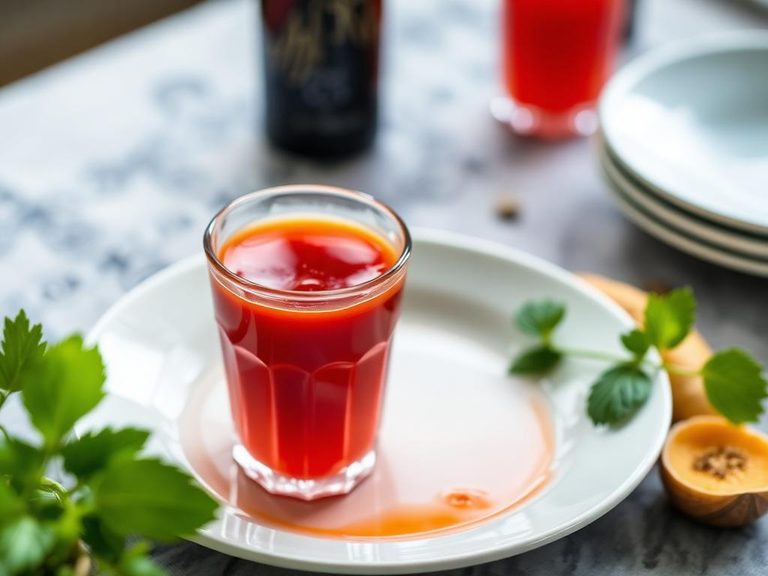
Tamarind nectar is a sweet-tart, amber-hued beverage made from the pulp of the tamarind pod, offering a uniquely complex flavor that's both tangy and subtly fruity. Its thin, juice-like consistency makes it a refreshing drink, while its nutrition profile is defined by a high carbohydrate content, primarily from natural sugars, with minimal protein or fat.
Calorie split: 1% protein · 98% carbs · 2% fat
↓ Full nutrition💚 Why it's loved
People love tamarind nectar for its bold, mouth-puckering tartness balanced by a deep, fruity sweetness that's hard to replicate. It's a beloved staple in many tropical and subtropical cultures, enjoyed as a thirst-quencher or a versatile ingredient in both sweet and savory recipes.
⚠️ Watch-outs & how to enjoy it better
Its high sugar content (12.7g per 100g) can cause rapid blood-sugar spikes, making it a poor choice for those managing diabetes or watching their glycemic load. To counteract this, always consume it in small portions and pair it with a source of protein or healthy fat (like nuts or yogurt) to slow sugar absorption.
Key benefits
- Provides a quick source of energy from natural carbohydrates.
- Contains small amounts of minerals like potassium and magnesium.
- Offers a distinctive, refreshing flavor without artificial additives.
- Can be used as a natural souring agent in cooking and drinks.
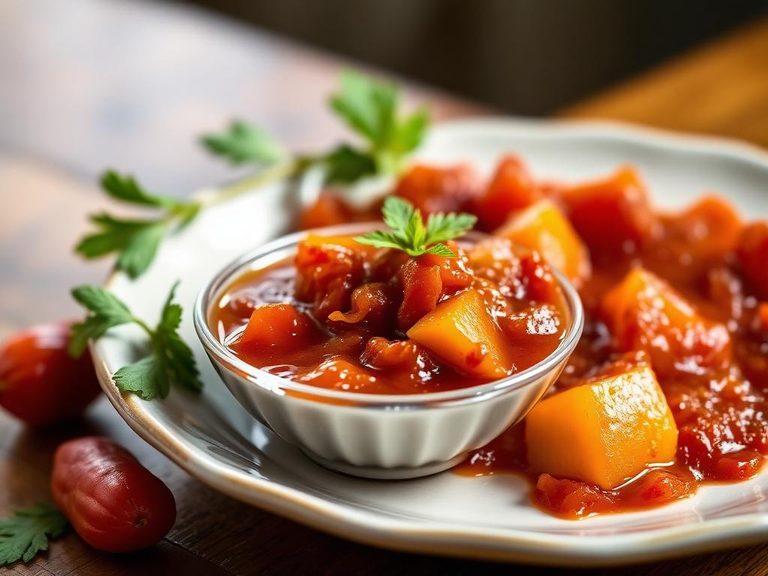
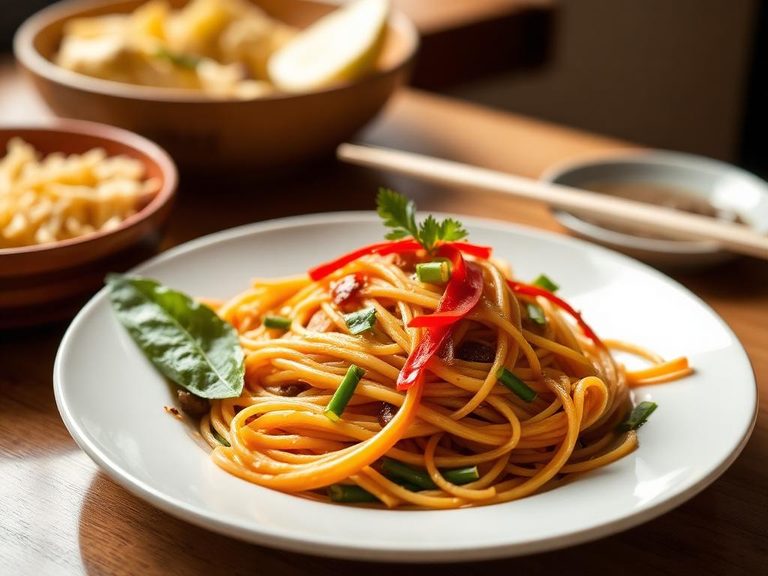
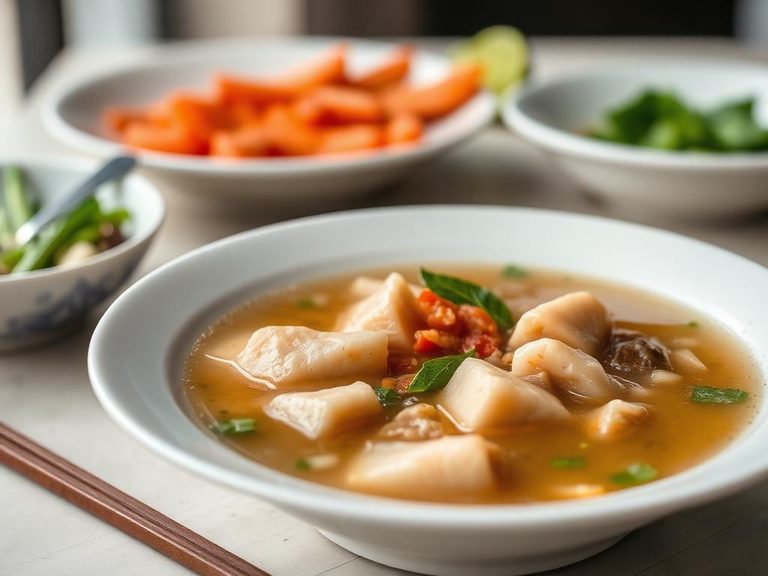
🍽️ Popular dishes

🌍 Where it's eaten
💡 Did you know?
The tamarind tree is the national tree of the Philippines, and its fruit pod is so integral to the cuisine that the country's name itself is believed to derive from the Arabic 'Tamar-i-Hind,' meaning 'Date of India.'
Full nutrition (USDA data · scales with serving)
| Water | 85.0 g |
| Energy | 57.0 kcal |
| Energy | 240 kj |
| Protein | 0.09 g |
| Total lipid (fat) | 0.12 g |
| Ash | 0.09 g |
| Carbohydrate, by difference | 14.7 g |
| Fiber, total dietary | 0.50 g |
| Total Sugars | 12.7 g |
| Sucrose | 0.13 g |
| Glucose | 5.9 g |
| Fructose | 6.1 g |
| Lactose | 0.00 g |
| Maltose | 0.57 g |
| Galactose | 0.00 g |
| Starch | 0.00 g |
| Calcium, Ca | 10.0 mg |
| Iron, Fe | 0.75 mg |
| Magnesium, Mg | 4.0 mg |
| Phosphorus, P | 2.0 mg |
| Potassium, K | 27.0 mg |
| Sodium, Na | 7.0 mg |
| Zinc, Zn | 0.02 mg |
| Copper, Cu | 0.01 mg |
| Manganese, Mn | 0.02 mg |
| Vitamin C, total ascorbic acid | 7.1 mg |
| Thiamin | 0.00 mg |
| Riboflavin | 0.00 mg |
| Niacin | 0.07 mg |
| Pantothenic acid | 0.04 mg |
| Vitamin B-6 | 0.01 mg |
| Folate, total | 1.0 ug |
| Folic acid | 0.00 ug |
| Folate, food | 1.0 ug |
| Folate, DFE | 1.0 ug |
| Choline, total | 1.3 mg |
| Betaine | 0.10 mg |
| Vitamin B-12 | 0.00 ug |
| Vitamin A, RAE | 0.00 ug |
| Carotene, beta | 0.00 ug |
| Carotene, alpha | 0.00 ug |
| Cryptoxanthin, beta | 0.00 ug |
| Vitamin A, IU | 0.00 iu |
| Lycopene | 0.00 ug |
| Lutein + zeaxanthin | 0.00 ug |
| Vitamin E (alpha-tocopherol) | 0.12 mg |
| Tocopherol, beta | 0.00 mg |
| Tocopherol, gamma | 0.02 mg |
| Tocopherol, delta | 0.00 mg |
| Tocotrienol, alpha | 0.01 mg |
| Tocotrienol, beta | 0.00 mg |
| Tocotrienol, gamma | 0.00 mg |
| Tocotrienol, delta | 0.00 mg |
| Vitamin K (phylloquinone) | 0.10 ug |
| Vitamin K (Dihydrophylloquinone) | 0.00 ug |
| Vitamin K (Menaquinone-4) | 0.00 ug |
Fat & fatty acid profile (per 100g)
| Fatty acids, total trans | 0.00 g |
| Cholesterol | 0.00 mg |
FAQ
Is tamarind nectar the same as tamarind juice?
They are often used interchangeably, but 'nectar' typically implies a sweeter, more diluted beverage made from concentrate or pulp with added sugar, while 'juice' might be a more direct extraction. Nutritionally, they are very similar.
Can I use tamarind nectar in cooking?
Yes, it's excellent in marinades, glazes, and sauces to add a sweet-sour depth. However, because it's pre-sweetened, you may need to adjust the amount of other sugars in the recipe.
Does tamarind nectar contain any allergens?
Pure tamarind nectar is generally allergen-free. However, some commercial brands may add preservatives or other ingredients. Always check the label if you have specific sensitivities.
Nutrient density (calculated · NRF9.3)
Nutrient Rich Foods index: beneficial nutrients (protein, fiber, vitamins, minerals) minus saturated fat, added sugar & sodium, per 100 kcal.
NRF9.3 index — Fulgoni, Keast & Drewnowski, 2009. Computed from USDA nutrients.
Weight-loss friendliness (composite index)
Energy density 0.57 kcal/g · 1% calories from protein · 0.5 g fiber · 12.7 g sugar per 100 g.
Composite of energy density (Rolls et al., 1999), protein & fiber satiety, minus sugar. A calculated heuristic — ranks satiety-per-calorie, not a clinical measure.
Dietary load (calculated from USDA values)
Potential renal acid load. Positive = acid-forming, negative = alkaline-forming.
Sodium-to-potassium ratio: 0.26 (lower is better — aim for ≤ 1)
Sodium:potassium per WHO potassium guidance. Computed from USDA nutrients.