

Sour Soup
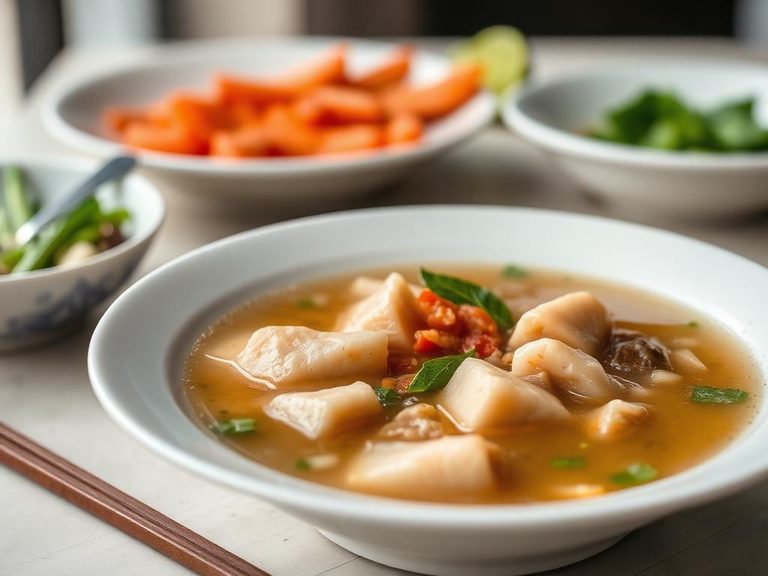
Sinigang is a beloved Filipino sour soup known for its signature tangy and savory broth, typically made with a souring agent like tamarind, guava, or calamansi. It features a variety of proteins such as pork, shrimp, or fish, simmered with an assortment of vegetables like tomatoes, kangkong (water spinach), radish, and eggplant. This comforting dish is a staple in Filipino households and is celebrated for its refreshing and hearty flavors.
🍽️ Nutrition at a glance
Sinigang is generally a well-balanced dish, offering a good source of protein from the meat or seafood, while being relatively low in carbohydrates and moderate in fat. It is rich in vitamins and minerals, particularly vitamin C from the souring agent and tomatoes, and fiber from the vegetables. A typical serving can range from 250 to 400 calories, depending on the protein and portion size.
Nutrition breakdown
| Calories | 120 kcal |
| Protein | 8 g |
| Carbs | 12 g |
| Fat | 5 g |
| Fiber | 3 g |
| Sugar | 4 g |
| Sodium | 680 mg |
| Vitamin C | 18 mg |
| Vitamin A | 90 mcg RAE |
| Potassium | 420 mg |
| Phosphorus | 110 mg |
| Iron | 1.5 mg |
| Calcium | 45 mg |
| Magnesium | 30 mg |
| Zinc | 1.2 mg |
Per 1 cup (240 g) · estimated, varies by recipe
💡 What's interesting
Culturally, Sinigang is often considered the unofficial national dish of the Philippines, embodying the Filipino love for sour flavors and communal eating. Nutritionally, its use of natural souring agents not only enhances flavor but also aids in digestion and provides a boost of antioxidants.
🍽️ Related dishes

AI estimate may be inaccurate · Terms