

Stuffed grape leaves with beef and rice
Common food

Photo: Wikipedia
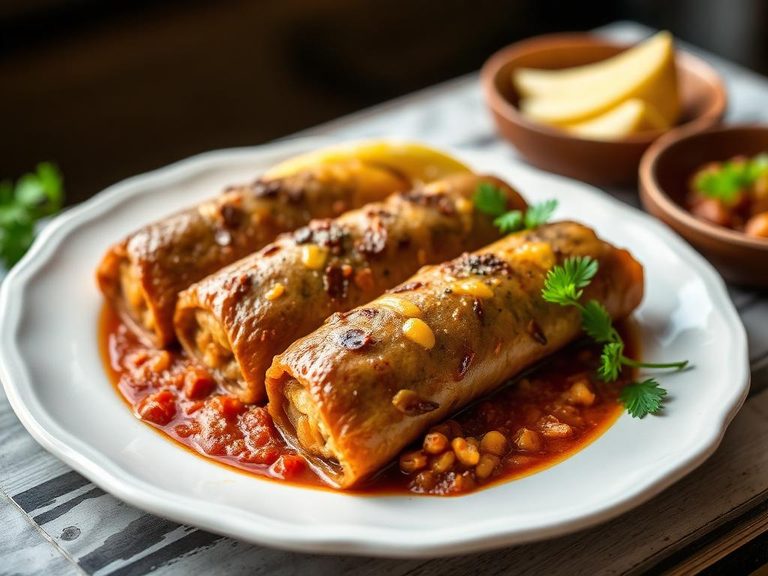
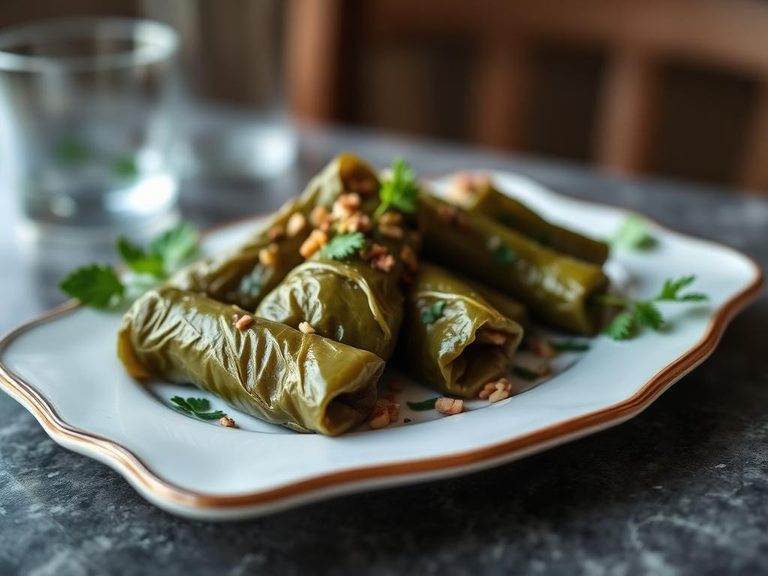
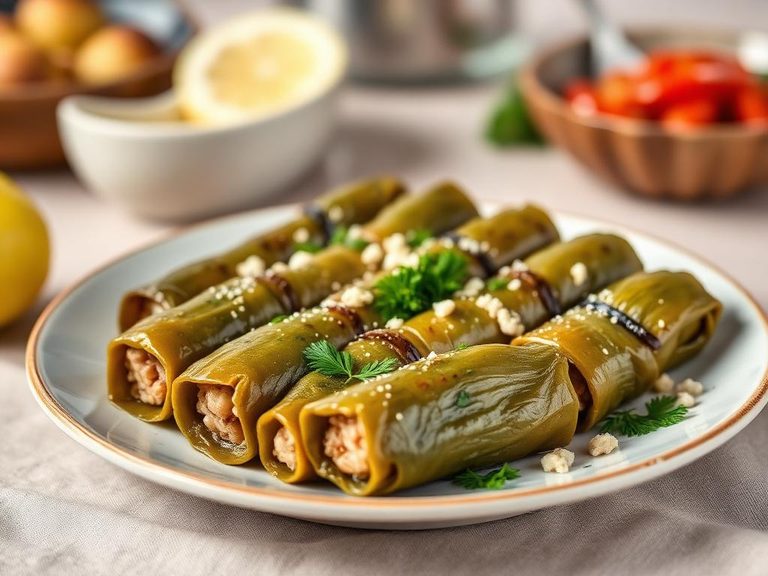
Stuffed grape leaves, often called dolma or warak enab, are tender vine leaves wrapped around a savory filling of ground beef, rice, and aromatic herbs. The texture is a delightful contrast between the slightly chewy, tangy leaf and the soft, spiced interior. Nutritionally, they offer a balanced profile of protein and healthy fats, making them a satisfying and flavorful bite.
Calorie split: 14% protein · 20% carbs · 66% fat
↓ Full nutrition💚 Why it's loved
People love them for their complex, savory flavor that balances the tanginess of the grape leaf with the richness of the beef and rice. They are also cherished as a versatile dish, served warm or cold, as an appetizer, main course, or part of a mezze platter, deeply rooted in Mediterranean and Middle Eastern culinary traditions.
⚠️ Watch-outs & how to enjoy it better
The dish can be high in sodium, especially if prepared with canned grape leaves or added salt, which may be a concern for those monitoring blood pressure. To mitigate this, use fresh or low-sodium grape leaves and season with herbs and lemon juice instead of excessive salt. Additionally, the rice content can cause blood-sugar spikes, so pairing with a side of non-starchy vegetables or a protein-rich salad can help balance the meal.
Key benefits
- Provides a good source of protein from beef for muscle maintenance.
- Contains dietary fiber from grape leaves and rice for digestive health.
- Offers healthy fats, including monounsaturated fats if prepared with olive oil.
- Rich in vitamins and minerals from grape leaves, such as vitamins A, C, and K.
- A culturally significant dish that promotes mindful, communal eating.
🍽️ Popular dishes
🌍 Where it's eaten
💡 Did you know?
Grape leaves have been used as a food wrapping for over 2,000 years, with evidence of their use in ancient Roman and Greek cuisine, where they were often stuffed with a mixture of grains, herbs, and sometimes meat.
Full nutrition (USDA data · scales with serving)
| Water | 61.5 g |
| Energy | 228 kcal |
| Protein | 8.2 g |
| Total lipid (fat) | 17.0 g |
| Carbohydrate, by difference | 11.3 g |
| Fiber, total dietary | 3.1 g |
| Total Sugars | 2.5 g |
| Calcium, Ca | 98.0 mg |
| Iron, Fe | 1.9 mg |
| Magnesium, Mg | 36.0 mg |
| Phosphorus, P | 95.0 mg |
| Potassium, K | 225 mg |
| Sodium, Na | 420 mg |
| Zinc, Zn | 1.8 mg |
| Copper, Cu | 0.19 mg |
| Selenium, Se | 6.4 ug |
| Vitamin C, total ascorbic acid | 9.7 mg |
| Thiamin | 0.06 mg |
| Riboflavin | 0.14 mg |
| Niacin | 2.3 mg |
| Vitamin B-6 | 0.19 mg |
| Folate, total | 31.0 ug |
| Folic acid | 9.0 ug |
| Folate, food | 23.0 ug |
| Folate, DFE | 38.0 ug |
| Choline, total | 23.6 mg |
| Vitamin B-12 | 0.52 ug |
| Vitamin B-12, added | 0.00 ug |
| Vitamin A, RAE | 337 ug |
| Retinol | 1.0 ug |
| Carotene, beta | 3942 ug |
| Carotene, alpha | 179 ug |
| Cryptoxanthin, beta | 2.0 ug |
| Lycopene | 1655 ug |
| Lutein + zeaxanthin | 532 ug |
| Vitamin E (alpha-tocopherol) | 3.0 mg |
| Vitamin E, added | 0.00 mg |
| Vitamin D (D2 + D3) | 0.00 ug |
| Vitamin K (phylloquinone) | 66.3 ug |
| Alcohol, ethyl | 0.00 g |
| Caffeine | 0.00 mg |
| Theobromine | 0.00 mg |
Fat & fatty acid profile (per 100g)
| Fatty acids, total saturated | 3.7 g |
| SFA 4:0 | 0.00 g |
| SFA 6:0 | 0.00 g |
| SFA 8:0 | 0.00 g |
| SFA 10:0 | 0.00 g |
| SFA 12:0 | 0.00 g |
| SFA 14:0 | 0.14 g |
| SFA 16:0 | 2.5 g |
| SFA 18:0 | 0.89 g |
| Fatty acids, total monounsaturated | 9.7 g |
| MUFA 16:1 | 0.29 g |
| MUFA 18:1 | 9.3 g |
| MUFA 20:1 | 0.06 g |
| MUFA 22:1 | 0.00 g |
| Fatty acids, total polyunsaturated | 1.9 g |
| PUFA 18:2 | 1.5 g |
| PUFA 18:3 | 0.30 g |
| PUFA 18:4 | 0.00 g |
| PUFA 20:4 | 0.01 g |
| PUFA 20:5 n-3 (EPA) | 0.00 g |
| PUFA 22:5 n-3 (DPA) | 0.00 g |
| PUFA 22:6 n-3 (DHA) | 0.00 g |
| Cholesterol | 22.0 mg |
FAQ
What is the difference between dolma and sarma?
Dolma is a general term for stuffed vegetables, while sarma specifically refers to stuffed grape leaves, often rolled into a cylindrical shape.
Can stuffed grape leaves be made vegetarian?
Yes, they can be made vegetarian by omitting the beef and using a filling of rice, herbs, pine nuts, and sometimes lentils or chickpeas.
How should stuffed grape leaves be stored?
They can be stored in an airtight container in the refrigerator for up to 3-4 days, or frozen for up to 3 months. Reheat gently in a steamer or oven to preserve texture.
Nutrient density (calculated · NRF9.3)
Nutrient Rich Foods index: beneficial nutrients (protein, fiber, vitamins, minerals) minus saturated fat, added sugar & sodium, per 100 kcal.
NRF9.3 index — Fulgoni, Keast & Drewnowski, 2009. Computed from USDA nutrients.
Weight-loss friendliness (composite index)
Energy density 2.28 kcal/g · 14% calories from protein · 3.1 g fiber · 2.5 g sugar per 100 g.
Composite of energy density (Rolls et al., 1999), protein & fiber satiety, minus sugar. A calculated heuristic — ranks satiety-per-calorie, not a clinical measure.
Dietary load (calculated from USDA values)
Potential renal acid load. Positive = acid-forming, negative = alkaline-forming.
Sodium-to-potassium ratio: 1.87 (lower is better — aim for ≤ 1)
Sodium:potassium per WHO potassium guidance. Computed from USDA nutrients.