

Grape leaves stuffed with rice
Common food

Photo: Wikipedia
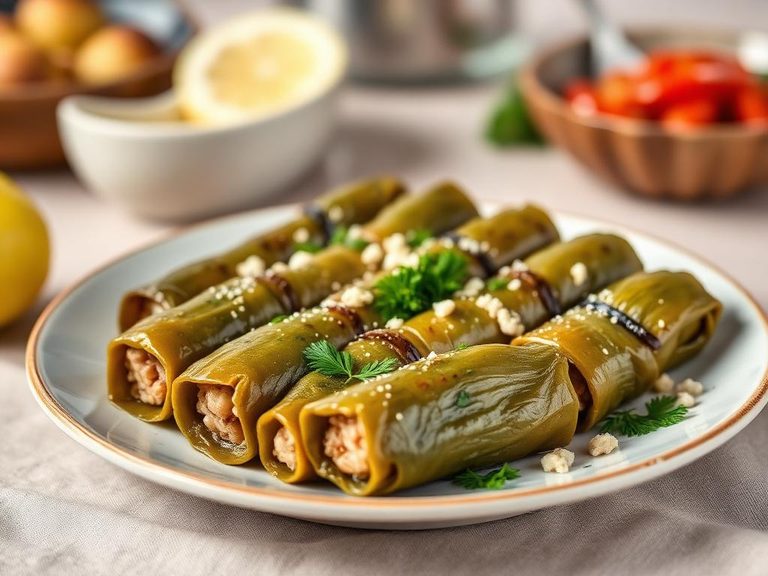
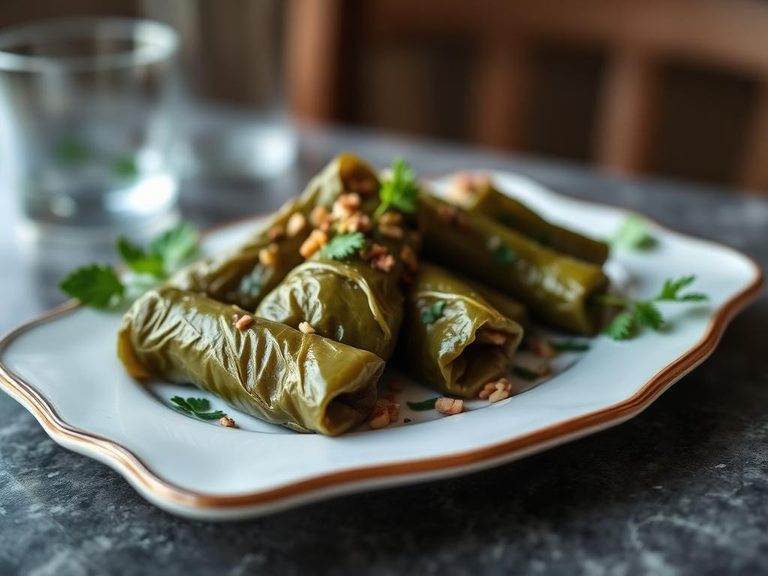
Grape leaves stuffed with rice, known as dolmas or dolmades, are tender, tangy parcels often filled with herbed rice, pine nuts, and sometimes ground meat. The texture is a delightful contrast between the slightly chewy, vinegary leaf and the soft, savory filling. Nutritionally, they offer a balanced mix of carbohydrates and healthy fats, with a good source of dietary fiber.
Calorie split: 5% protein · 32% carbs · 62% fat
↓ Full nutrition💚 Why it's loved
People adore them for their unique, savory-tangy flavor profile and the satisfying, hand-held texture. They are deeply embedded in Mediterranean and Middle Eastern cultures, often served as part of a festive meze spread or family gathering.
⚠️ Watch-outs & how to enjoy it better
The primary concern can be high sodium content from brining or pickling the leaves, which may be an issue for those monitoring salt intake. The rice filling can also cause a blood-sugar spike if not balanced, especially in larger portions. To counteract this, pair with a protein-rich dip like tzatziki or a side of grilled chicken, and practice portion control by enjoying 2-3 pieces as part of a varied meal.
Key benefits
- Good source of dietary fiber from the grape leaf and rice
- Contains healthy fats, often from olive oil in the preparation
- Provides a balanced energy source from complex carbohydrates
- Can be a satisfying, portion-controlled appetizer or light meal
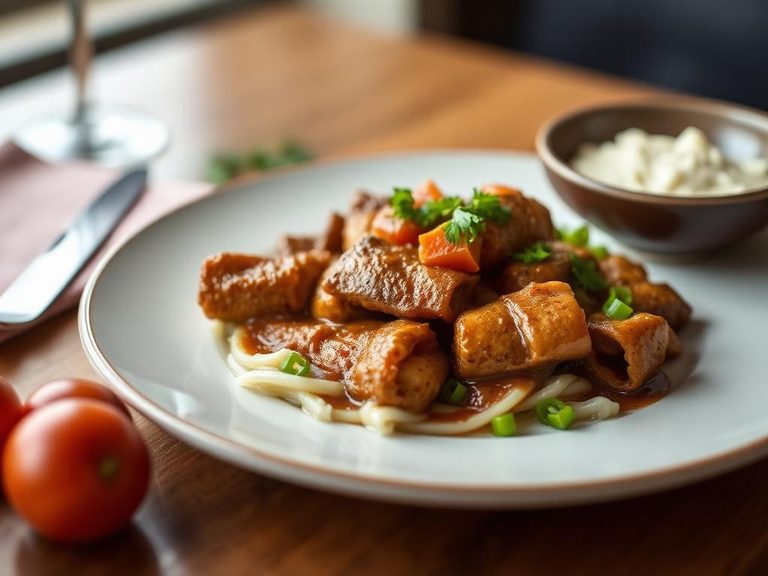
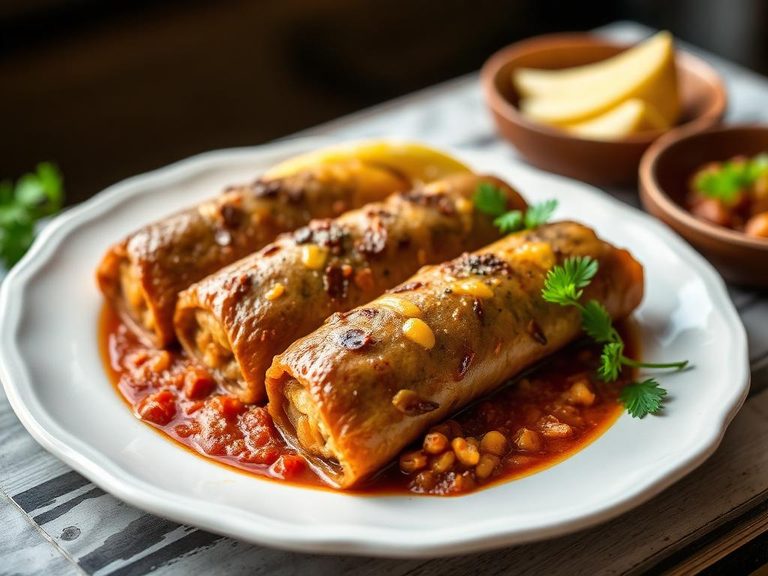
🍽️ Popular dishes
🌍 Where it's eaten
💡 Did you know?
The word 'dolma' comes from the Turkish verb 'doldurmak,' meaning 'to fill,' perfectly describing the action of stuffing the leaf.
Full nutrition (USDA data · scales with serving)
| Water | 70.8 g |
| Energy | 168 kcal |
| Protein | 2.3 g |
| Total lipid (fat) | 11.9 g |
| Carbohydrate, by difference | 13.9 g |
| Fiber, total dietary | 3.1 g |
| Total Sugars | 2.8 g |
| Calcium, Ca | 89.0 mg |
| Iron, Fe | 1.3 mg |
| Magnesium, Mg | 26.0 mg |
| Phosphorus, P | 41.0 mg |
| Potassium, K | 152 mg |
| Sodium, Na | 166 mg |
| Zinc, Zn | 0.34 mg |
| Copper, Cu | 0.12 mg |
| Selenium, Se | 1.7 ug |
| Vitamin C, total ascorbic acid | 5.6 mg |
| Thiamin | 0.07 mg |
| Riboflavin | 0.09 mg |
| Niacin | 0.89 mg |
| Vitamin B-6 | 0.13 mg |
| Folate, total | 38.0 ug |
| Folic acid | 13.0 ug |
| Folate, food | 24.0 ug |
| Folate, DFE | 47.0 ug |
| Choline, total | 5.8 mg |
| Vitamin B-12 | 0.00 ug |
| Vitamin B-12, added | 0.00 ug |
| Vitamin A, RAE | 241 ug |
| Retinol | 0.00 ug |
| Carotene, beta | 2835 ug |
| Carotene, alpha | 107 ug |
| Cryptoxanthin, beta | 2.0 ug |
| Lycopene | 0.00 ug |
| Lutein + zeaxanthin | 464 ug |
| Vitamin E (alpha-tocopherol) | 2.9 mg |
| Vitamin E, added | 0.00 mg |
| Vitamin D (D2 + D3) | 0.00 ug |
| Vitamin K (phylloquinone) | 58.5 ug |
| Alcohol, ethyl | 0.00 g |
| Caffeine | 0.00 mg |
| Theobromine | 0.00 mg |
Fat & fatty acid profile (per 100g)
| Fatty acids, total saturated | 1.9 g |
| SFA 4:0 | 0.00 g |
| SFA 6:0 | 0.00 g |
| SFA 8:0 | 0.00 g |
| SFA 10:0 | 0.00 g |
| SFA 12:0 | 0.00 g |
| SFA 14:0 | 0.00 g |
| SFA 16:0 | 1.5 g |
| SFA 18:0 | 0.31 g |
| Fatty acids, total monounsaturated | 7.9 g |
| MUFA 16:1 | 0.13 g |
| MUFA 18:1 | 7.7 g |
| MUFA 20:1 | 0.03 g |
| MUFA 22:1 | 0.00 g |
| Fatty acids, total polyunsaturated | 1.3 g |
| PUFA 18:2 | 1.1 g |
| PUFA 18:3 | 0.23 g |
| PUFA 18:4 | 0.00 g |
| PUFA 20:4 | 0.00 g |
| PUFA 20:5 n-3 (EPA) | 0.00 g |
| PUFA 22:5 n-3 (DPA) | 0.00 g |
| PUFA 22:6 n-3 (DHA) | 0.00 g |
| Cholesterol | 0.00 mg |
FAQ
Are grape leaves stuffed with rice typically vegan?
It varies by recipe. Many traditional versions are vegan, stuffed with rice, herbs, and pine nuts cooked in olive oil. However, some recipes include ground lamb or beef in the filling. Always check the specific ingredients.
What do they taste like?
The grape leaf itself has a pleasant, slightly sour and tangy flavor from being brined. The filling is savory, often with notes of lemon, mint, dill, and allspice, creating a complex and aromatic bite.
Can I use fresh grape leaves?
Yes, but they must be blanched first to soften them and remove bitterness. Brined or jarred leaves are more common and convenient, as they are pre-softened and have a consistent tangy flavor.
Nutrient density (calculated · NRF9.3)
Nutrient Rich Foods index: beneficial nutrients (protein, fiber, vitamins, minerals) minus saturated fat, added sugar & sodium, per 100 kcal.
NRF9.3 index — Fulgoni, Keast & Drewnowski, 2009. Computed from USDA nutrients.
Weight-loss friendliness (composite index)
Energy density 1.68 kcal/g · 5% calories from protein · 3.1 g fiber · 2.8 g sugar per 100 g.
Composite of energy density (Rolls et al., 1999), protein & fiber satiety, minus sugar. A calculated heuristic — ranks satiety-per-calorie, not a clinical measure.
Dietary load (calculated from USDA values)
Potential renal acid load. Positive = acid-forming, negative = alkaline-forming.
Sodium-to-potassium ratio: 1.09 (lower is better — aim for ≤ 1)
Sodium:potassium per WHO potassium guidance. Computed from USDA nutrients.