

Stuffed cabbage rolls with beef and rice
Common food

Photo: Wikipedia
A tender cabbage leaf wraps a savory, juicy filling of seasoned ground beef and rice, creating a perfect pocket of flavor. The texture is a delightful contrast between the soft, yielding cabbage and the hearty, slightly chewy filling. For a dish this comforting and substantial, it's remarkably lean, offering a balanced mix of protein and complex carbs with minimal fat.
Calorie split: 29% protein · 31% carbs · 40% fat
↓ Full nutrition💚 Why it's loved
People adore the harmonious blend of flavors—the sweet, mild cabbage perfectly complements the rich, savory beef and rice filling. It's a beloved comfort food across many cultures, often representing home cooking, family gatherings, and a sense of tradition.
⚠️ Watch-outs & how to enjoy it better
The dish can be high in sodium depending on the broth or seasoning used, which is a consideration for those monitoring salt intake. To counteract this, use low-sodium broth and season generously with herbs like dill, parsley, or black pepper instead. The cabbage, while nutritious, contains goitrogens that can affect thyroid function in very large amounts if consumed raw; cooking thoroughly, as is done here, significantly reduces this concern.
Key benefits
- Excellent source of lean protein for muscle maintenance.
- Rich in dietary fiber from cabbage, aiding digestion.
- Low in fat, making it a heart-healthy meal option.
- Provides complex carbohydrates for sustained energy.
- Contains vitamin C and K from the cabbage wrapper.
🍽️ Popular dishes
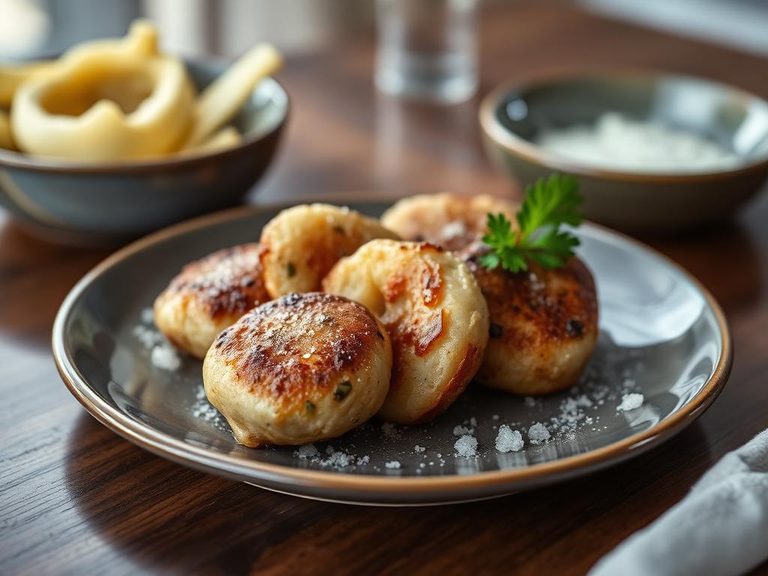
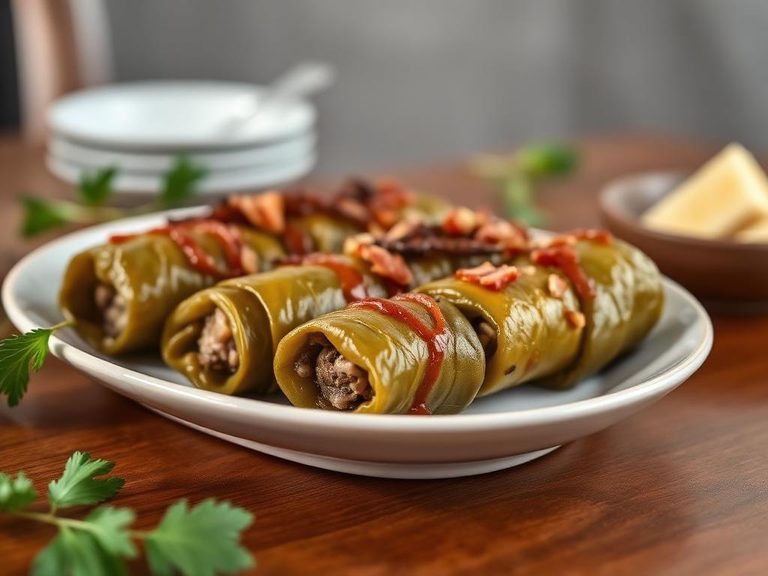
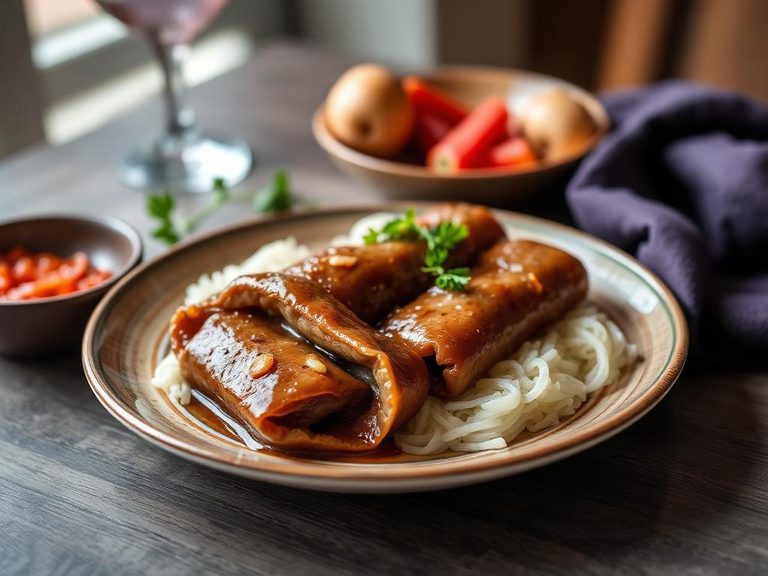
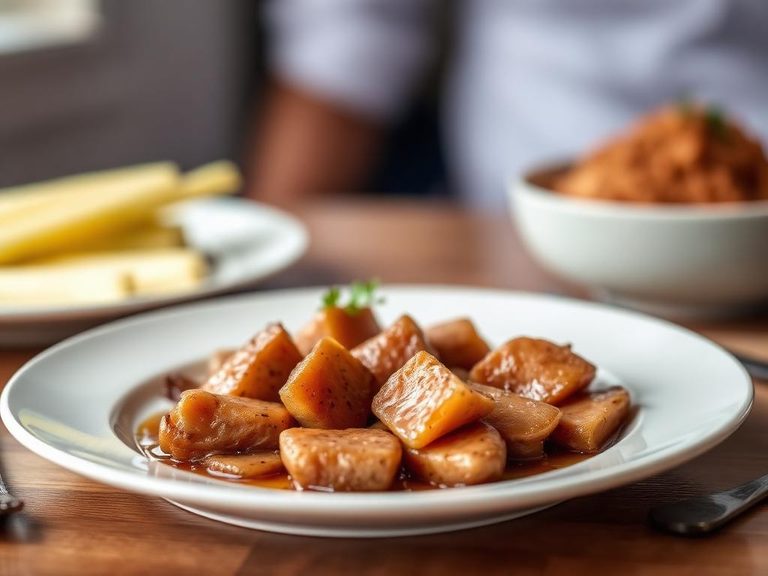
🌍 Where it's eaten
💡 Did you know?
The practice of wrapping meat in leaves is ancient and global, but the name 'golabki' literally translates to 'little pigeons' in Polish, possibly due to the folded shape of the roll.
Full nutrition (USDA data · scales with serving)
| Water | 76.4 g |
| Energy | 114 kcal |
| Protein | 8.3 g |
| Total lipid (fat) | 5.1 g |
| Carbohydrate, by difference | 8.8 g |
| Fiber, total dietary | 1.3 g |
| Total Sugars | 3.5 g |
| Calcium, Ca | 28.0 mg |
| Iron, Fe | 1.1 mg |
| Magnesium, Mg | 16.0 mg |
| Phosphorus, P | 81.0 mg |
| Potassium, K | 253 mg |
| Sodium, Na | 338 mg |
| Zinc, Zn | 1.9 mg |
| Copper, Cu | 0.06 mg |
| Selenium, Se | 8.1 ug |
| Vitamin C, total ascorbic acid | 13.4 mg |
| Thiamin | 0.06 mg |
| Riboflavin | 0.10 mg |
| Niacin | 1.9 mg |
| Vitamin B-6 | 0.19 mg |
| Folate, total | 24.0 ug |
| Folic acid | 5.0 ug |
| Folate, food | 20.0 ug |
| Folate, DFE | 28.0 ug |
| Choline, total | 38.4 mg |
| Vitamin B-12 | 0.75 ug |
| Vitamin B-12, added | 0.00 ug |
| Vitamin A, RAE | 19.0 ug |
| Retinol | 8.0 ug |
| Carotene, beta | 119 ug |
| Carotene, alpha | 19.0 ug |
| Cryptoxanthin, beta | 1.0 ug |
| Lycopene | 3189 ug |
| Lutein + zeaxanthin | 58.0 ug |
| Vitamin E (alpha-tocopherol) | 0.52 mg |
| Vitamin E, added | 0.00 mg |
| Vitamin D (D2 + D3) | 0.10 ug |
| Vitamin K (phylloquinone) | 21.0 ug |
| Alcohol, ethyl | 0.00 g |
| Caffeine | 0.00 mg |
| Theobromine | 0.00 mg |
Fat & fatty acid profile (per 100g)
| Fatty acids, total saturated | 1.9 g |
| SFA 4:0 | 0.00 g |
| SFA 6:0 | 0.00 g |
| SFA 8:0 | 0.00 g |
| SFA 10:0 | 0.00 g |
| SFA 12:0 | 0.00 g |
| SFA 14:0 | 0.13 g |
| SFA 16:0 | 1.1 g |
| SFA 18:0 | 0.57 g |
| Fatty acids, total monounsaturated | 2.2 g |
| MUFA 16:1 | 0.17 g |
| MUFA 18:1 | 1.9 g |
| MUFA 20:1 | 0.01 g |
| MUFA 22:1 | 0.00 g |
| Fatty acids, total polyunsaturated | 0.25 g |
| PUFA 18:2 | 0.20 g |
| PUFA 18:3 | 0.02 g |
| PUFA 18:4 | 0.00 g |
| PUFA 20:4 | 0.01 g |
| PUFA 20:5 n-3 (EPA) | 0.00 g |
| PUFA 22:5 n-3 (DPA) | 0.00 g |
| PUFA 22:6 n-3 (DHA) | 0.00 g |
| Cholesterol | 39.0 mg |
FAQ
Can I make stuffed cabbage rolls ahead of time?
Yes, they are ideal for meal prep. Assemble and refrigerate for up to 24 hours before baking, or freeze the unbaked rolls for up to 3 months. Add a bit more baking time if cooking from frozen.
What can I use instead of cabbage leaves?
Large collard green leaves, Swiss chard, or even thinly sliced and softened pumpkin or butternut squash sheets can be used as wrappers for a different flavor and texture.
Why do my cabbage rolls fall apart?
The most common reason is under-softening the cabbage leaves. Blanch the whole head in boiling water for a few minutes until the leaves are pliable, then carefully peel them off. Also, ensure the filling is not too wet and the rolls are placed seam-side down in the baking dish.
Nutrient density (calculated · NRF9.3)
Nutrient Rich Foods index: beneficial nutrients (protein, fiber, vitamins, minerals) minus saturated fat, added sugar & sodium, per 100 kcal.
NRF9.3 index — Fulgoni, Keast & Drewnowski, 2009. Computed from USDA nutrients.
Weight-loss friendliness (composite index)
Energy density 1.14 kcal/g · 29% calories from protein · 1.3 g fiber · 3.5 g sugar per 100 g.
Composite of energy density (Rolls et al., 1999), protein & fiber satiety, minus sugar. A calculated heuristic — ranks satiety-per-calorie, not a clinical measure.
Dietary load (calculated from USDA values)
Potential renal acid load. Positive = acid-forming, negative = alkaline-forming.
Sodium-to-potassium ratio: 1.34 (lower is better — aim for ≤ 1)
Sodium:potassium per WHO potassium guidance. Computed from USDA nutrients.