

Stuffed cabbage, with meat, Puerto Rican style
Common food

Photo: Wikipedia
This is a savory, hearty Puerto Rican dish where tender cabbage leaves are wrapped around a seasoned ground beef filling, often simmered in a rich, tomato-based sofrito sauce. The texture is a satisfying contrast between the soft, yielding cabbage and the juicy, flavorful meat inside. Nutritionally, it offers a good balance of protein and fat, making it a filling meal, though it's relatively calorie-dense for a vegetable dish.
Calorie split: 18% protein · 16% carbs · 65% fat
↓ Full nutrition💚 Why it's loved
People adore it for the deep, savory flavors of the seasoned beef melding with the sweet, cooked cabbage and the tangy tomato sauce. It's a beloved comfort food that embodies the heartiness of Puerto Rican home cooking and is often served at family gatherings.
⚠️ Watch-outs & how to enjoy it better
The dish can be high in sodium and saturated fat, depending on the cut of beef and seasoning used. To counteract this, use lean ground beef, rinse canned tomato products, and balance the meal with a side of plain beans or a fresh salad to increase fiber and manage blood sugar response.
Key benefits
- Good source of protein from the meat filling.
- Provides dietary fiber from the cabbage leaves.
- Contains vitamins like Vitamin K and C from the cabbage.
- Offers iron and B vitamins from the ground beef.
- A complete, balanced meal in a single serving.
🍽️ Popular dishes
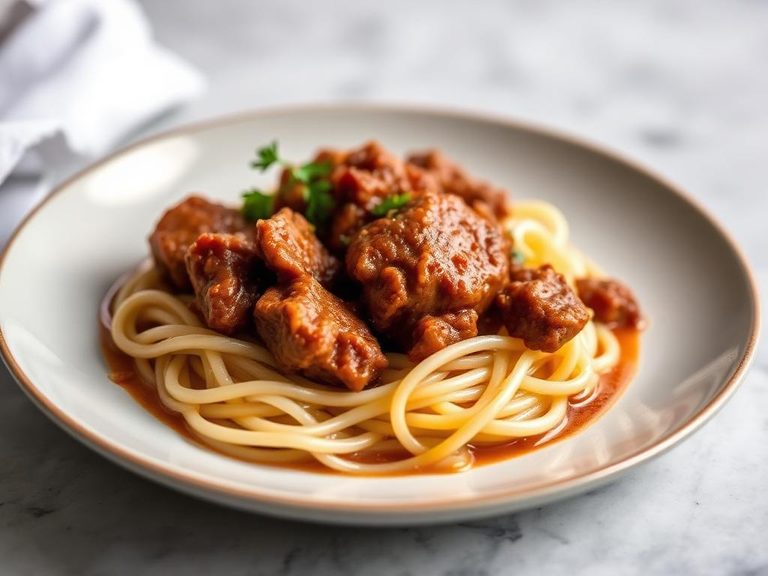
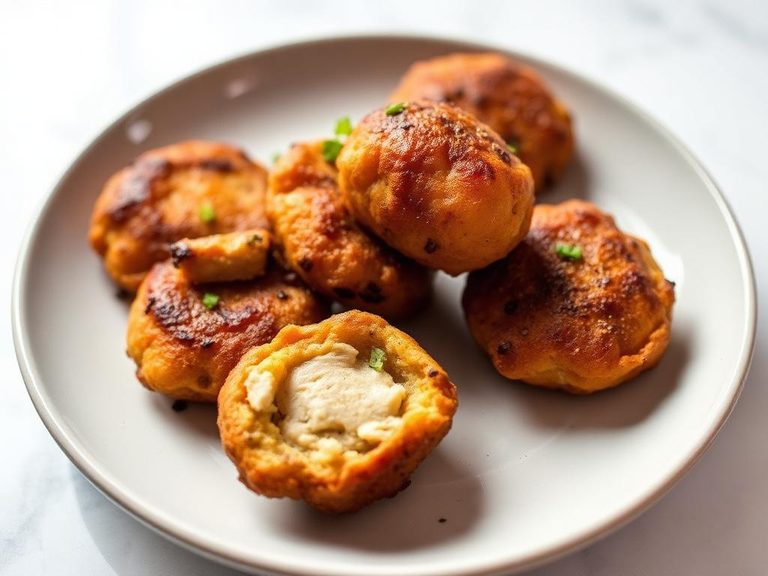
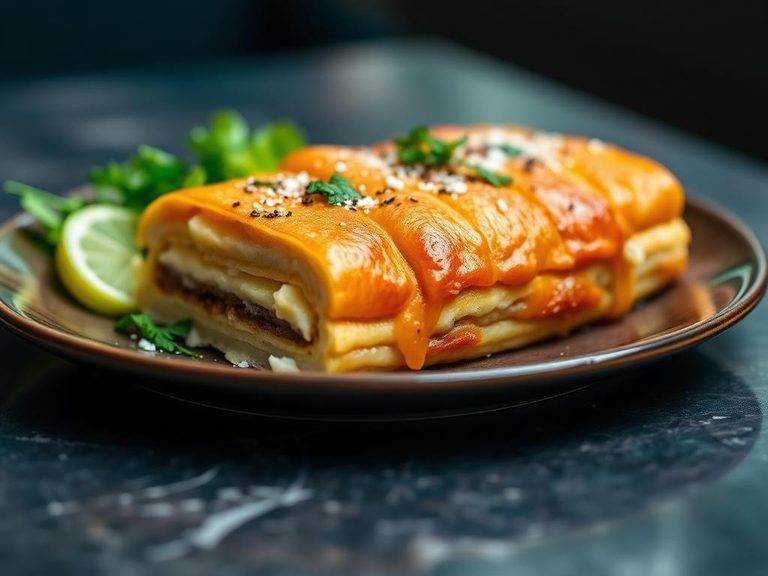
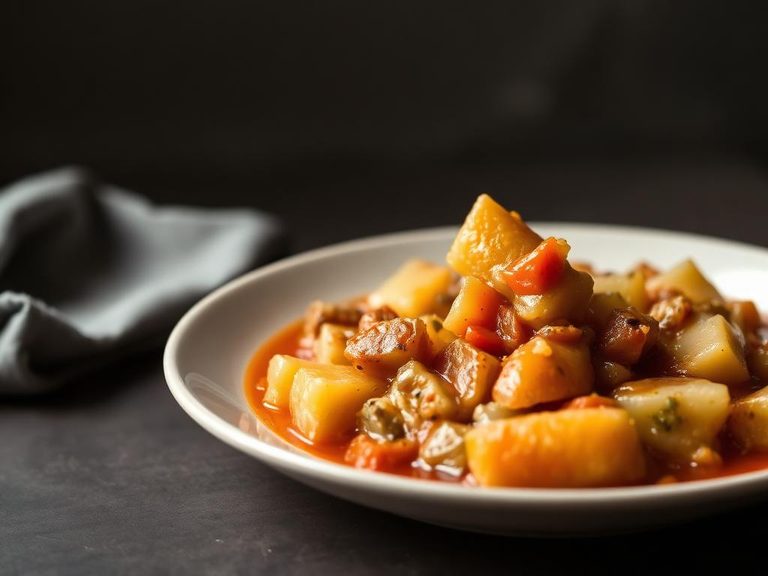
🌍 Where it's eaten
💡 Did you know?
While stuffed cabbage is found globally, the Puerto Rican version often includes a distinctive sofrito base made from recao (culantro), cilantro, peppers, and onions, which gives it a uniquely aromatic and herbaceous flavor profile not found in Eastern European or other Latin versions.
Full nutrition (USDA data · scales with serving)
| Water | 64.2 g |
| Energy | 207 kcal |
| Protein | 9.6 g |
| Total lipid (fat) | 15.1 g |
| Carbohydrate, by difference | 8.4 g |
| Fiber, total dietary | 2.3 g |
| Total Sugars | 4.6 g |
| Calcium, Ca | 41.0 mg |
| Iron, Fe | 1.2 mg |
| Magnesium, Mg | 25.0 mg |
| Phosphorus, P | 115 mg |
| Potassium, K | 412 mg |
| Sodium, Na | 723 mg |
| Zinc, Zn | 1.6 mg |
| Copper, Cu | 0.10 mg |
| Selenium, Se | 10.5 ug |
| Vitamin C, total ascorbic acid | 27.5 mg |
| Thiamin | 0.13 mg |
| Riboflavin | 0.14 mg |
| Niacin | 2.5 mg |
| Vitamin B-6 | 0.27 mg |
| Folate, total | 25.0 ug |
| Folic acid | 0.00 ug |
| Folate, food | 25.0 ug |
| Folate, DFE | 25.0 ug |
| Choline, total | 32.8 mg |
| Vitamin B-12 | 0.42 ug |
| Vitamin B-12, added | 0.00 ug |
| Vitamin A, RAE | 58.0 ug |
| Retinol | 39.0 ug |
| Carotene, beta | 208 ug |
| Carotene, alpha | 22.0 ug |
| Cryptoxanthin, beta | 2.0 ug |
| Lycopene | 5292 ug |
| Lutein + zeaxanthin | 67.0 ug |
| Vitamin E (alpha-tocopherol) | 2.3 mg |
| Vitamin E, added | 0.00 mg |
| Vitamin D (D2 + D3) | 0.30 ug |
| Vitamin K (phylloquinone) | 35.4 ug |
| Alcohol, ethyl | 0.00 g |
| Caffeine | 0.00 mg |
| Theobromine | 0.00 mg |
Fat & fatty acid profile (per 100g)
| Fatty acids, total saturated | 3.7 g |
| SFA 4:0 | 0.00 g |
| SFA 6:0 | 0.00 g |
| SFA 8:0 | 0.00 g |
| SFA 10:0 | 0.00 g |
| SFA 12:0 | 0.01 g |
| SFA 14:0 | 0.12 g |
| SFA 16:0 | 2.3 g |
| SFA 18:0 | 1.2 g |
| Fatty acids, total monounsaturated | 8.0 g |
| MUFA 16:1 | 0.25 g |
| MUFA 18:1 | 7.6 g |
| MUFA 20:1 | 0.04 g |
| MUFA 22:1 | 0.00 g |
| Fatty acids, total polyunsaturated | 2.2 g |
| PUFA 18:2 | 2.0 g |
| PUFA 18:3 | 0.17 g |
| PUFA 18:4 | 0.00 g |
| PUFA 20:4 | 0.02 g |
| PUFA 20:5 n-3 (EPA) | 0.00 g |
| PUFA 22:5 n-3 (DPA) | 0.00 g |
| PUFA 22:6 n-3 (DHA) | 0.00 g |
| Cholesterol | 28.0 mg |
FAQ
Is this the same as Polish golabki?
No. While both are stuffed cabbage rolls, the Puerto Rican style uses a distinct sofrito-based seasoning, often includes olives or capers, and is typically simmered in a tomato sauce, giving it a different flavor profile than the often sour-cream-accompanied Polish version.
Can I make it healthier?
Yes. Use extra-lean ground beef or a mix of beef and turkey, add finely diced vegetables like carrots or bell peppers to the filling for extra nutrients, and serve it with a side of brown rice or quinoa instead of white rice to boost fiber.
What gives it its characteristic color?
The reddish-orange hue comes from the combination of tomato sauce or paste and achiote (annatto) oil, which is a staple in Puerto Rican cooking for adding color and a subtle earthy flavor.
Nutrient density (calculated · NRF9.3)
Nutrient Rich Foods index: beneficial nutrients (protein, fiber, vitamins, minerals) minus saturated fat, added sugar & sodium, per 100 kcal.
NRF9.3 index — Fulgoni, Keast & Drewnowski, 2009. Computed from USDA nutrients.
Weight-loss friendliness (composite index)
Energy density 2.07 kcal/g · 18% calories from protein · 2.3 g fiber · 4.6 g sugar per 100 g.
Composite of energy density (Rolls et al., 1999), protein & fiber satiety, minus sugar. A calculated heuristic — ranks satiety-per-calorie, not a clinical measure.
Dietary load (calculated from USDA values)
Potential renal acid load. Positive = acid-forming, negative = alkaline-forming.
Sodium-to-potassium ratio: 1.75 (lower is better — aim for ≤ 1)
Sodium:potassium per WHO potassium guidance. Computed from USDA nutrients.