

Steak sauce
Common food
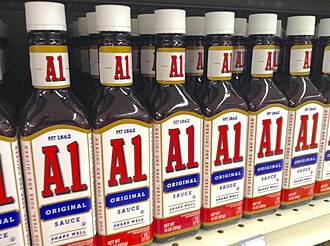
Photo: Wikipedia
A thick, dark brown condiment with a tangy, sweet, and savory flavor profile, steak sauce is a staple for enhancing grilled meats. Its smooth, pourable texture and bold taste come from a blend of tomatoes, vinegar, sugar, and spices. Nutritionally, it's primarily a source of carbohydrates from added sugars, with minimal protein or fat.
Calorie split: 5% protein · 93% carbs · 2% fat
↓ Full nutrition💚 Why it's loved
People love it for its ability to instantly transform a plain cut of meat, adding a complex sweet-tangy depth that complements char and smoke. It's a cultural icon of American cookouts and diners, offering a familiar, comforting flavor boost.
⚠️ Watch-outs & how to enjoy it better
Its high sugar content (nearly 10g per 100g) can cause blood-sugar spikes, and it often contains significant sodium. To counteract this, use it sparingly as a dip rather than a drench, and pair it with protein-rich foods like steak or chicken to help slow sugar absorption. Those watching sodium should check labels and opt for low-sodium versions when available.
Key benefits
- Adds significant flavor with minimal calories
- Provides a quick, easy way to elevate simple dishes
- Contains small amounts of fiber from tomato and spice base
- Low in fat and cholesterol
- A versatile pantry staple for marinades and glazes
🍽️ Popular dishes
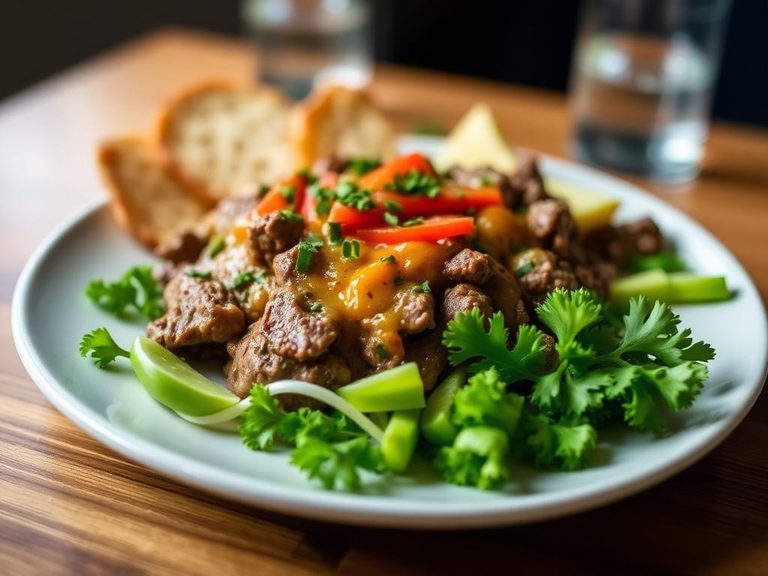
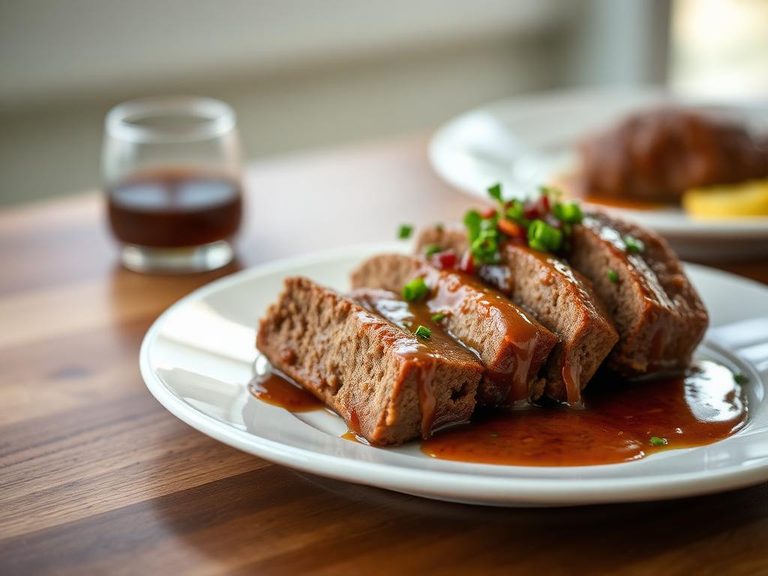




🌍 Where it's eaten
💡 Did you know?
The most famous brand, A1 Steak Sauce, was originally created in the 1820s by a British king's chef as a general-purpose seasoning, not specifically for steak.
Full nutrition (USDA data · scales with serving)
| Water | 71.0 g |
| Energy | 95.0 kcal |
| Protein | 1.3 g |
| Total lipid (fat) | 0.23 g |
| Carbohydrate, by difference | 22.0 g |
| Fiber, total dietary | 1.5 g |
| Total Sugars | 9.8 g |
| Calcium, Ca | 19.0 mg |
| Iron, Fe | 1.4 mg |
| Magnesium, Mg | 17.0 mg |
| Phosphorus, P | 33.0 mg |
| Potassium, K | 312 mg |
| Sodium, Na | 1647 mg |
| Zinc, Zn | 0.34 mg |
| Copper, Cu | 0.19 mg |
| Selenium, Se | 0.80 ug |
| Vitamin C, total ascorbic acid | 6.8 mg |
| Thiamin | 0.03 mg |
| Riboflavin | 0.05 mg |
| Niacin | 0.91 mg |
| Vitamin B-6 | 0.10 mg |
| Folate, total | 8.0 ug |
| Folic acid | 0.00 ug |
| Folate, food | 8.0 ug |
| Folate, DFE | 8.0 ug |
| Choline, total | 11.5 mg |
| Vitamin B-12 | 0.00 ug |
| Vitamin B-12, added | 0.00 ug |
| Vitamin A, RAE | 15.0 ug |
| Retinol | 0.00 ug |
| Carotene, beta | 177 ug |
| Carotene, alpha | 0.00 ug |
| Cryptoxanthin, beta | 0.00 ug |
| Lycopene | 12564 ug |
| Lutein + zeaxanthin | 0.00 ug |
| Vitamin E (alpha-tocopherol) | 1.2 mg |
| Vitamin E, added | 0.00 mg |
| Vitamin D (D2 + D3) | 0.00 ug |
| Vitamin K (phylloquinone) | 2.2 ug |
| Alcohol, ethyl | 0.00 g |
| Caffeine | 0.00 mg |
| Theobromine | 0.00 mg |
Fat & fatty acid profile (per 100g)
| Fatty acids, total saturated | 0.00 g |
| SFA 4:0 | 0.00 g |
| SFA 6:0 | 0.00 g |
| SFA 8:0 | 0.00 g |
| SFA 10:0 | 0.00 g |
| SFA 12:0 | 0.00 g |
| SFA 14:0 | 0.00 g |
| SFA 16:0 | 0.00 g |
| SFA 18:0 | 0.00 g |
| Fatty acids, total monounsaturated | 0.00 g |
| MUFA 16:1 | 0.00 g |
| MUFA 18:1 | 0.00 g |
| MUFA 20:1 | 0.00 g |
| MUFA 22:1 | 0.00 g |
| Fatty acids, total polyunsaturated | 0.00 g |
| PUFA 18:2 | 0.00 g |
| PUFA 18:3 | 0.00 g |
| PUFA 18:4 | 0.00 g |
| PUFA 20:4 | 0.00 g |
| PUFA 20:5 n-3 (EPA) | 0.00 g |
| PUFA 22:5 n-3 (DPA) | 0.00 g |
| PUFA 22:6 n-3 (DHA) | 0.00 g |
| Cholesterol | 0.00 mg |
FAQ
Is steak sauce the same as Worcestershire sauce?
No. They are distinct. Steak sauce is a thick, tomato-based condiment, while Worcestershire is a thin, fermented liquid condiment with anchovies, vinegar, and molasses.
Can I use steak sauce as a marinade?
Yes, it's excellent for marinades. Its acidity and sugar help tenderize and flavor meats. Combine it with oil, garlic, and herbs for a balanced mixture.
Why is my steak sauce grainy?
Some recipes include ingredients like minced onions or horseradish which can create texture. If it's unintentional, it may be due to improper emulsification or storage; always shake well before use.
Nutrient density (calculated · NRF9.3)
Nutrient Rich Foods index: beneficial nutrients (protein, fiber, vitamins, minerals) minus saturated fat, added sugar & sodium, per 100 kcal.
NRF9.3 index — Fulgoni, Keast & Drewnowski, 2009. Computed from USDA nutrients.
Weight-loss friendliness (composite index)
Energy density 0.95 kcal/g · 5% calories from protein · 1.5 g fiber · 9.8 g sugar per 100 g.
Composite of energy density (Rolls et al., 1999), protein & fiber satiety, minus sugar. A calculated heuristic — ranks satiety-per-calorie, not a clinical measure.
Dietary load (calculated from USDA values)
Potential renal acid load. Positive = acid-forming, negative = alkaline-forming.
Sodium-to-potassium ratio: 5.28 (lower is better — aim for ≤ 1)
Sodium:potassium per WHO potassium guidance. Computed from USDA nutrients.