

Burger Topping

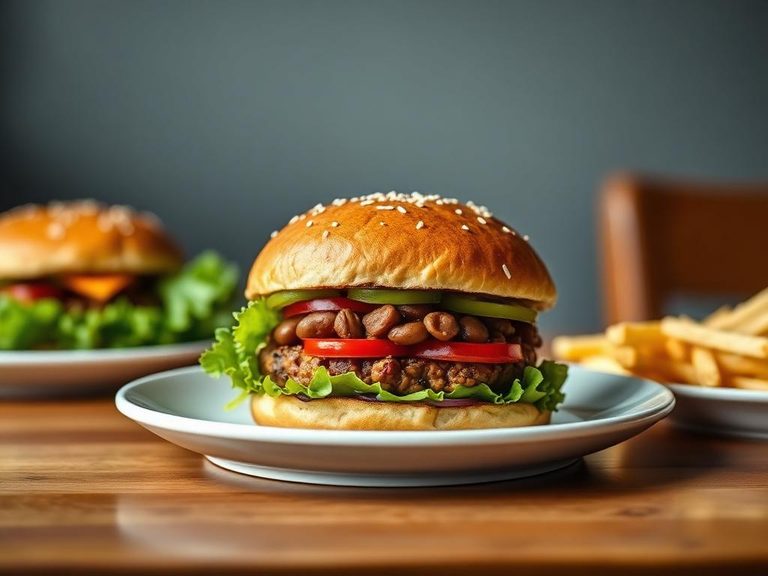
Burger toppings are the customizable condiments, vegetables, and cheeses layered onto a hamburger patty to add flavor, texture, and moisture. Common examples include lettuce, tomato, onion, pickles, ketchup, mustard, mayonnaise, and cheese, with regional variations like avocado in California or kimchi in fusion styles. While the concept is globally popular, it is most iconic in American cuisine, where build-your-own burger bars are a staple.
🍳 View the full Burger Topping recipe →
🍽️ Nutrition at a glance
Burger toppings vary widely in nutrition: fresh vegetables like lettuce and tomatoes add fiber and vitamins with minimal calories, while creamy sauces and cheeses contribute significant fat and calories. A typical serving of mixed toppings (e.g., lettuce, tomato, onion, and a tablespoon of mayo) might add 50-100 calories to a burger, with key nutrients including vitamin C from tomatoes and calcium from cheese.
Nutrition breakdown
| Calories | 10 kcal |
| Protein | 0.5 g |
| Carbs | 1.5 g |
| Fat | 0.2 g |
| Fiber | 0.5 g |
| Sugar | 0.8 g |
| Sodium | 150 mg |
| Vitamin C | 3 mg |
| Vitamin K | 5 mcg |
| Potassium | 45 mg |
| Vitamin A | 20 IU |
| Iron | 0.3 mg |
| Calcium | 10 mg |
| Magnesium | 4 mg |
| Folate | 5 mcg |
Per 1/4 cup (40 g) · estimated, varies by recipe
💡 What's interesting
Burger toppings reflect cultural adaptation—such as teriyaki sauce in Japan or beetroot in Australia—making them a lens for global food fusion. Nutritionally, they can transform a basic protein source into a more balanced meal by adding vegetables, though they can also turn it into a high-calorie indulgence depending on choices.
🍽️ Related dishes







AI estimate may be inaccurate · Terms